Start with the clothes you already reach for
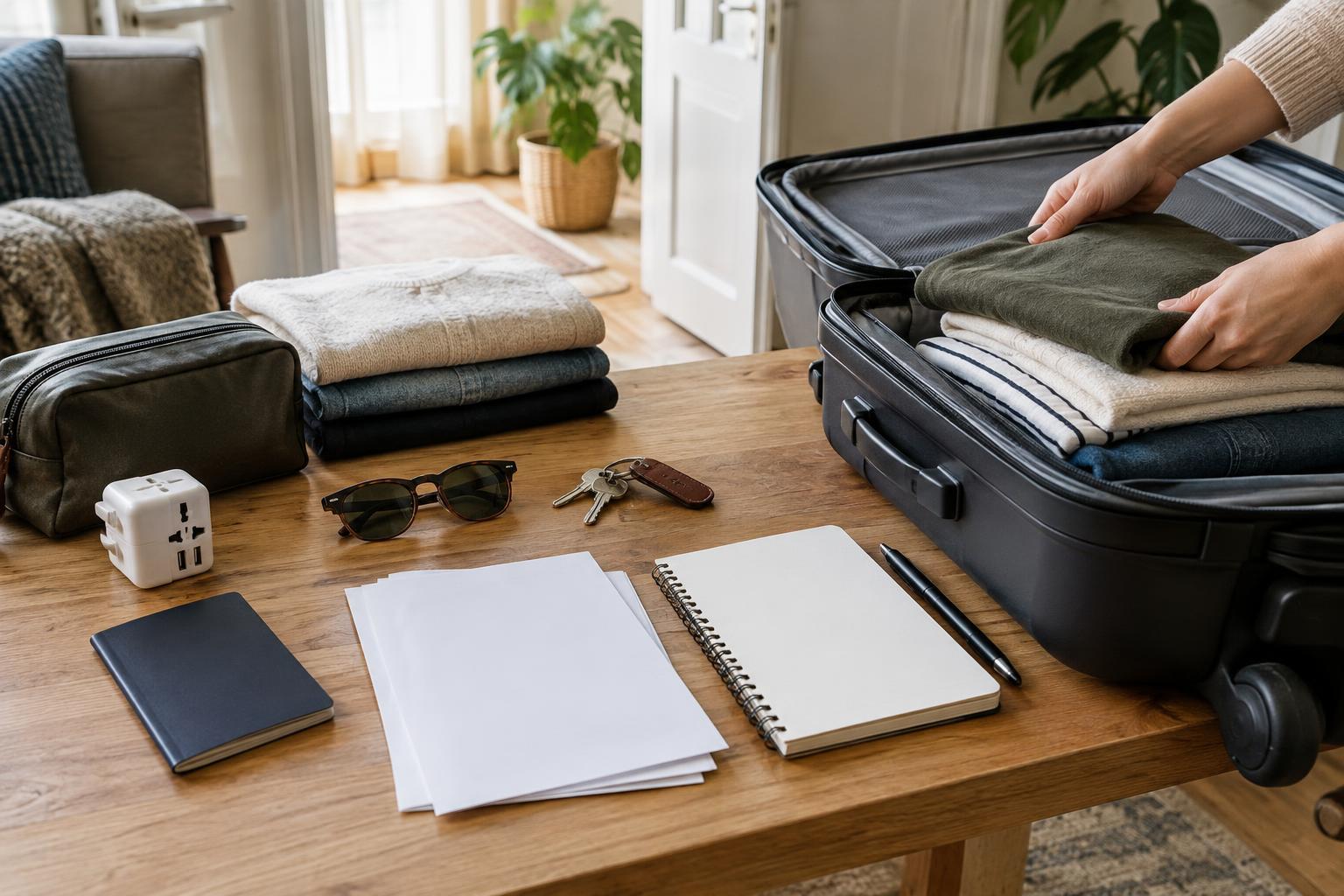
Before choosing a scarf for a trip, lay out the clothes that are actually going into your bag. A scarf that looks striking on its own may be less useful if it works with only one outfit. Look at your most-worn coat, the neckline of your travel-day top, your walking shoes and the dress or shirt you might wear to dinner. If the same scarf makes sense with three of those pieces, it has a stronger claim on limited packing space. This is the practical appeal of UniqueYou’s approach: an elegant accessory can complement a woman’s existing wardrobe instead of asking her to start again.
Try identifying one dependable base color and one color you enjoy wearing near your face. A neutral wrap might connect a patterned dress with a plain jacket; a brighter square scarf might bring life to several dark outfits. Neither choice is automatically better. Think about the trip you are taking, not an imagined itinerary with unlimited outfit changes. For a city break with one small bag, versatility matters more than the number of possible styling tricks. For a longer journey with a celebration on the calendar, a piece chosen mainly for that occasion may still be worth carrying.
Give different scarf shapes different jobs
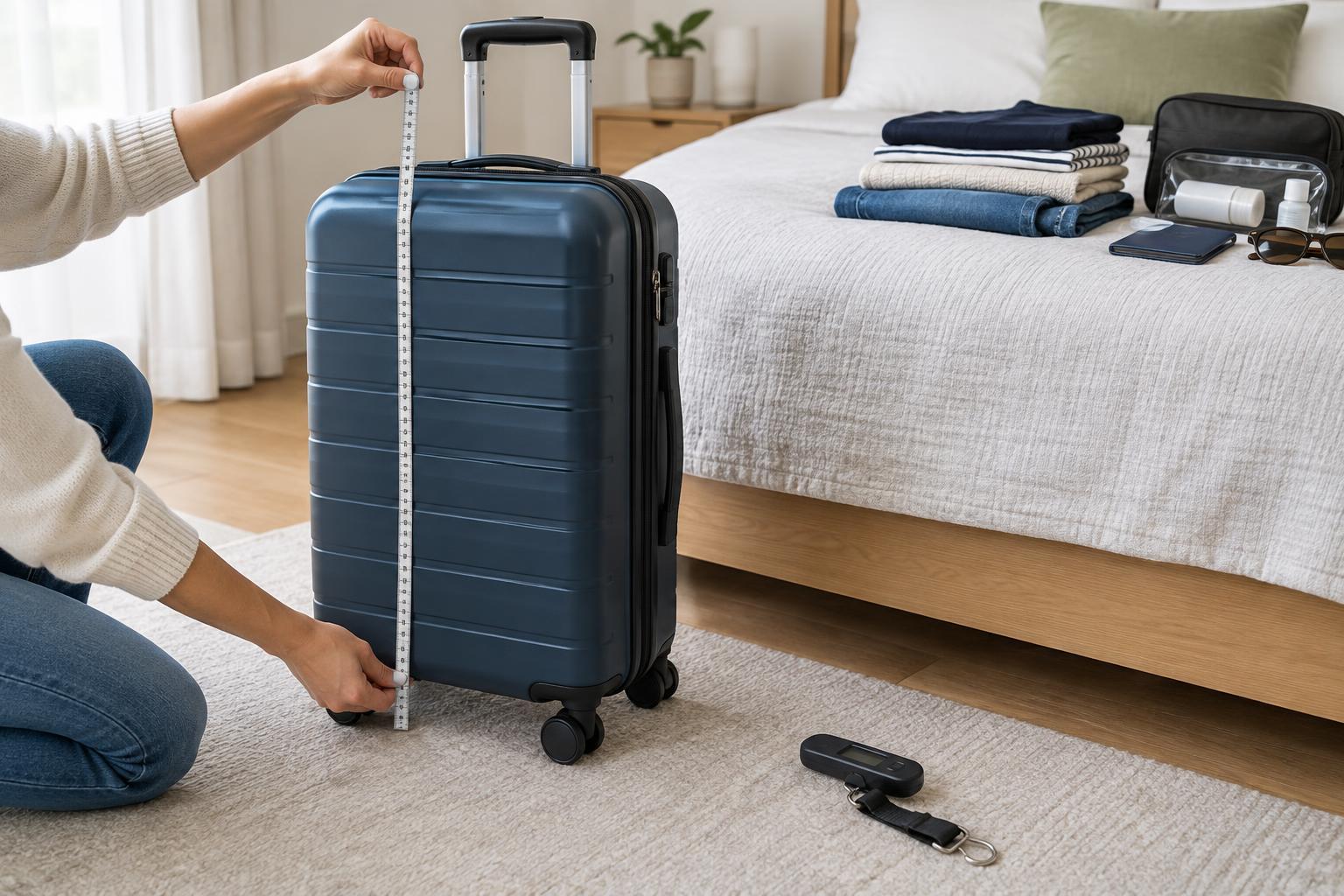
A square scarf, a long scarf, a shawl and a wrap are not interchangeable simply because each can be worn around the shoulders. A square can add a compact accent at the neck or in the hair, provided its size suits the way you want to tie it. A longer scarf gives you more room for loose draping or a simple loop. A shawl can change the outline of an outfit, while a generous wrap can offer a layer over clothing when you prefer not to pack another jacket. Check actual dimensions before deciding how a particular piece will work; category names alone cannot tell you how much coverage it provides.
Consider the moments between destinations. On a train, you may want a layer you can put on and take off quickly. At a museum or restaurant, you may prefer something that stays comfortably in place without constant adjustment. If you are planning walks followed by a smarter evening, ask whether the same accessory can move between both settings. Test a tie at home with the coat and bag you intend to carry. The result should feel easy to live in, not just appealing for the few seconds it takes to take a photograph.
Choose materials with the whole day in mind
UniqueYou includes silk, cashmere and wool categories, alongside other scarf choices. Those names are useful signposts, but the fiber composition can vary from product to product. Read the individual description and care information rather than assuming every item in a category has the same content. Think, too, about the feel you prefer against your skin, the weight you are willing to carry and whether you will have time to care for the piece while traveling. A scarf intended for a packed itinerary needs to suit your habits as well as your outfit.
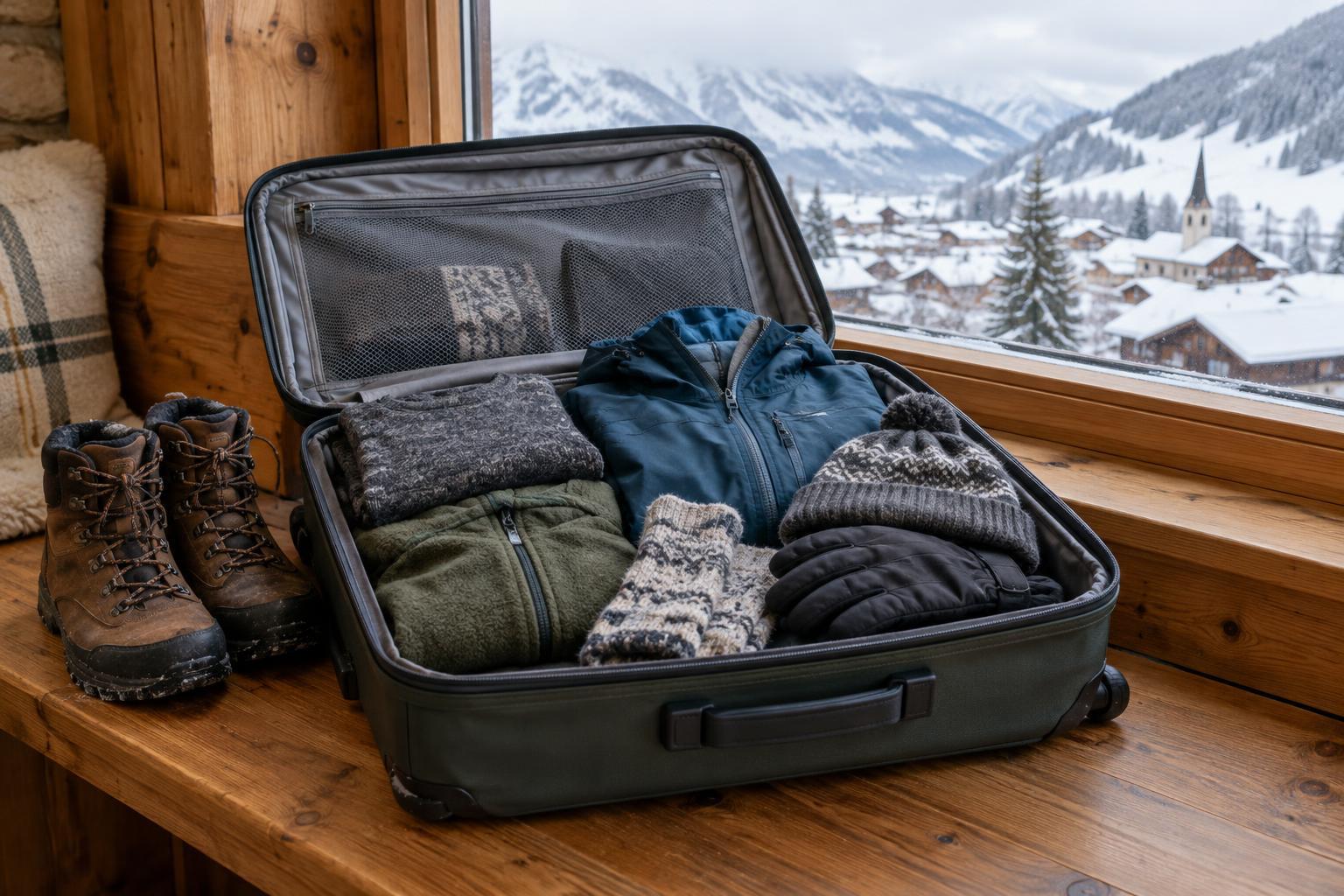
For warm afternoons and cooler evenings, a lighter scarf may be easier to carry throughout the day than a substantial winter layer. For a cold-weather trip, consider how the scarf sits with a coat collar and whether its length allows the coverage you want. Silk, cashmere and wool invite different styling choices, but no material name guarantees the right answer for every person or climate. If you are unsure, compare measurements and composition first, then look at the colors and drape. This order helps prevent a beautiful image from doing all the decision-making.
Build a small travel color plan
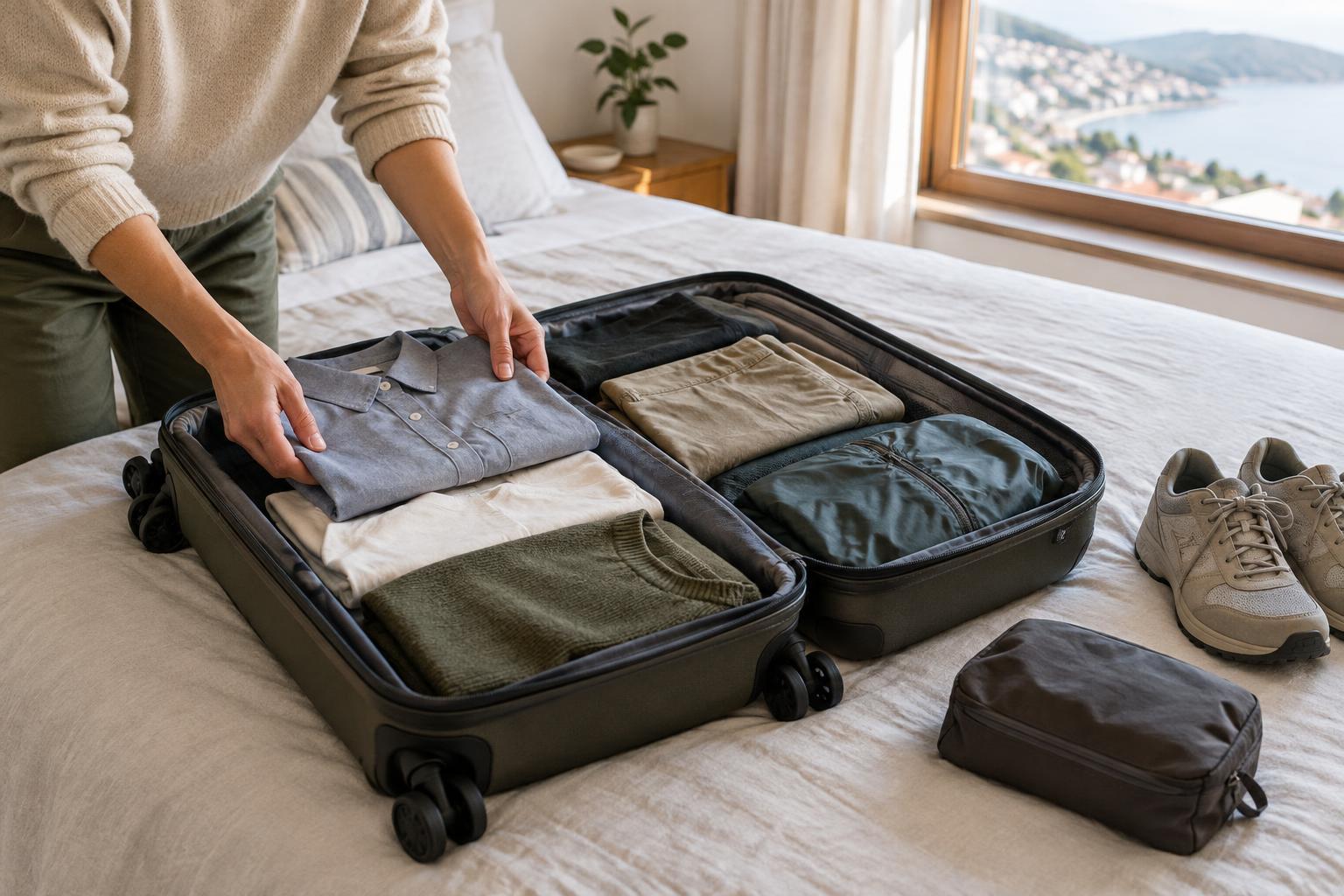
A packing list becomes easier when most pieces can be worn together. Start with the coat or outer layer, because it appears in more outfits than you might expect, especially on a cool-weather trip. Then look at the trousers, skirts or dresses you are taking. If those pieces are mostly neutral, a red, burgundy or patterned scarf can become the focal point. If the clothes already carry strong color or print, a quieter scarf may connect them without competing. You do not have to match shades exactly; you do need to like the way they look side by side in ordinary daylight.
It helps to make two trial outfits before you commit: one for the travel day and one for the moment when you most want to feel dressed up. Put on the shoes and outerwear as well. A scarf that works with only the dress underneath your coat may not deliver the effect you imagined during an outdoor evening. Conversely, a scarf that initially seems plain can become the piece that makes several outfits feel finished. Treat photographs as inspiration, then trust what you see in your own wardrobe. Travel style is most comfortable when it still feels like you.
Pack for transitions, not just destinations
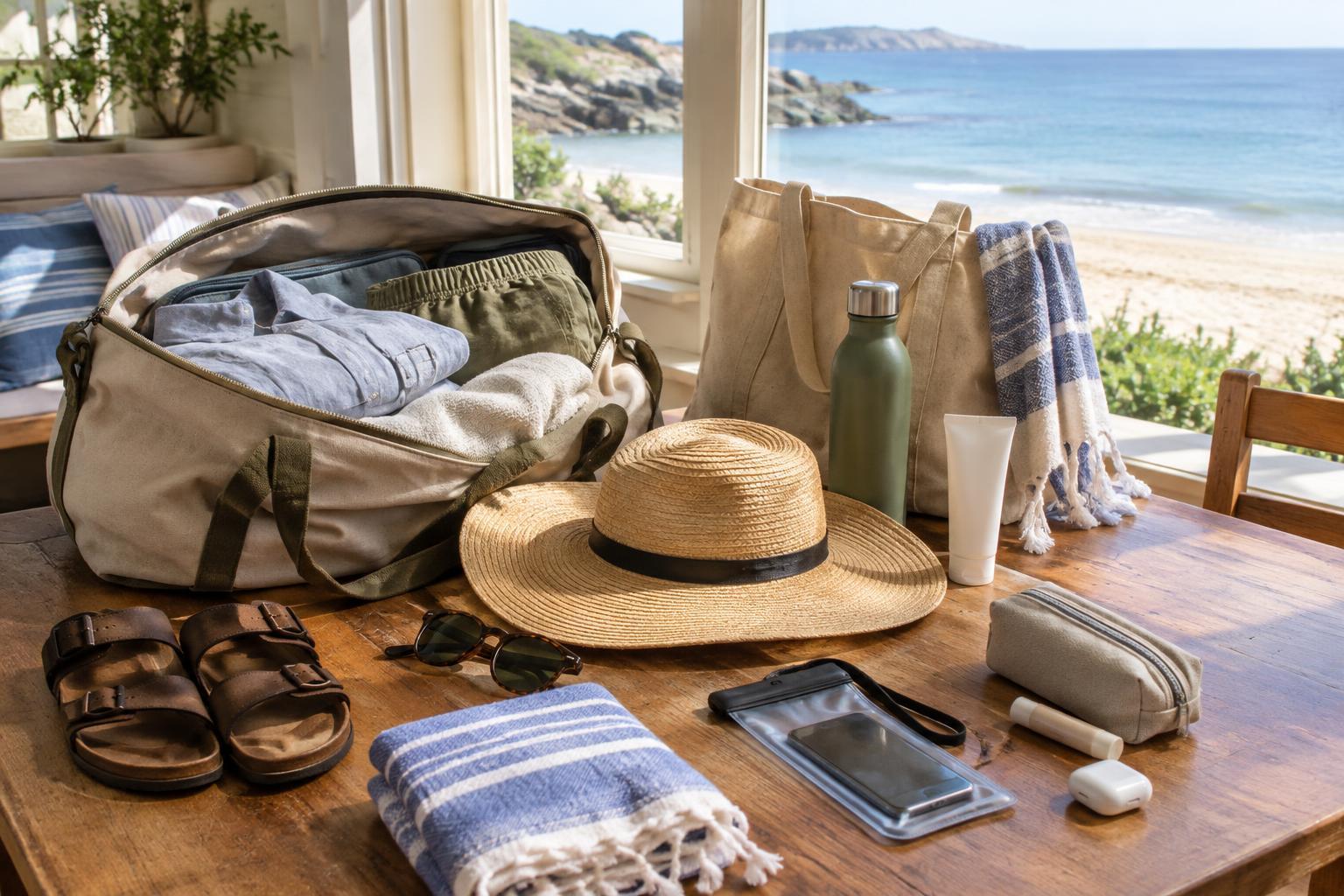
Travel plans are full of small changes: a breezy platform after a warm carriage, a long walk before dinner, an early start followed by a sunny afternoon. A scarf can help bridge those moments, but it should not be asked to replace essential weather gear. Check the likely conditions for your route, including places where you will spend time outside, and pack suitable outerwear first. Then choose an accessory that adds comfort or a change of look without making the bag difficult to manage. If a piece is too bulky to carry once removed, you may wear it less than expected.
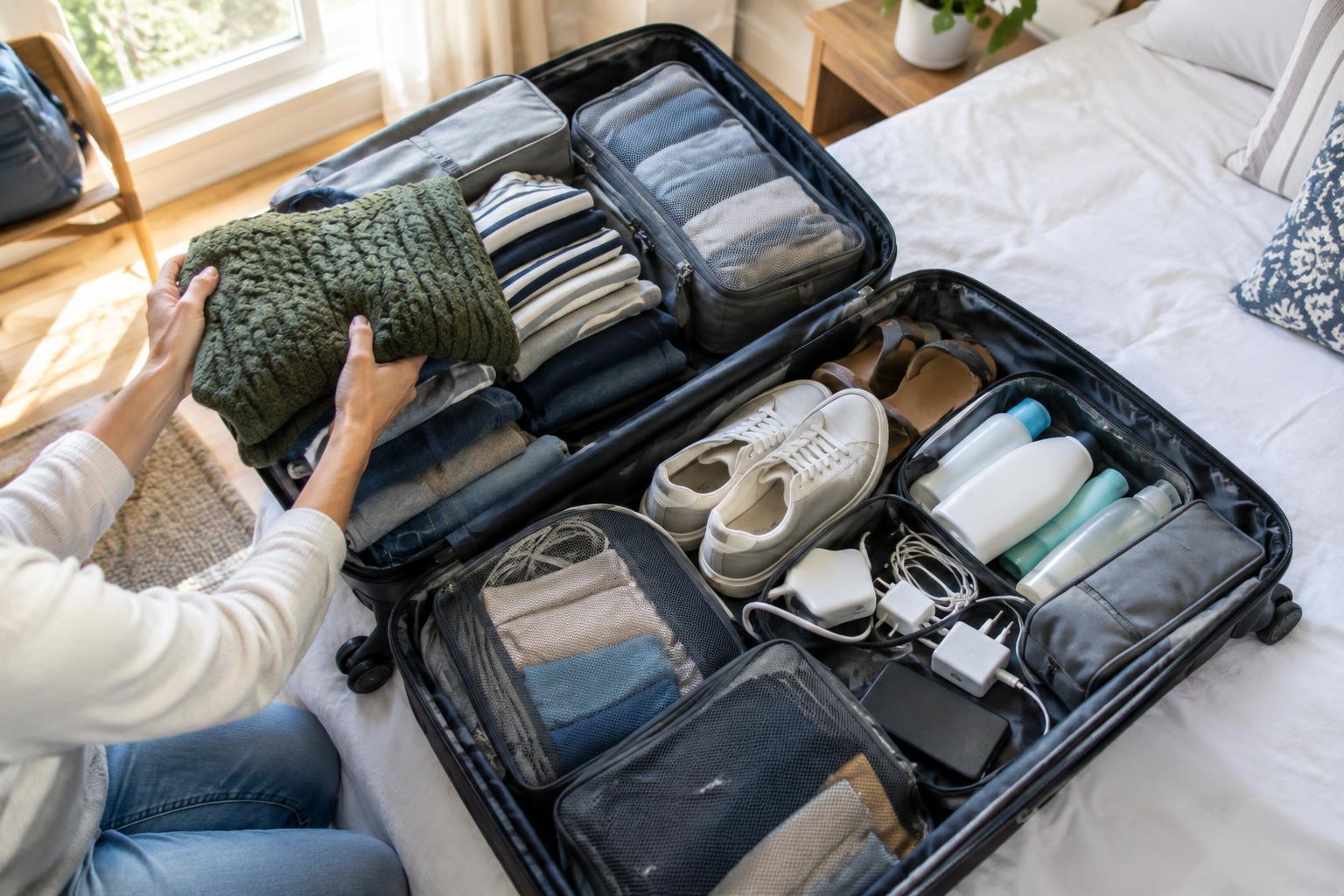
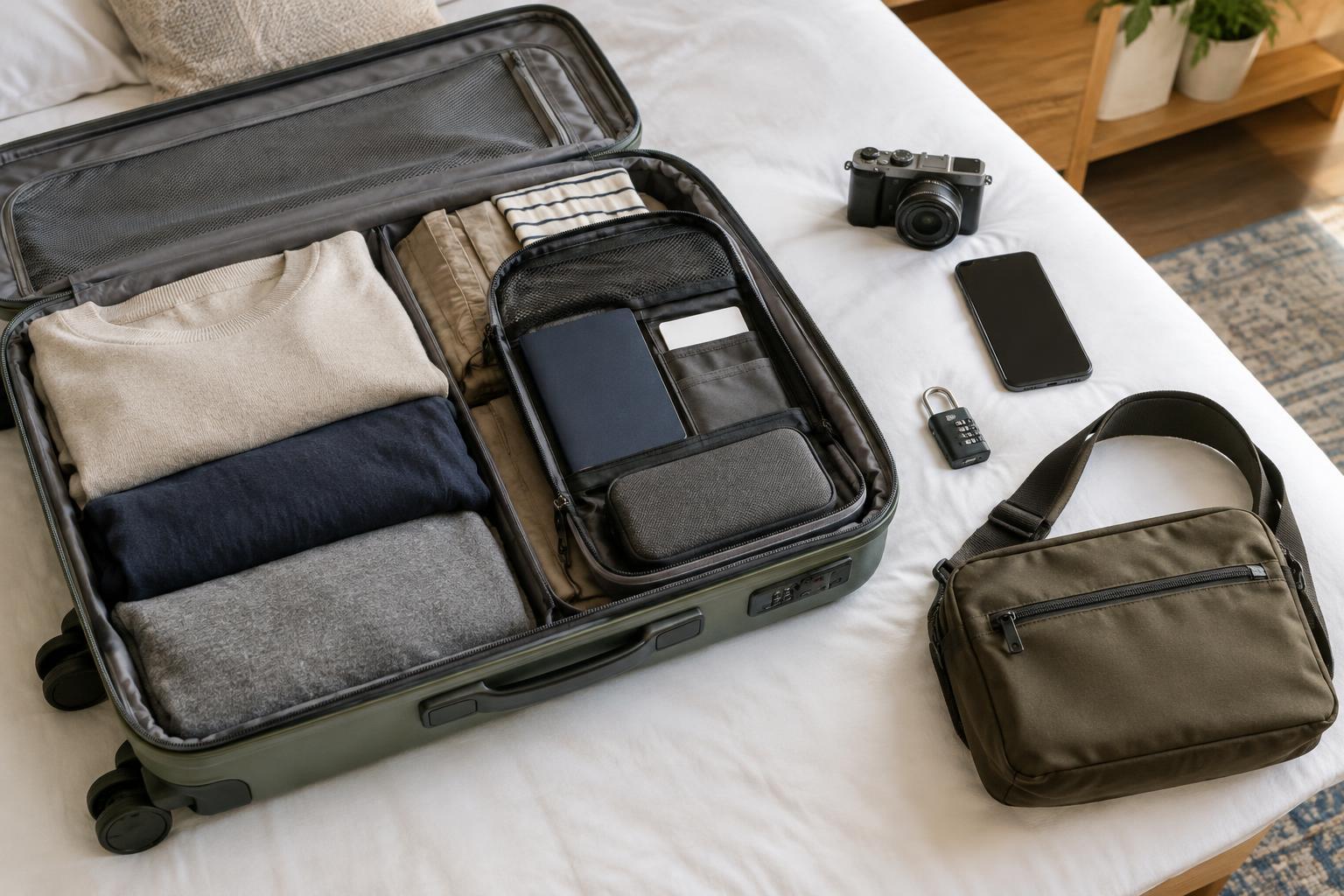
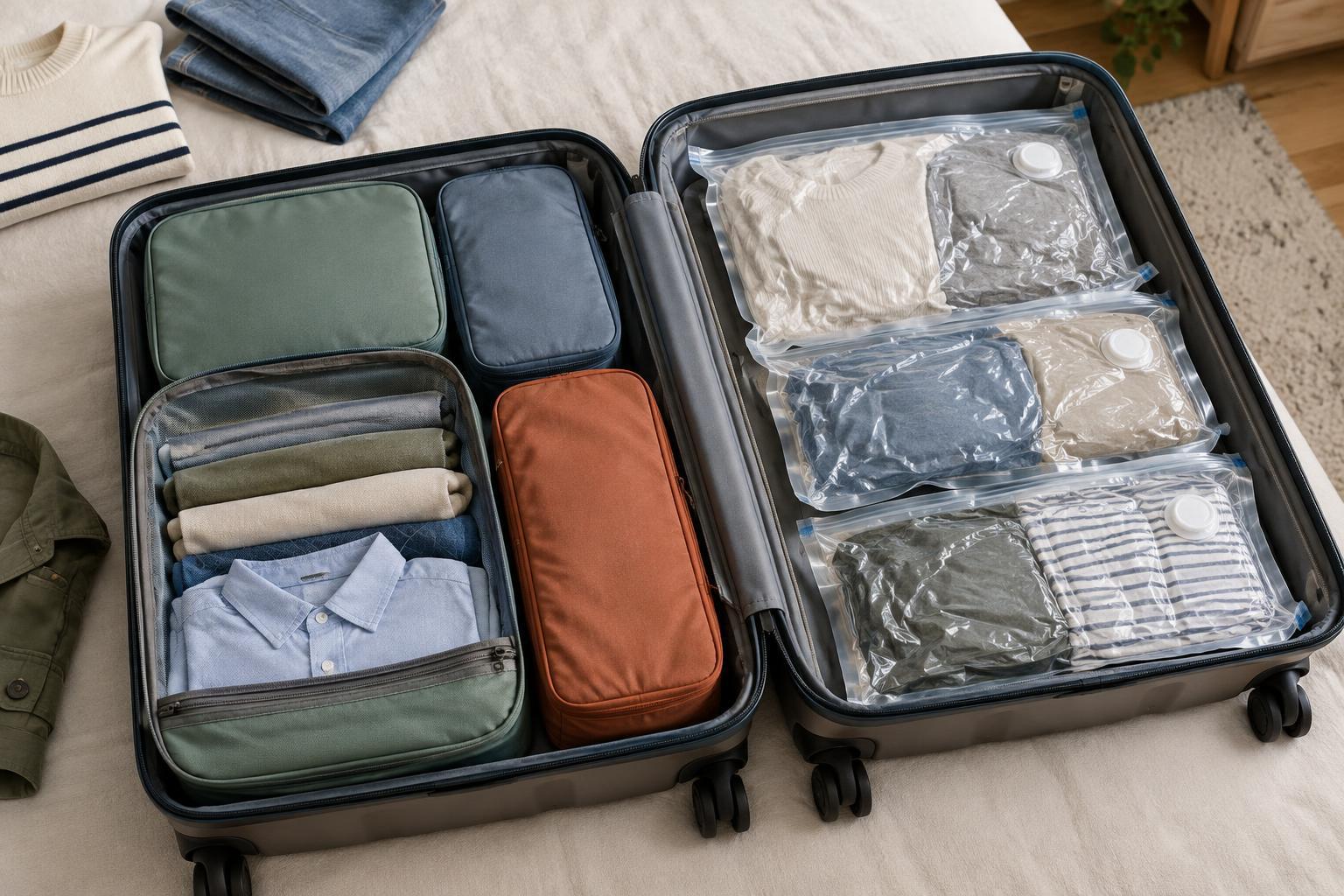
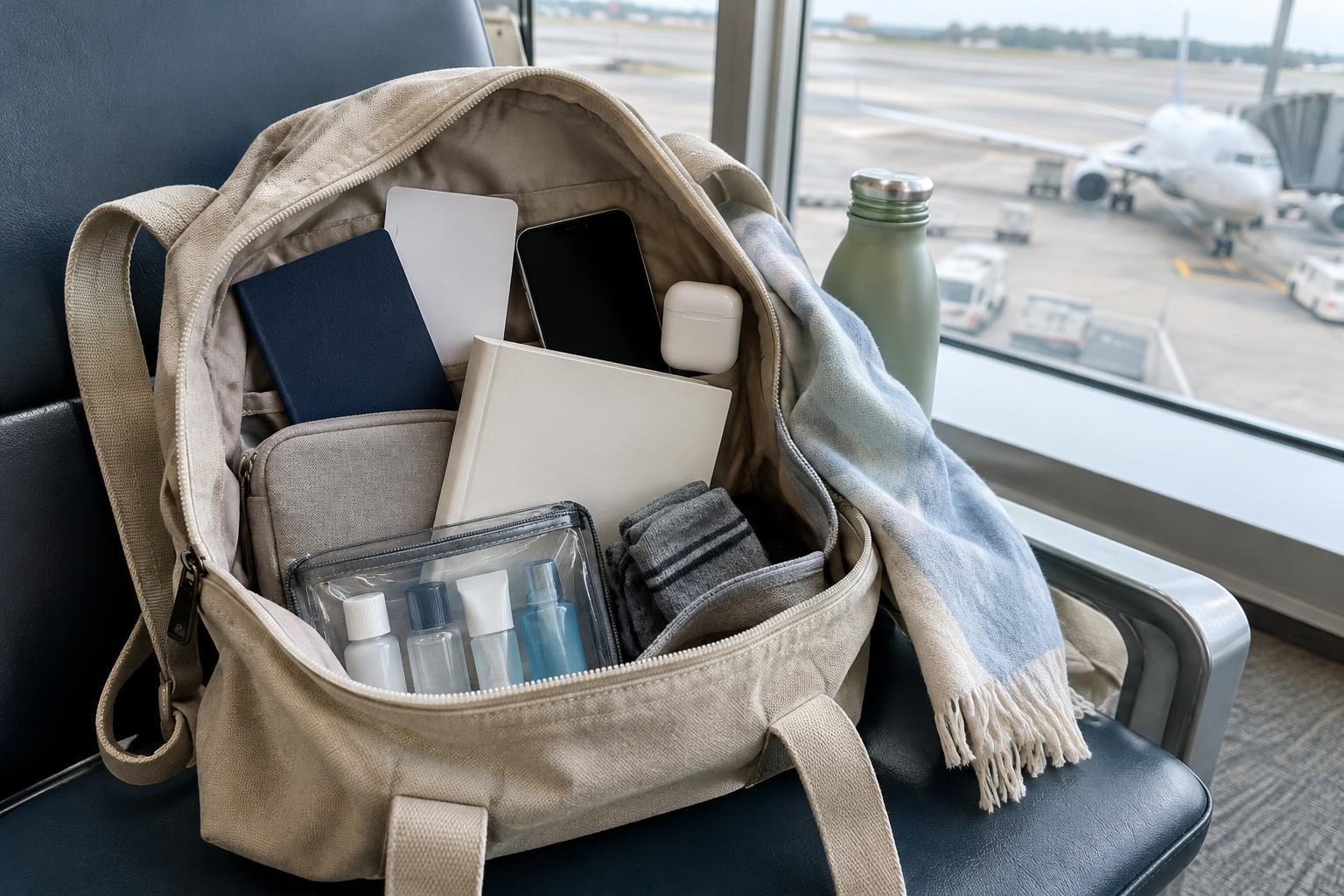
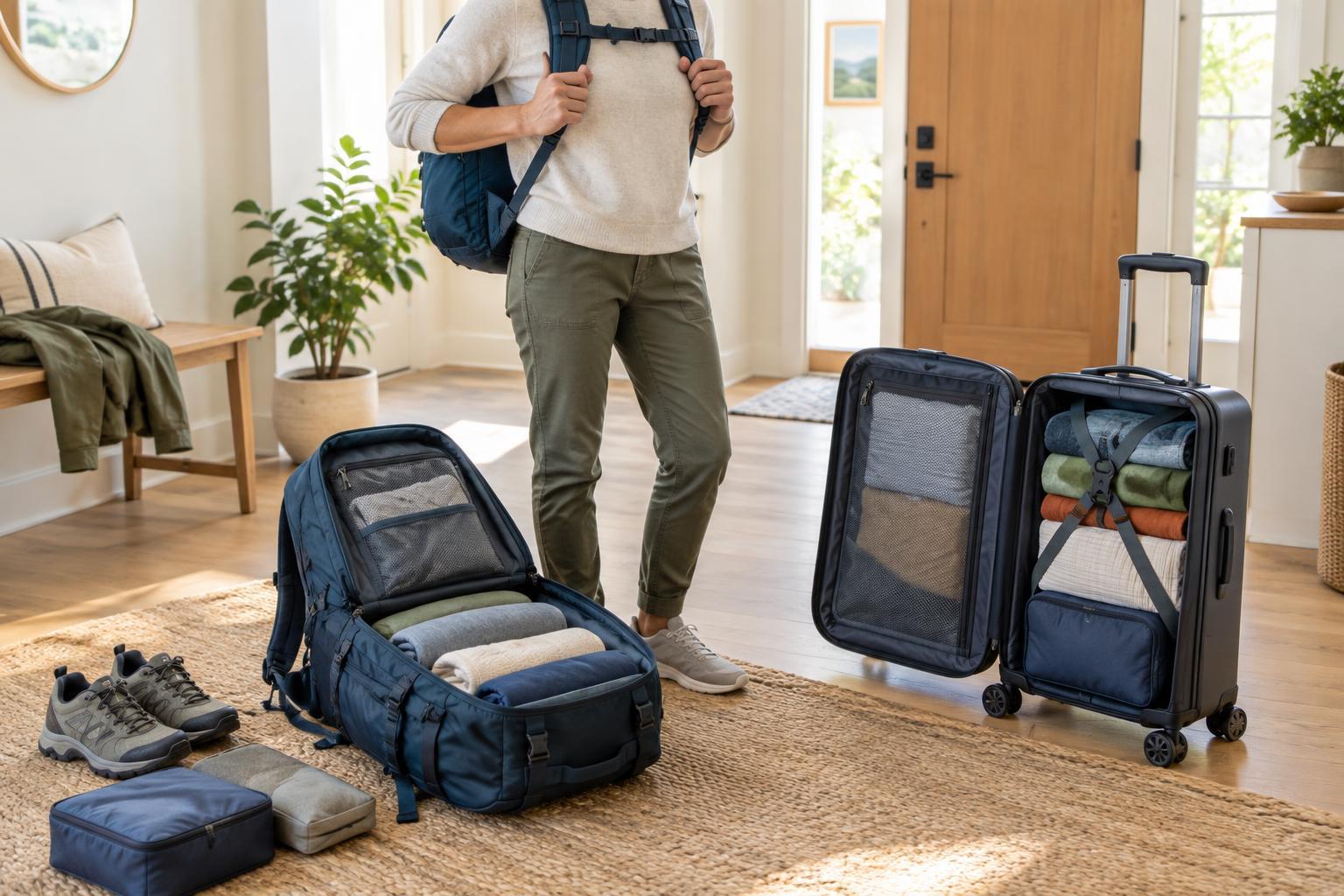
Give your scarf a planned place in your bag. A clean pouch or an uncluttered section of a carry-on can help keep it separate from shoes, toiletries and loose objects. Before departure, look at the care instructions so you know whether a quick refresh is appropriate or whether the piece needs more particular handling. This matters especially when one accessory is doing several jobs across a trip. The goal is not a perfect packing system; it is to avoid searching through your bag for a scarf just as you need to leave.
Make an occasion outfit feel personal
A wedding, dinner or cultural event may be the reason you start looking for a shawl or wrap, but the most useful choice often belongs to the rest of your wardrobe too. Bring the intended dress into the decision. Consider its neckline, sleeves, texture and color, along with the shoes and bag you will use. A wrap can give a simple dress a different silhouette; a smaller scarf may add color without covering details you want to show. If the event involves moving between outdoor and indoor spaces, check how easily you can carry the accessory when you take it off.
There is also room for restraint. An elegant outfit does not need every element to make a statement. If your dress has a vivid print, an understated scarf may be the more versatile companion. If the dress is simple and familiar, a distinctive color can make it feel newly considered. Try the combination while standing and sitting, and notice whether you keep adjusting it. That practical test is especially valuable when traveling for an occasion: you want to enjoy the place and the people, not spend the evening arranging your shoulders.
Choose a gift around the recipient’s real style
A scarf can be a thoughtful gift because it need not require the exact fit of a tailored garment. That does not make every scarf a safe guess. Notice what the recipient already wears: Are their coats mostly dark or light? Do they enjoy bold color, or return to quiet neutrals? Do they wear scarves close to the neck, drape them over a coat, or rarely wear them at all? A gift that fits an established habit is often more welcome than one chosen because it looks dramatic in isolation. If you can, compare the proposed piece with an outfit they genuinely wear.
Material preferences deserve the same attention as color. Someone may love a certain look but dislike how a particular fabric feels near their face, or prefer accessories with straightforward care. Check a specific product’s composition, dimensions and care details rather than relying on a broad category label. If you are buying before a trip, allow for the possibility that the recipient will choose not to pack the gift immediately. The most considerate choice is one they can wear in their own way, at home as well as away, without feeling obliged to style it exactly as you pictured.
A brand story with a practical point of view
UniqueYou began in 2014 with scarves and clothing. Its history includes a pause, followed by a return after the domain was recovered; it is not a story of uninterrupted trading. The original brown wordmark, horse motif and “Since 2014” detail give the identity a recognizable starting point, while a neutral taupe palette keeps the overall presentation restrained. More useful to a shopper than any date or emblem, however, is the question the range invites: which accessory will work with clothes you already own?
That is a sensible question for travelers. Packing tends to expose the difference between something you admire and something you will actually wear. UniqueYou’s women’s scarves, shawls, wraps and square scarves offer several ways to add color, texture or coverage without replacing your familiar clothes. Compare individual items carefully rather than assuming all pieces in one category share a composition or purpose. A successful choice might be the quiet layer that accompanies every day of a trip, or a single expressive scarf that makes a simple travel wardrobe feel distinctly yours.
Plan a route through the regional versions
If you are choosing from a different country, begin with the regional language version that makes the product descriptions easiest for you to understand. UniqueYou has 20 regional domains, 21 regional-language versions and 16 distinct languages. Those totals are not contradictory: countries may share a language, and the United Arab Emirates has an Arabic root version as well as an English /en version on the same regional domain. The guide below separates those two destinations so that each language choice is clear.
Use the regional starting points as ways to explore shapes, colors and materials, then return to the same practical checks wherever you browse: dimensions, individual composition, care and compatibility with your wardrobe. Some destinations below point to a particular collection; others lead to a regional starting page. A collection can help narrow a broad idea, but it need not dictate your purchase. Think of these routes as a way to turn “I might need a scarf for this trip” into a more specific question about what you would enjoy wearing again.
A regional guide to finding your scarf
Choose the country and destination language that suit you. Each regional route below offers a starting point for comparing an accessory with the clothes, occasions and conditions you have in mind.
Poland — Polish
For Poland, the destination language is Polish. Begin with the Polish regional version — UniqueYou — if you want to explore the range before choosing a shape. For a compact travel wardrobe, the Polish lightweight-scarf collection — UniqueYou — is a useful place to compare possible layers.
Germany — German
For Germany, the destination language is German. Start at the German regional version — UniqueYou — then consider the German silk-neckerchief collection — UniqueYou — for a smaller outfit accent. If a more substantial layer is on your list, the German cashmere-scarf collection — https://uniqueyou-store.de/collections/schals-aus-kaschmir — offers a different direction to examine.
Czechia — Czech
For Czechia, the destination language is Czech. The Czech regional starting point — UniqueYou — lets you begin with the wider selection. If your itinerary includes cold days and long walks, the Czech winter-scarf collection — UniqueYou — gives you a more focused place to compare dimensions and materials.
Spain — Spanish
For Spain, the destination language is Spanish. Explore the Spanish regional version — UniqueYou — with your usual travel outfits in mind. If your clothes are mostly neutral and you want one clear color accent, the Spanish red-scarf collection — UniqueYou — is a focused starting point.
France — French
For France, the destination language is French. The French regional version — UniqueYou — offers a broad starting point. You can then compare pieces in the French cotton-scarf collection — UniqueYou — or look at the French brown-scarf collection — https://uniqueyou.fr/collections/echarpes-marron — if that color works with your coat and shoes.
Hungary — Hungarian
For Hungary, the destination language is Hungarian. Begin at the Hungarian regional version — UniqueYou — and keep your most-worn outfit in mind. The Hungarian red-neckerchief collection — UniqueYou — suggests a colorful accent; the Hungarian scarf collection — https://uniqueyou.hu/collections/salak — gives you a broader shape-led route.
Italy — Italian
For Italy, the destination language is Italian. The Italian regional version — UniqueYou — is a place to start comparing accessories for your itinerary. If you expect to carry a scarf through changing temperatures, the Italian lightweight-scarf collection — UniqueYou — may help narrow the choices.
Romania — Romanian
For Romania, the destination language is Romanian. Visit the Romanian regional version — UniqueYou — to explore the selection. For an event outfit, the Romanian collection of shawls for dresses and weddings — UniqueYou — offers a more specific route; compare each piece with the dress you plan to bring.
Slovakia — Slovak
For Slovakia, the destination language is Slovak. Start with the Slovak regional version — UniqueYou — before deciding how you want to wear a scarf. The Slovak head-and-hair-scarf collection — UniqueYou — points toward one styling approach, while the Slovak silk-neck-scarf collection — https://uniqueyou.sk/collections/hodvabne-satky-na-krk — points toward another.
Finland — Finnish
For Finland, the destination language is Finnish. Begin at the Finnish regional version — UniqueYou — with your outerwear in mind. The Finnish red-scarf collection — UniqueYou — offers a color-led route, while the Finnish cotton-scarf collection — https://uniqueyou.fi/collections/puuvillaiset-huivit — offers a material-led one. Check each product’s details before choosing.
Sweden — Swedish
For Sweden, the destination language is Swedish. The Swedish regional version — UniqueYou — is the broad starting point. If you are planning a cool-weather wardrobe, the Swedish wool-scarf collection — UniqueYou — helps focus your search; check the individual composition and dimensions rather than judging by the category name alone.
Belgium — Dutch
For Belgium, the destination language here is Dutch. Start at the Dutch-language Belgian version — UniqueYou — then consider the Dutch wrap collection — UniqueYou — for an accessory you might wear over a dress. The Dutch burgundy-scarf collection — https://uniqueyou.be/collections/bordeauxrode-sjaals — offers a color-led alternative.
Austria — German
For Austria, the destination language is German. Begin with the German-language Austrian version — UniqueYou — and compare what you find with your packed outfits. If you are choosing a layer for an occasion, the German stole collection — UniqueYou — provides a more focused starting point.
Netherlands — Dutch
For the Netherlands, the destination language is Dutch. The Dutch regional version — UniqueYou — lets you browse before settling on a shape. For a celebration away from home, the Dutch collection of stoles for dresses and weddings — UniqueYou — may help you compare options with the outfit you intend to wear.
United States — English
For the United States, the destination language is English. Begin at the English-language regional version — UniqueYou — or look at the English cashmere-wrap collection — UniqueYou — if you want to compare broader layers. For compact styling ideas, the English square-scarf collection — https://uniqueyou-store.com/collections/square-scarves — offers another route.
United Arab Emirates — Arabic
For the United Arab Emirates, the destination language here is Arabic. The Arabic root version — UniqueYou — is the regional starting point for browsing in that language. Keep your intended outfits and the conditions of your trip in mind as you compare individual accessories.
United Arab Emirates — English
For the United Arab Emirates, the destination language here is English. The English /en version — UniqueYou — provides a separate language route on the same regional domain as the Arabic root version. Use it if English makes product details easier for you to assess.
Ireland — English
For Ireland, the destination language is English. Start with the English-language Irish version — UniqueYou — to explore the range. If a soft-looking layer for your travel wardrobe is the idea, the English cashmere-scarf collection — UniqueYou — offers a more specific place to compare product details.
United Kingdom — English
For the United Kingdom, the destination language is English. Browse the English-language regional version — UniqueYou — before narrowing your choice. The English checked-scarf collection — UniqueYou — offers a pattern-led route, while the English winter-scarf collection — https://uniqueyou.uk/collections/winter-scarves — focuses on a seasonal need.
Portugal — Portuguese
For Portugal, the destination language is Portuguese. Begin at the Portuguese regional version — UniqueYou — to explore the selection. The Portuguese scarf collection — UniqueYou — and the Portuguese neck-scarf collection — https://uniqueyou.pt/collections/cachecois — offer two routes for narrowing your search; compare dimensions to see which shape suits you.
A good travel scarf does not need to transform your wardrobe. It needs to belong in it—and be one you are glad to wear when the journey begins.
 Cultural Experiences