Start with the trip you want, not the mountain range
Snow-covered peaks may be the image that starts your plans, but they are only one part of a mountain trip. Do you want to hike most days, take scenic rides with short walks, visit towns and markets, or spend quiet afternoons beside a lake? Your answer will narrow the choice faster than a list of famous summits.
The Alps, Andes and Rockies are enormous regions, each with varied climates, costs and travel conditions. Think of them as starting points rather than ready-made itineraries. Pick a small area within one range, then check what you can realistically reach in the time you have. A week based in one valley or near one park can feel more rewarding than a rushed tour of distant highlights.
Choose the Alps for connected towns and flexible mountain days
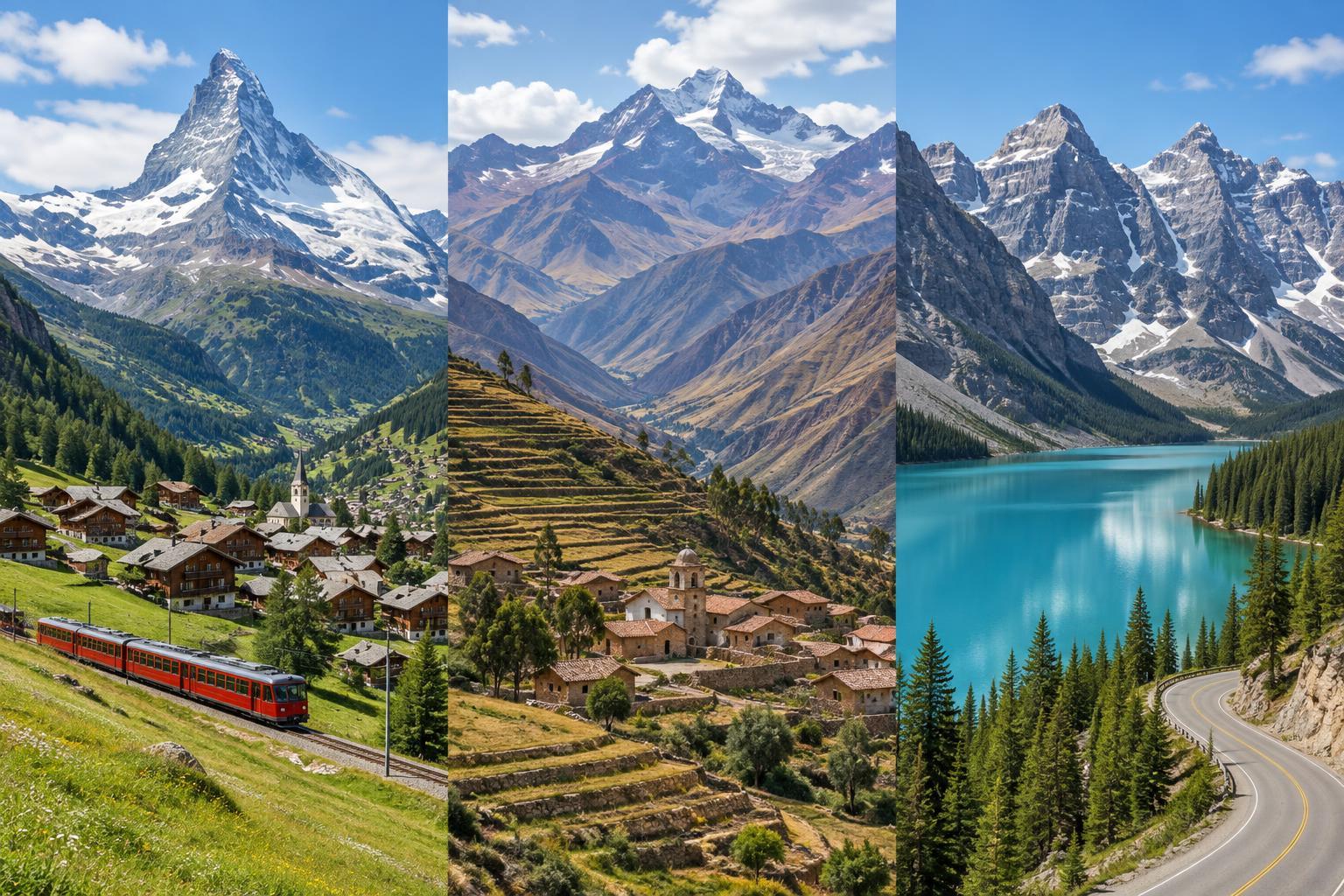
The Alps suit travelers who want dramatic scenery without making every outing a major expedition. In many Alpine areas, villages, marked walking routes and mountain transport make it possible to pair a demanding hike with an easier day. You might spend a morning above the tree line and an afternoon exploring a town, eating a long lunch or relaxing by a lake.
They can also work well for a trip without a car, particularly if you choose a base with useful rail or bus connections. That convenience is not universal: schedules, trail access and operating seasons vary by location. Popular resort areas and mountain lifts can add substantially to the cost, so compare several bases rather than assuming the best-known village is your only option. The Alps are a strong match if you value choice each day and prefer to spend less time managing transport.
Choose the Andes for scale, variety and cultural depth
The Andes run through multiple countries, so an Andean trip could mean high plateaus, steep valleys, glaciated peaks or landscapes that feel almost desert-like. That variety is the attraction, but it also makes careful planning essential. Choose a specific destination before comparing routes and prices; conditions in one part of the Andes will tell you little about another.
Many travelers are drawn by the chance to combine mountain scenery with local food, markets, historic places and living cultural traditions. Build time for those experiences rather than treating towns only as stops between viewpoints. Also pay attention to elevation: some destinations sit high even before a walk begins. Give your itinerary breathing room, learn about the conditions on your chosen route and avoid assuming that a short distance on a map means an easy travel day. The Andes may be your best fit if you welcome a trip with contrasts and are comfortable doing more advance research.
Choose the Rockies for road trips and open-air exploration
The Rockies appeal to travelers who picture wide valleys, forest trails, lakes and long views from the road. Depending on the area you choose, a car can make it easier to link hikes, viewpoints and overnight stops. This is a good region for building a trip around one or two bases, with day walks that match your energy and a scenic drive when you want a break from hiking.
Road-trip freedom comes with responsibilities. Distances can be longer than they look, and services may be limited between towns or near remote trailheads. Check access rules, accommodation options and local guidance before committing to a route. Wildlife is part of the experience in some areas, so follow posted advice and observe animals from a safe distance. The Rockies are a natural choice if you enjoy planning your own pace and want the journey between stops to be part of the trip.
Make the final choice with a simple planning test
Sketch the same trip three ways: choose one realistic base in each region, list three activities you would genuinely enjoy, and note how you would get between your arrival point, accommodation and trailheads. Then compare the full trip, not just the flight. Include local transport or a rental car, lodging, food, activity costs and a little room for changes in weather.
Finally, match your dates to your preferred activities. Conditions can differ greatly between neighboring valleys, and the Andes span different hemispheres from much of the Alps and Rockies. Check the usual hiking or snow-sport season for the exact place you choose before booking. If one option leaves you with comfortable travel days, affordable backup plans and experiences you are excited about beyond a single photo, it is probably the right mountain trip for you.