Plan for transitions, not just the forecast
A day of travel can begin on a cold platform, continue through a warm museum and end at an outdoor dinner. Packing a separate outfit for each setting takes up space; layering lets you adjust the same outfit as conditions change. The aim is to carry a few pieces that work together, feel comfortable on their own and are easy to put on or take off.
Before packing, think through your likely days rather than looking only at the expected high temperature. Will you be outside at dawn, sitting in air-conditioned transport, walking uphill or spending evenings near the water? Wind, rain and activity level can affect comfort as much as the number on a forecast. These details help you decide which layers need a place in your bag.
Build a three-part system
Start with a base layer: the shirt or top closest to your skin. Choose one you would be happy wearing by itself when the day warms up. A breathable, comfortable fabric matters more than a specialized label. Quick-drying tops can be useful if you expect to hand-wash clothes or get caught in light rain; familiar cotton may be fine for a relaxed day in mild, dry conditions.
The middle layer adds warmth without committing you to a heavy coat. A cardigan, fleece or light sweater can cover a range of cool conditions, depending on its thickness and how warm you tend to run. Look for something you can take off indoors and carry comfortably. If you are packing one middle layer, a simple color that works with several outfits gives it more uses.
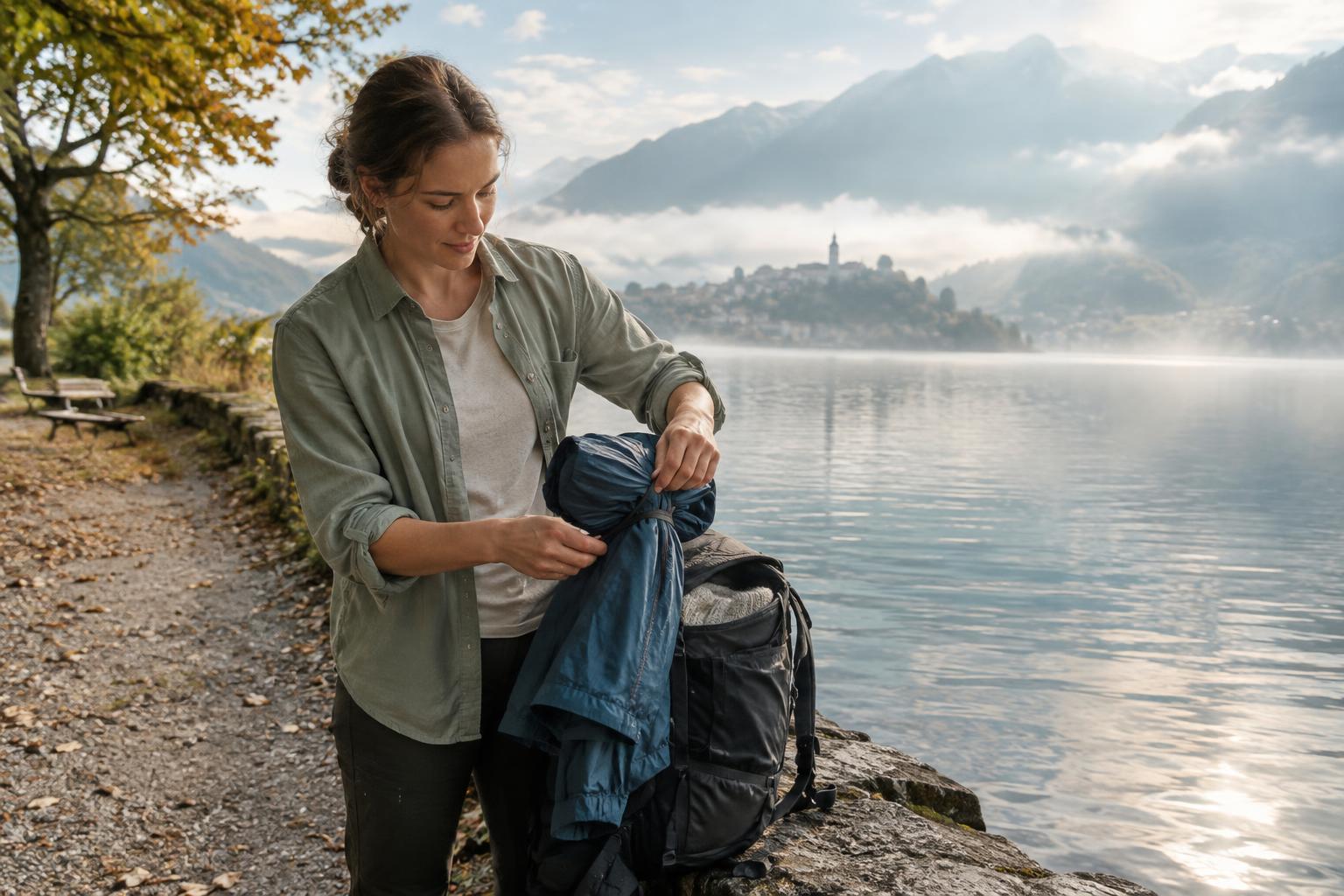
The outer layer handles the conditions your other clothes cannot, especially wind or rain. A lightweight shell may be more versatile than a bulky jacket when temperatures vary but severe cold is unlikely. For colder trips, you may need a warmer coat instead. Check that the outer layer fits over your chosen sweater and that you can move your arms freely; a system that works only when every piece is worn separately is not much help.
Choose pieces that cooperate
Layering works best when each piece has a distinct job. A thin long-sleeved top can add modest warmth under a sweater or serve as a sun-covering option on its own. A button-up shirt can be worn open over a T-shirt, then buttoned when the air cools. A scarf or compact hat may make a breezy wait more comfortable without taking the space of another jacket.
Pay attention to fit and texture as you assemble outfits. Tight sleeves can bunch under a sweater, while an oversized middle layer may be awkward beneath a fitted shell. Try the full combination at home, including the bag you plan to carry. If straps make a coat uncomfortable or a fabric feels scratchy after a few minutes, it is better to find out before departure.
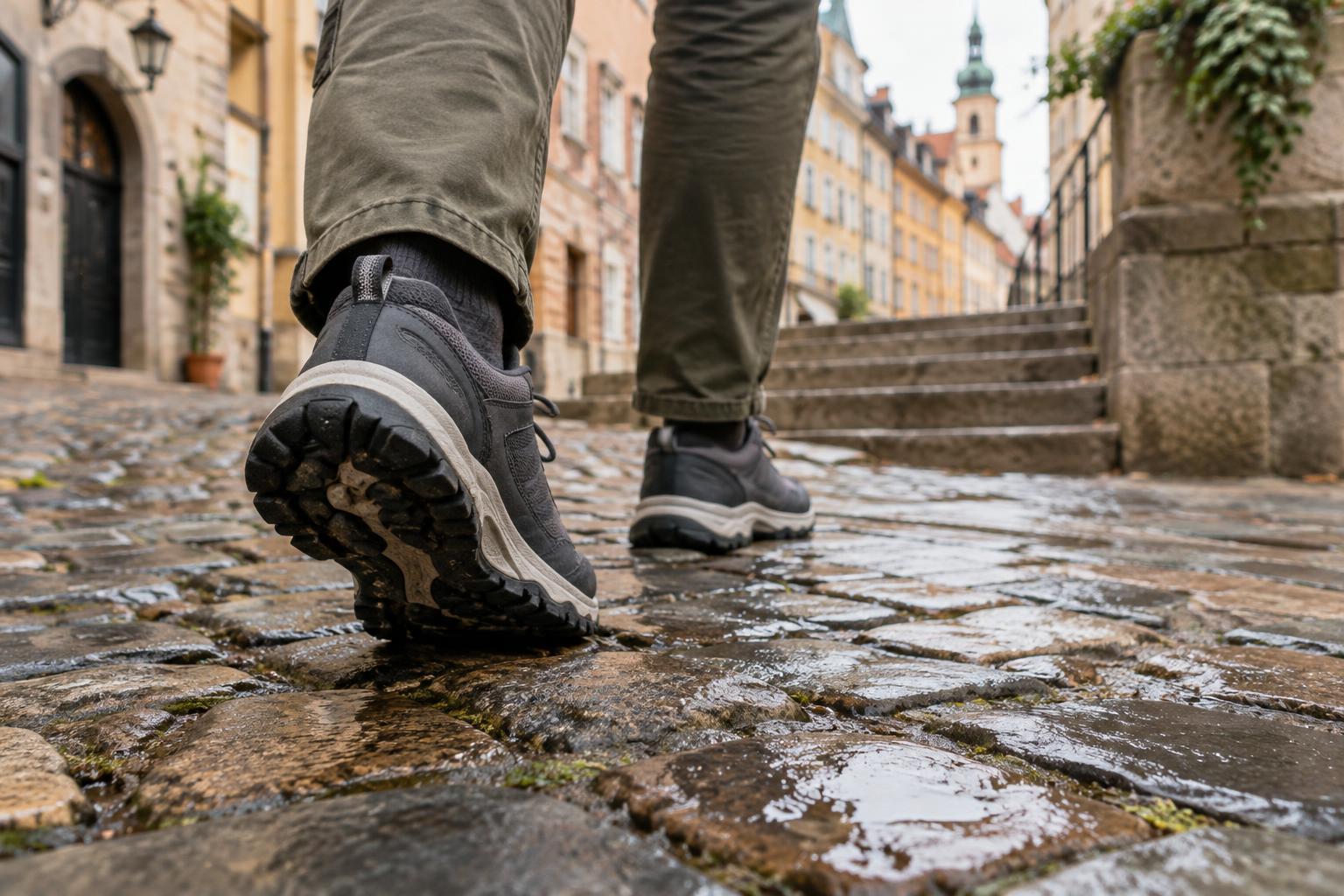
For bottoms, versatility often matters more than building a complex stack. Choose trousers or other bottoms suited to most of your planned activities, then consider a thin layer underneath only if cold conditions make it useful. Comfortable socks and shoes are part of the temperature plan too: changing into dry socks after a wet walk may do more for your comfort than adding another top.
Make layers easy to manage during the day
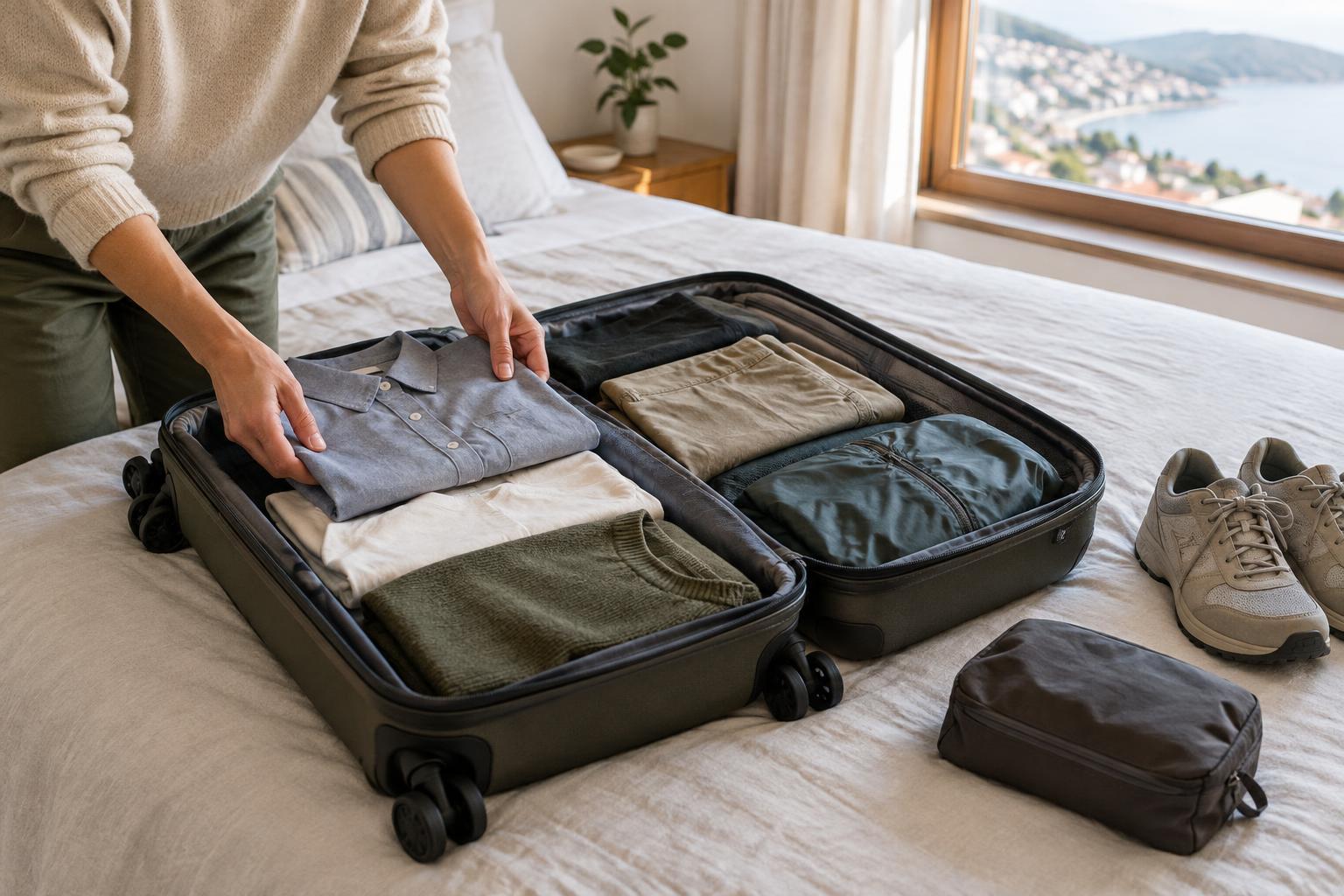
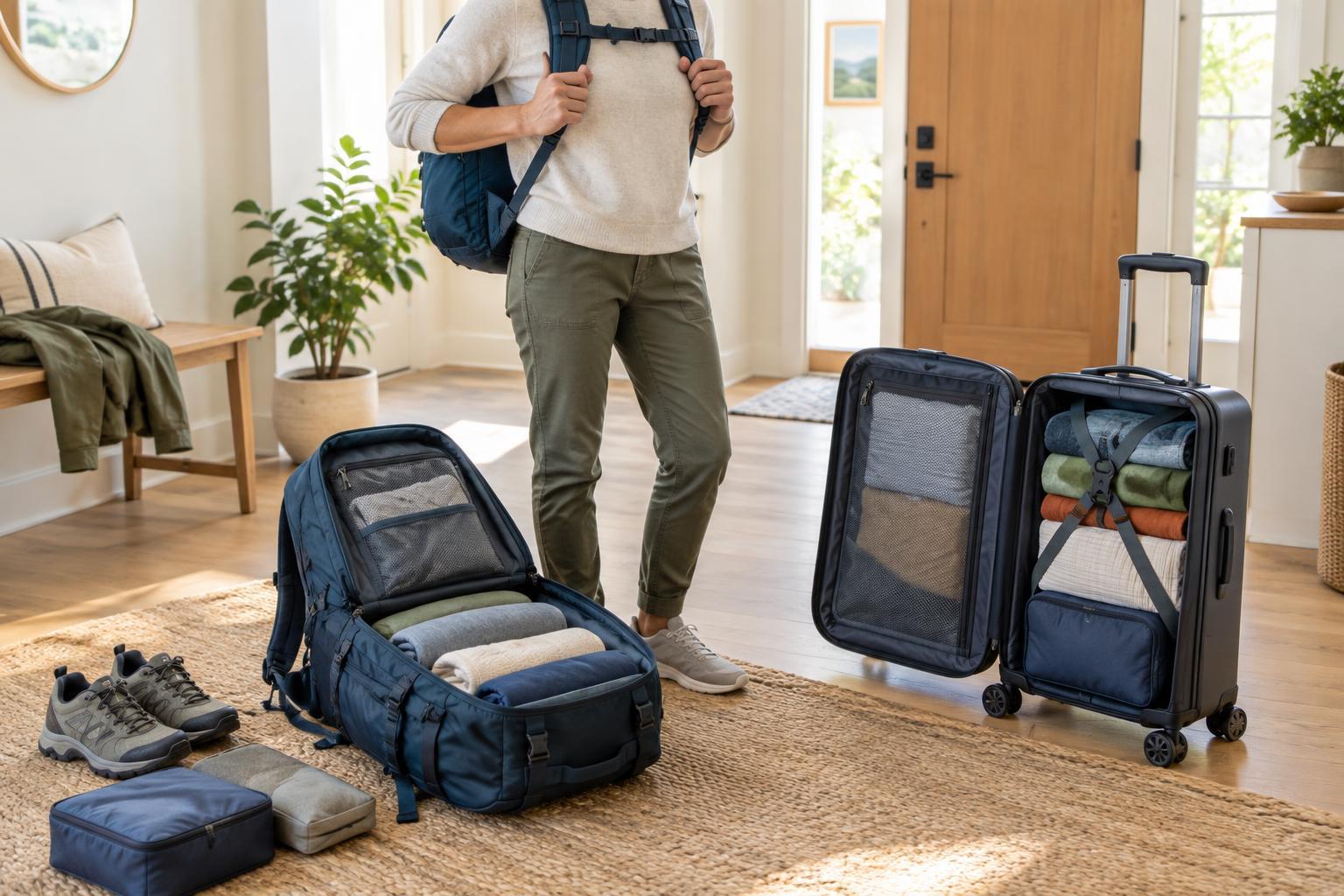
Pack the layer you are most likely to remove where you can reach it. On a train or plane, keep a sweater near the top of your personal item rather than deep in a suitcase. For a sightseeing day, leave enough room in your day bag for the jacket you might take off at midday. A layer is less useful if carrying it becomes a nuisance.
Adjust early, before you become uncomfortably hot or cold. You might remove your sweater before a long uphill walk, then put it back on when you stop moving. In damp weather, an outer shell can protect your warmer layer from getting wet; once indoors, taking the shell off may help you avoid overheating. These small changes are easier than trying to find one outfit that feels perfect all day.
Pack for your itinerary, then edit
Lay out a few complete outfits using the same middle and outer layers. If a piece works with only one outfit, consider whether the activity that requires it is important enough to justify the space. You do not need to buy an entirely new wardrobe: clothes you already wear comfortably are a good starting point, and laundry plans can reduce the number of base layers you bring.
Finally, test the packed bag and the clothes you expect to wear in transit. Make sure you can carry your layers when you are not wearing them, and leave a little flexibility for a forecast change. A practical layering wardrobe is not the one with the most options; it is the one that lets you move through the trip comfortably without thinking about your clothes at every stop.