Decide whether the photo needs a person in it
A lively market or festival may catch your eye because of the people in it. Before raising your camera, pause and consider what you want the photograph to show. If the goal is to remember a place, a wider view, a sign, a doorway or an interesting detail might tell the story without making one person its subject. If a particular person is central to the image, asking first is usually the more considerate choice.
Pay particular attention when someone is working, resting, eating, praying or dealing with a difficult moment. A person who cannot easily step away from a stall or workplace may find it hard to refuse. Public visibility is not a reliable measure of comfort, and customs around photography vary between places and individuals. Where photography is restricted, follow the posted rules or ask the people responsible for the space before taking out your camera.
Ask clearly, before you take the picture
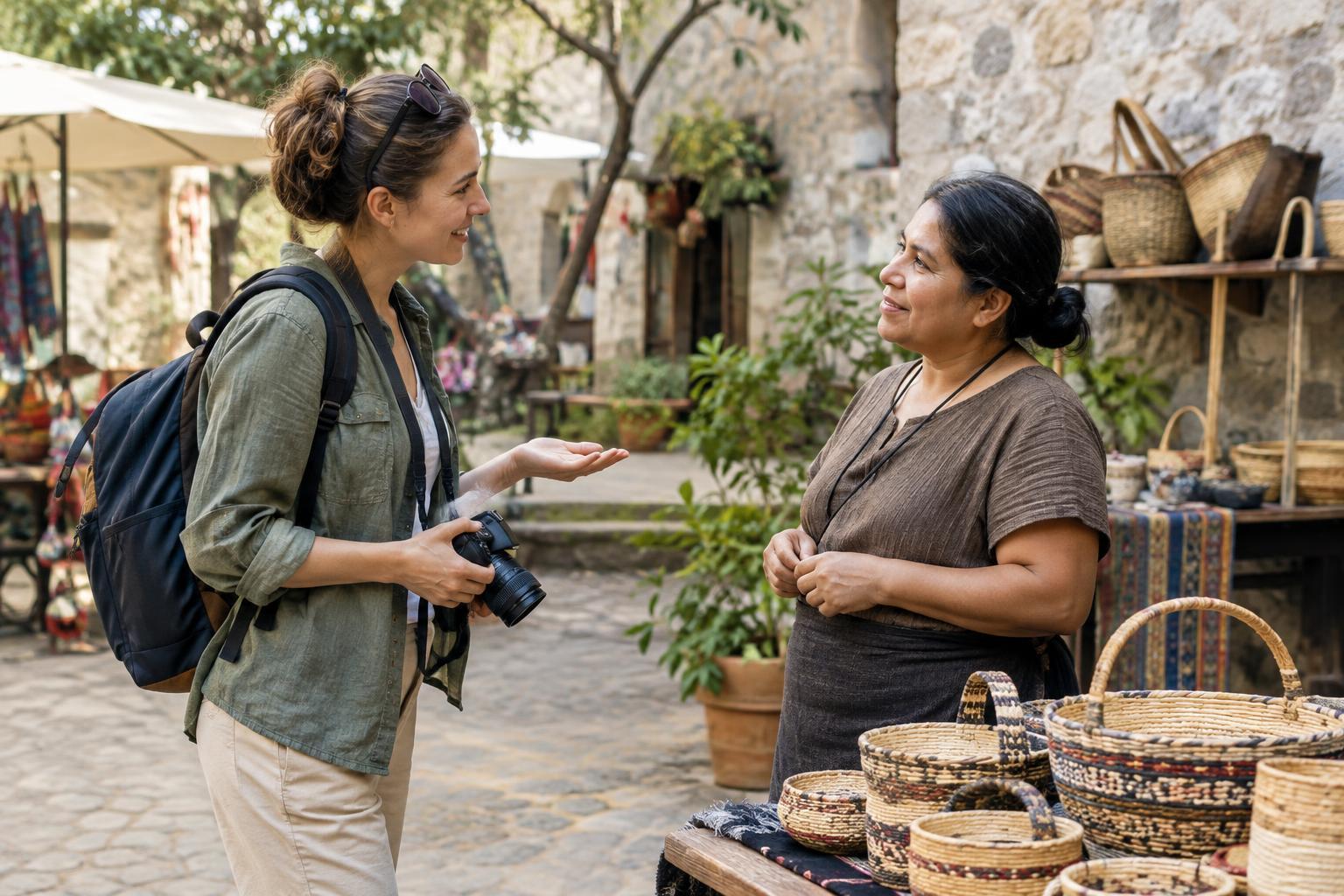
Approach from where the person can see you, keep a comfortable distance and make a brief request. You can point to your camera and ask, “May I take your photo?” A few words in the local language may help, but do not rely on a smile or a nod if you are unsure what it means. Put the camera down while you wait for an answer, rather than composing the shot as though permission is inevitable.
Explain what you have in mind if it is not obvious. A request for a quick portrait is different from a photograph of someone demonstrating a craft, and both are different from recording video. If you hope to post the image online, say so before taking it. Consent to one photograph does not necessarily mean consent to filming, repeated shots or public sharing. If the conversation is too difficult to make your intentions clear, choose another subject.
Make it easy to say no
A refusal does not require an explanation. Thank the person, lower your camera and move on without trying to persuade them. Hesitation, turning away or covering a face are also good reasons to stop. Avoid taking a photograph from farther away after being refused; changing your position does not change the answer.
Be especially careful around children. Ask a parent or guardian where appropriate, and consider whether the photograph is necessary even if an adult agrees. Do not ask a child to pose alone or publish an identifiable image simply because the encounter felt friendly. The same restraint is useful whenever someone may feel pressured to agree because you are a customer, a guest or part of a larger group.
Keep the encounter comfortable
If someone agrees, work quickly and follow any limits they set. They may be happy to be photographed with friends but not alone, or may prefer that you avoid their workplace sign. Show them the image if they want to see it. If they ask you to delete it, doing so is a straightforward way to respect the agreement you made.
Some people may request payment for a portrait, particularly in settings where posing for visitors is part of their work. Decide whether you are comfortable with that arrangement before taking the picture, and settle any expectations plainly. A purchase or tip is not a substitute for permission. Likewise, an invitation to watch an activity is not automatically an invitation to photograph everyone involved.
Think again before you share
After the trip, look at images of people with the same care you used when taking them. Ask whether a caption gives useful context or turns someone into a stereotype. Consider whether posting an identifiable face, location or workplace could create an unwanted connection, even if the person seemed comfortable at the time. When in doubt, keep the photograph private or choose one that does not identify the person.
You can also make your travel photographs more personal without collecting portraits of strangers. Photograph the objects, colors and shared spaces that help you recall an encounter, then write down what you learned in your own notes. The best souvenir of a conversation may be the conversation itself, not a picture you needed someone to agree to.