Build your packing list around the time between washes
Packing for a trip with laundry stops does not mean packing as little as possible. It means carrying enough clean clothes to reach the next wash comfortably. Start with the longest stretch you expect to go without doing laundry, then add a small buffer in case a machine is unavailable, the weather slows drying, or your plans change.
For example, if you expect to wash every five days, you might pack enough everyday outfits for five days plus one spare set. The right number depends on your activities. Hot walks, workouts, and muddy outings may call for more changes than museum days. Underwear and socks are often worth packing for a little longer than your planned wash interval because they take up relatively little space.
Before finalizing the list, check where laundry fits into the itinerary. A longer stay in one place may offer an easier washing opportunity than a night between train rides. Accommodation listings can help, but confirm details that matter to you, such as whether a washer is available, whether it requires payment, and whether you will have somewhere to dry clothes.
Choose clothes that can be worn in more than one combination
A small wardrobe works best when most pieces can be worn together. Choose a few tops and bottoms that suit the expected weather and activities, then test the combinations before you leave. A layer that works over several outfits is usually more useful than one reserved for a single look. If your plans include a dressier meal or event, consider whether an everyday piece can be styled for it rather than packing a separate outfit.
Think about how each item will be washed and dried, not just how small it folds. Check care labels, especially for garments that need special handling. Lightweight pieces may be convenient for sink washing, but drying time varies with fabric, humidity, ventilation, and room temperature. Try washing a key item at home and see how long it takes to dry in conditions similar to those you expect.
Shoes deserve their own decision. Wear the pair you will use most, and pack another only if it fills a clear need, such as a different activity or setting. Shoes are difficult to wash and dry mid-trip, so comfortable, suitable footwear can do more for a streamlined bag than removing one extra shirt.
Match your laundry method to your travel style
Laundry along the way can mean using an accommodation washer, visiting a laundromat, paying for a wash service, or hand-washing a few small items. Each method changes what you need to pack. A machine is convenient for a full load, but it may require detergent and time to wait for the cycle. A wash service can save hands-on effort, though you may need to be without those clothes until pickup. Hand-washing is useful for small items but less practical for a whole wardrobe.
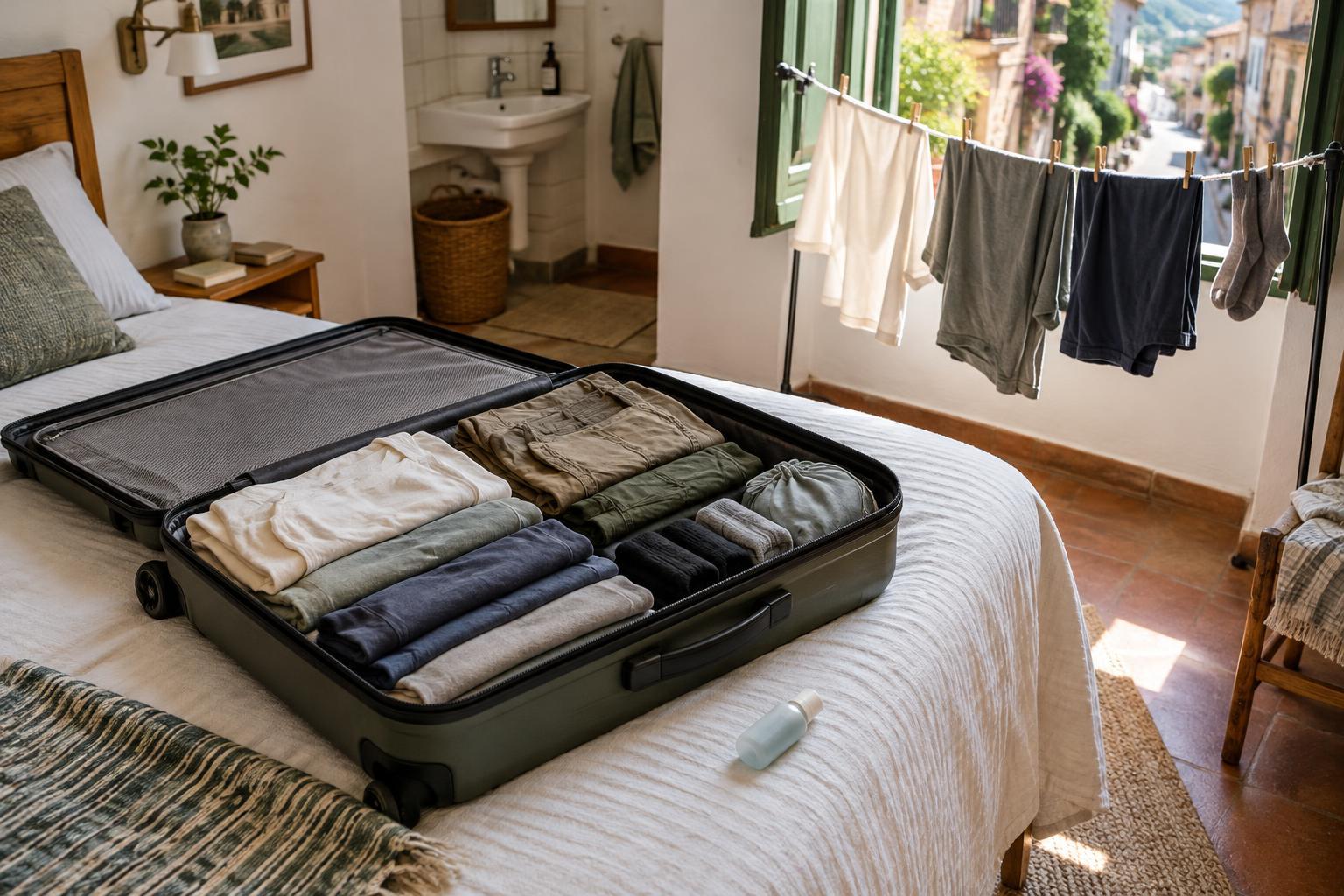
Keep a modest laundry kit suited to your plan: a compact bag for dirty clothes, a small amount of detergent in packaging that meets your transport rules, and perhaps a travel clothesline if you expect to air-dry items and have a suitable place to hang them. Do not count on being able to attach a line everywhere. A sealable bag can hold a damp item temporarily, but take it out to dry as soon as you can.
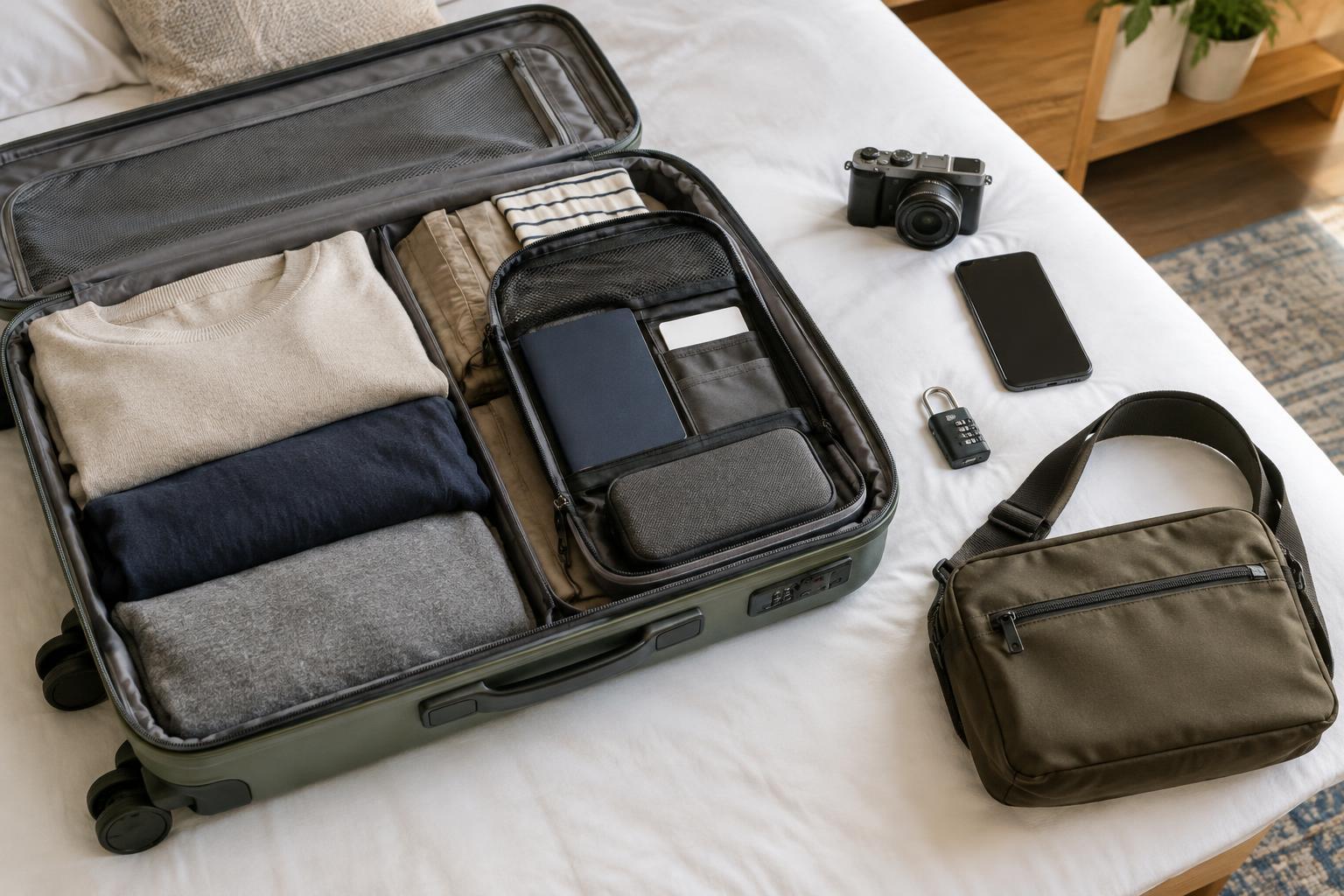
Separate dirty clothes from clean ones in a way you can maintain throughout the trip. A simple laundry bag is often enough; packing cubes can help if you prefer to keep items sorted. Leave some space in the bag rather than packing it to capacity, since clean, dry clothes may not fold as neatly after the first wash.
Give laundry a place in the itinerary
A laundry plan is only useful if there is time to carry it out. Choose a wash day before you run out of essentials, ideally during a stay long enough to handle delays. If you will air-dry clothes, wash them early in that stay rather than on the evening before departure. Avoid washing everything at once if you still need something comfortable to wear.
On travel days, manage damp clothes carefully. Packing an item before it is fully dry can leave it unpleasant to wear later, so allow more drying time than you think you need. If an item remains damp, look for another safe place to hang it when you arrive, or use an available dryer if its care label permits. Be considerate of accommodation rules and shared spaces.
Finally, treat the plan as adjustable. If you find that a particular top rarely gets worn, you will know it can stay home next time. If you repeatedly run short of socks, add a pair on the next trip. The aim is not a perfect packing formula; it is a bag that feels manageable while leaving you enough clean, appropriate clothes to enjoy the journey.