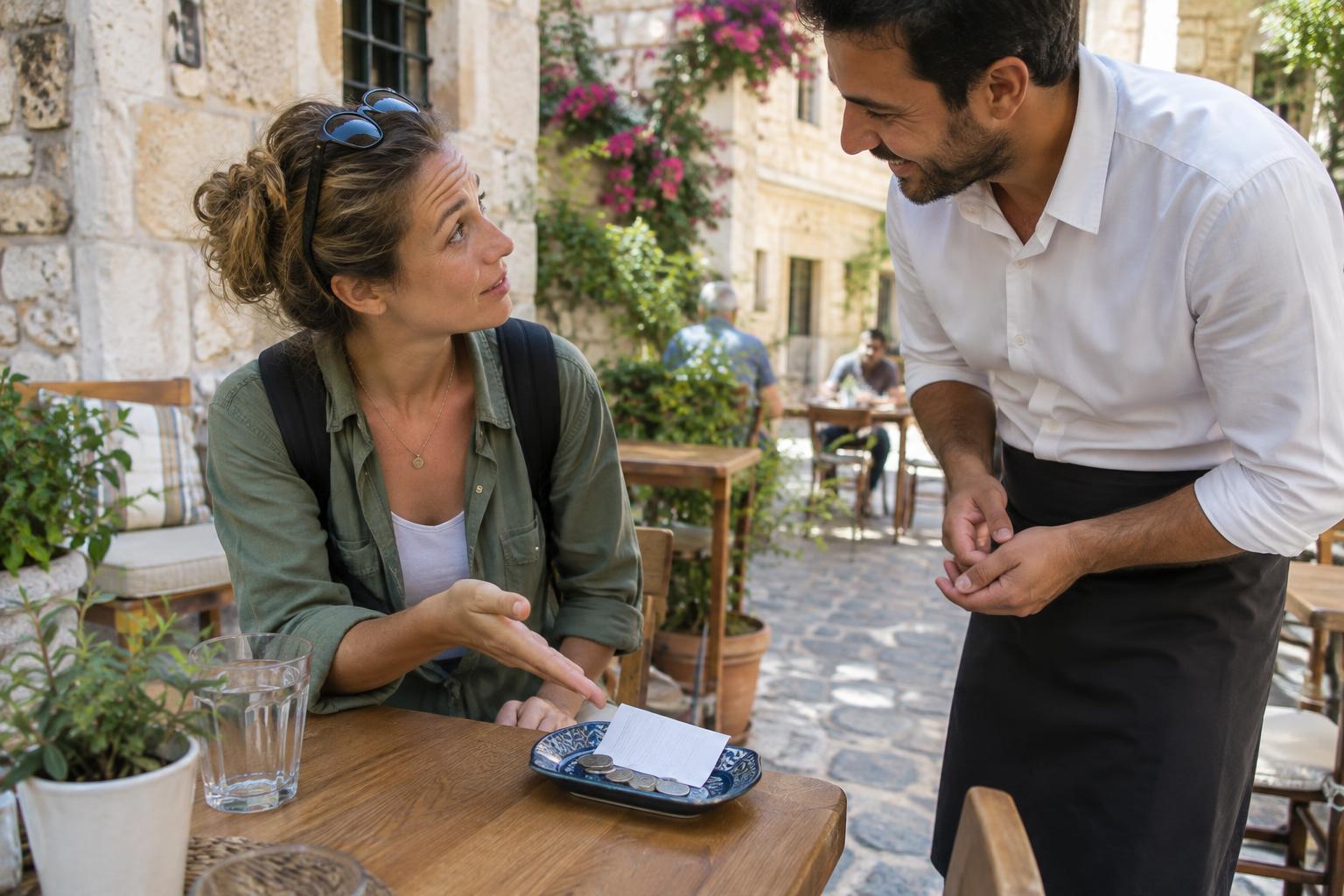
Why familiar tipping habits may not travel well
A tip can mean different things in different places. It may be a routine part of paying for a meal, a modest thank-you for extra help or something a worker would not expect. Customs can also vary within one destination: a restaurant, hotel, guided tour and taxi ride may each call for a different approach. Carrying a single rule from home into every interaction risks both awkwardness and unnecessary expense.
Before deciding whether to tip, separate three questions: Is it customary for this service? Has a service charge already been included? If a tip is welcome, how is it usually given? The answers may differ by neighborhood, type of business and level of service. Treat any general guide as a starting point, not a promise that every person you meet will expect the same thing.
Check expectations before you need to pay
Add tipping to your pre-trip planning alongside transport and payment methods. Look for guidance specific to the destination and the services you expect to use, such as sit-down meals, food delivery, hotel assistance, private drivers or group tours. If information conflicts, ask your accommodation or a local host how people commonly handle a particular situation. A specific question is more useful than asking, “Do people tip here?”
Keep a short note on your phone rather than trying to memorize a long list of percentages. Record whether a tip is generally expected, sometimes offered or usually unnecessary, and note any situations where cash is helpful. Recheck your assumptions when you move to another region or book a different kind of service. Even within one trip, a casual café and a full-service restaurant may work differently.
Read the bill and payment screen carefully
A line labeled “service,” “service charge” or something similar deserves attention before you add anything. It may already cover what you intended to give, but labels do not always explain who receives the money or whether an additional tip is customary. If it matters to your decision, ask the staff politely. A brief question is better than assuming that a suggested amount on a card terminal reflects a local obligation.
Payment screens can also present tip options even where tipping is uncommon for that kind of purchase. You can pause, review the total and choose deliberately. Likewise, leaving coins on a table is not automatically the clearest or most welcome way to express thanks. In some settings, handing a tip directly to the person who helped you, adding it to the card payment or offering no extra payment may be more appropriate.
Match the gesture to the service
Think about what happened rather than applying the same amount everywhere. A scheduled tour may have different expectations from a free-to-join walk; a porter carrying bags may be treated differently from a receptionist answering a quick question. For group activities, check whether gratuities are included and whether a tip for the guide is separate from one for a driver or crew. These distinctions help you plan without turning every exchange into a calculation.
When a tip is appropriate, make it easy to receive. Carry a few suitable small notes or coins if cash is commonly used, and avoid giving a large bill that forces someone to find change. If you cannot tip in the expected form, a sincere thank-you is still worthwhile. Do not assume that gifts, foreign currency or leftover coins will be convenient substitutes for local money.
When you are unsure, lead with courtesy
It is fine to ask a straightforward question: “Is a tip customary for this service?” or “Is service included?” Ask quietly and without making the person receiving the payment defend the custom. If you are traveling with others, settle shared tipping decisions before the bill arrives when possible. That gives everyone time to understand the plan and avoids an awkward discussion in front of staff.
Tipping is only one way to show appreciation. Being punctual for a tour, respecting a venue’s rules, speaking kindly and thanking people for their work matter too. If you discover that you handled a payment differently from the local norm, adjust for the next interaction rather than dwelling on it. The aim is not to perform a perfect formula; it is to pay attention to the people and practices around you.