Start with the problem you need to solve
A crowded suitcase can mean two different things. Perhaps everything fits, but finding a clean shirt requires unpacking the whole bag. Or perhaps a bulky jacket and several sweaters leave no room for anything else. Packing cubes are especially useful for the first problem: they group items into manageable sections. Compression bags address the second by pressing air out of soft contents. Neither tool changes how much your belongings weigh.
The distinction matters most when you have limited luggage space. Compressing clothes may help close a bag, but it can also make it easier to pack more than you intended. If you are traveling with a weight limit, check the packed bag rather than judging it by how neatly it closes. If the main frustration is a messy suitcase, start with ordinary packing cubes instead of trying to squeeze every item smaller.
What packing cubes do well
Packing cubes are zippered fabric containers that let you assign a place to different kinds of clothing. You might use one for tops, one for underwear and socks, and one for clothes needed later in the trip. When you arrive, you can lift out a cube instead of sorting through loose layers. They are particularly handy when you change accommodations often or share a suitcase.
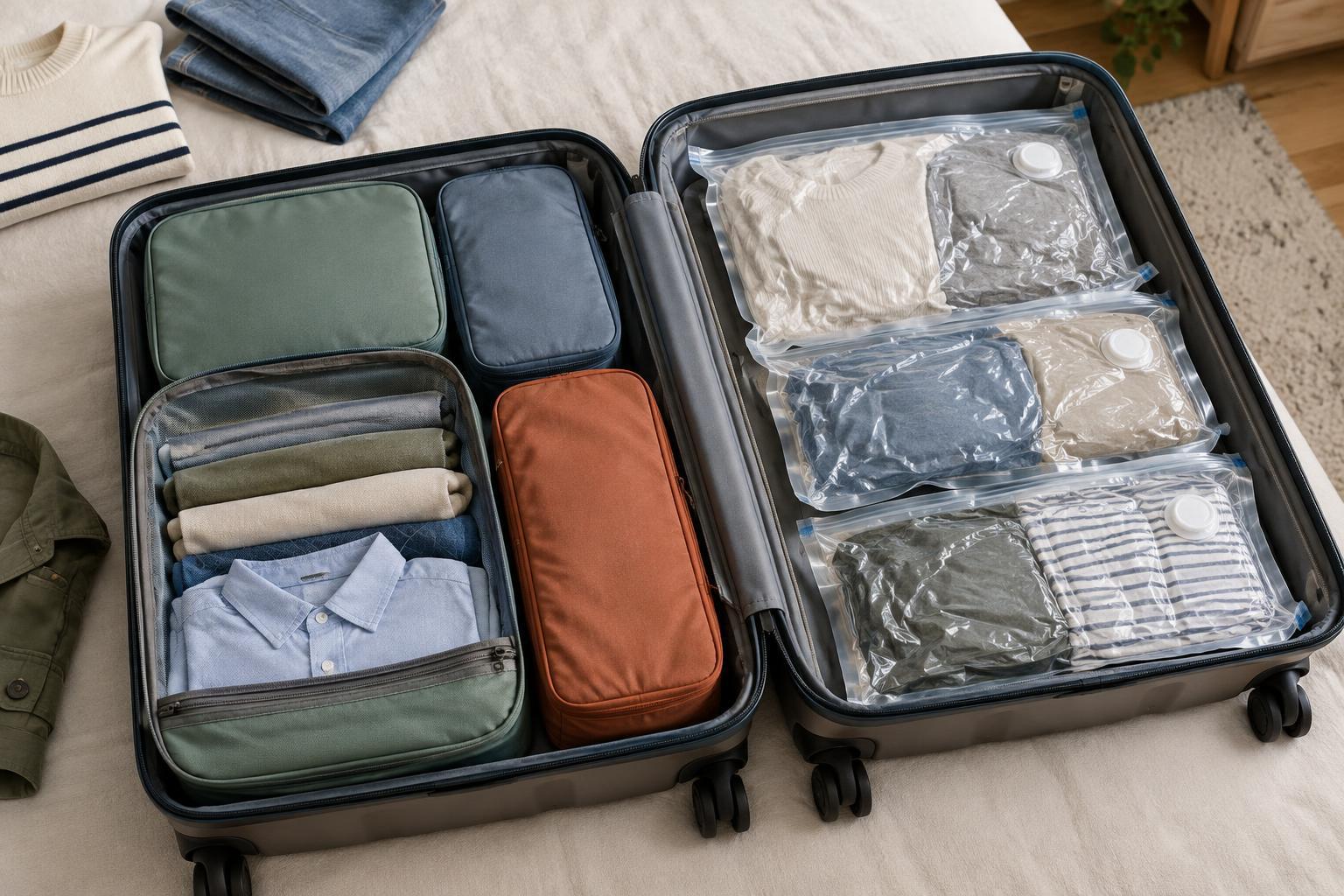
Standard cubes provide structure, not a dramatic reduction in volume. They can still help you use space efficiently by keeping rolled or folded clothes together. Compression packing cubes add a second zipper that draws the cube's sides closer once it is filled. That can make a modest difference with soft clothing, though an overfilled cube may become an awkward shape or put strain on its zipper. For easy access, leave enough room to open and close each cube without forcing it.
Where compression bags earn their space
Compression bags usually hold clothing inside a flexible plastic pouch. Depending on the design, you remove air by rolling the bag or using a vacuum. They are most useful for lofty items such as fleece, spare bedding, or a bulky layer that takes up space but can tolerate being squashed. A roll-up bag can be practical away from home because it does not require a vacuum to repack.
The trade-off is access. To retrieve one item, you may have to open the sealed bag, disturb its contents, and compress it again. Clothes packed tightly can also emerge creased, especially if they stay compressed for much of the trip. Keep damp or dirty items out of a sealed bag unless you are using it briefly to contain them on the way to laundry; trapped moisture is a poor companion for clean clothes. Before relying on a bag, test whether you can refill and close it without help.
Match the tool to your trip
For a short city break or a trip with several stops, packing cubes are usually the simpler choice. Separate everyday outfits from sleepwear or accessories, and you can find what you need without repacking each morning. For a cold-weather trip with one or two bulky spare layers, a compression bag may free useful room. Put frequently worn clothes somewhere easier to reach, and compress only the items you will not need until later.
A mixed setup often works better than choosing one system for everything. Try two or three cubes for daily clothing and one small roll-up compression bag for a spare sweater or jacket. Keep toiletries, shoes, and anything rigid outside the compression bag. If you expect to bring home purchases, leave some space free from the start rather than planning to compress an already full suitcase even further.
Pack once at home before deciding
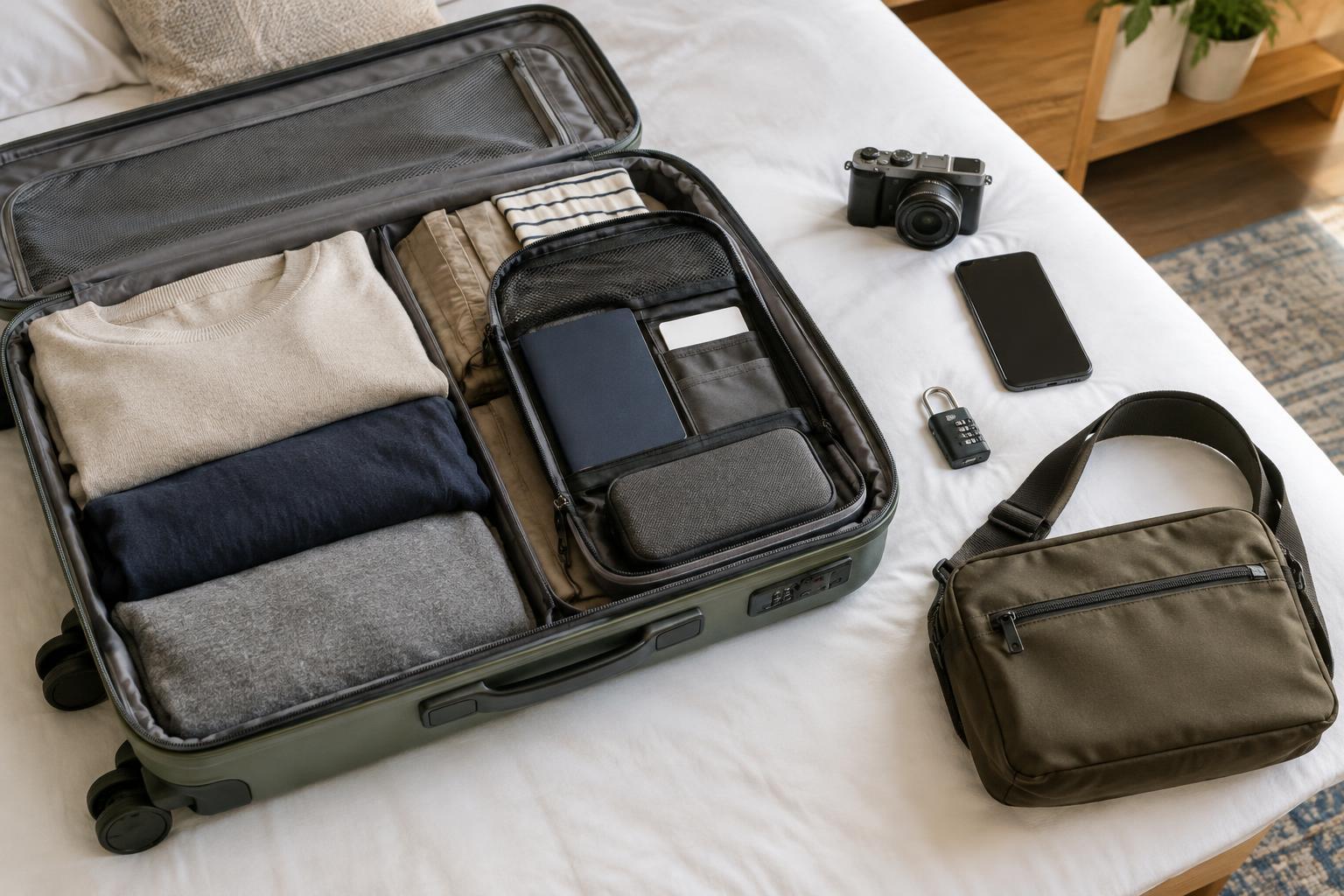
Lay out what you plan to bring, then remove items that do not serve a clear purpose. Pack the remaining clothes first without organizers so you can see whether space or disorganization is the real issue. Add cubes if the contents are hard to manage; try a compression bag if soft, bulky items are preventing the bag from closing comfortably. Check that you can still reach travel essentials and that your luggage meets any size or weight rules that apply to your journey.
The best organizer is the one you can use easily throughout the trip, including on the final packing day. Choose cubes when you want order and quick access, compression bags when you need to reduce the bulk of selected soft items, and both when those needs overlap. If your suitcase only closes when every bag is packed to its limit, taking less may help more than buying another packing tool.