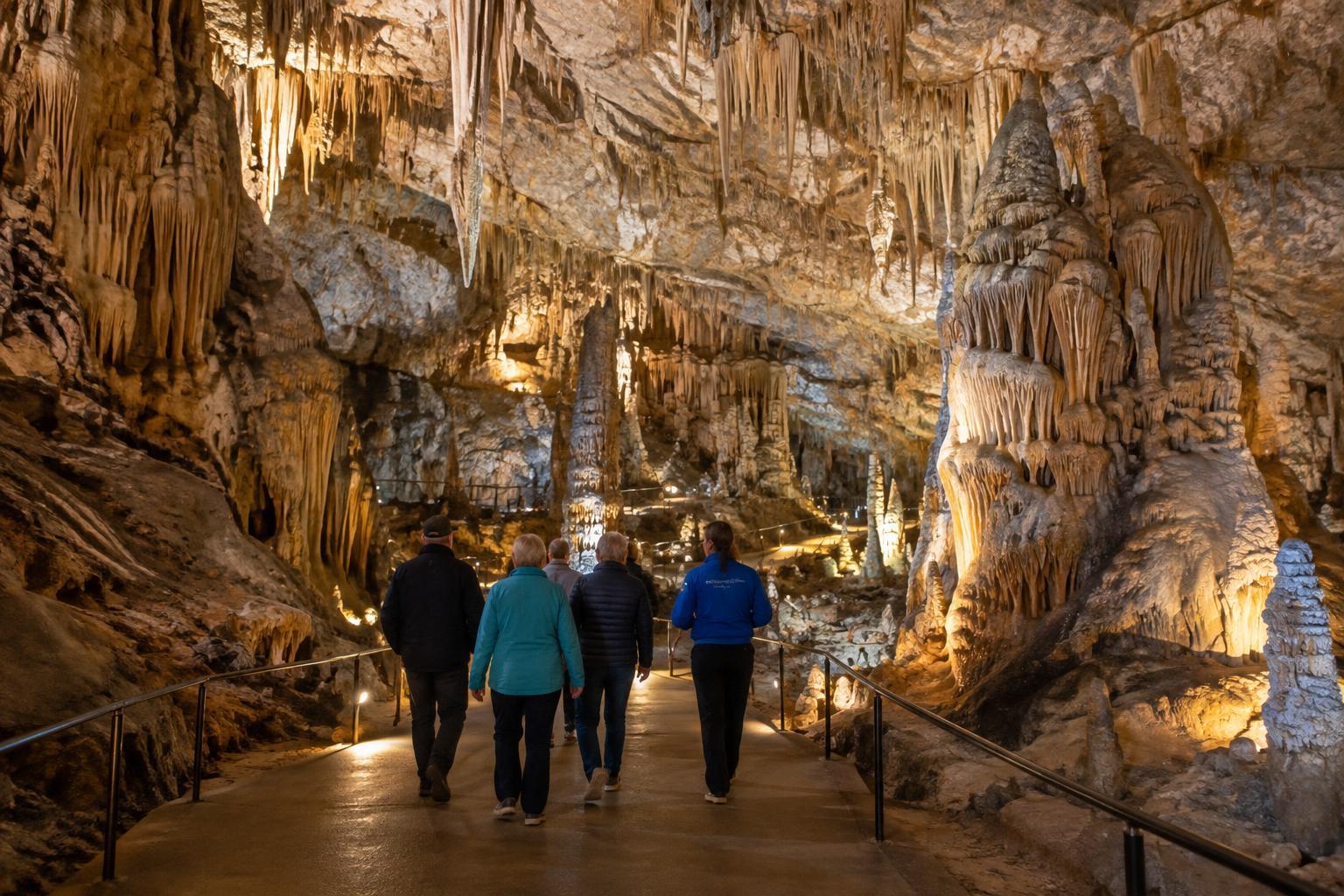
Start with the kind of cave visit you want
A cave can be a gentle sightseeing stop or a demanding underground adventure. For a first visit, look for a developed tour with a guide, established paths and a published route description. These tours let you concentrate on the surroundings rather than navigation. They also give you a chance to hear how the cave formed and why particular features need protection.
Do not assume that “beginner-friendly” means step-free. A route may include long staircases, low ceilings, uneven ground or stretches without places to sit. Before choosing a tour, check its duration, walking distance, number of steps and any restrictions related to mobility or enclosed spaces. If you feel uneasy underground, a shorter introductory route can be a better first choice than the cave’s most famous tour.
Four destinations with different underground highlights
Mammoth Cave in Kentucky is a strong choice if you want to experience the scale of an extensive cave system. Its tours cover different routes, so a first-time visitor should compare the descriptions rather than book by name alone. Depending on the route, you may encounter broad passages, narrower corridors and stories about the people who explored or used the cave. Some tours involve substantial stairs.
At Postojna Cave in Slovenia, a train ride forms part of the familiar visitor experience, followed by a guided walk. It offers a look at chambers and formations such as stalactites and stalagmites without making the entire visit a long hike. In New Zealand, Waitomo Glowworm Caves offers a contrasting sight: tiny glowworms visible in the darkness, with a boat section on the standard guided visit. Quiet and limited photography may be part of the experience, so check the rules before you go.
Carlsbad Caverns in New Mexico offers yet another perspective: a vast chamber known as the Big Room. Standard access can be self-guided, while guided options may be offered separately. It suits travelers who want to move at their own pace, provided they are comfortable with the route and its conditions. At any of these destinations, tour formats and availability can change; confirm the current route before building a day around it.
What you are actually looking at
Cave scenery varies more than photographs suggest. In some caves, the memorable feature is space: a chamber so large that its far side fades from view. In others, it is the detail. Stalactites hang from ceilings, while stalagmites rise from floors where mineral-rich water has dripped over long periods. Flowstone can look like a frozen cascade along a wall. A guide may point out these shapes, but you do not need to identify every formation to enjoy the visit.
Light also shapes the experience. Developed caves use lighting to help visitors follow a route and see selected features, while darker sections may reveal how little natural light reaches underground. At Waitomo, darkness helps make the glowworms visible. Expect cool air in many caves, but do not assume every cave has the same temperature or humidity. The conditions described by the operator are more useful for packing than the weather outside.
Plan for the tour, not just the destination
Popular or capacity-limited tours may require advance booking. When comparing tickets, note the meeting point, check-in time and whether transport within the site is included. Leave room in your schedule for parking, restrooms and the walk to the departure area. A cave tour can be difficult to join after it starts.
Wear shoes with reliable grip and bring a light layer if the cave is cool. Keep your hands free on stairs and carry only what the operator allows; large bags, food and tripods may be restricted. If photography matters to you, check whether it is permitted and whether flash is allowed. Guides often ask visitors to stay together, remain on marked paths and avoid touching formations. Following those rules protects fragile surfaces and makes the route safer for everyone.
Choose a first cave that leaves you wanting more
Pick one main reason for going: the immense passages of Mammoth Cave, Postojna’s combination of train and walking tour, Waitomo’s glowworms, or the open scale of Carlsbad Caverns. Then match that experience to your comfort level and available time. If stairs, darkness or confined passages concern you, ask the operator specific questions about the route rather than relying on a general difficulty label.
A well-chosen first cave visit is not a test of endurance. It is a chance to see a landscape that daylight rarely reaches, learn why it looks the way it does and come back above ground with a clearer idea of what sort of underground experience you might enjoy next.