Start with the streets you expect to walk
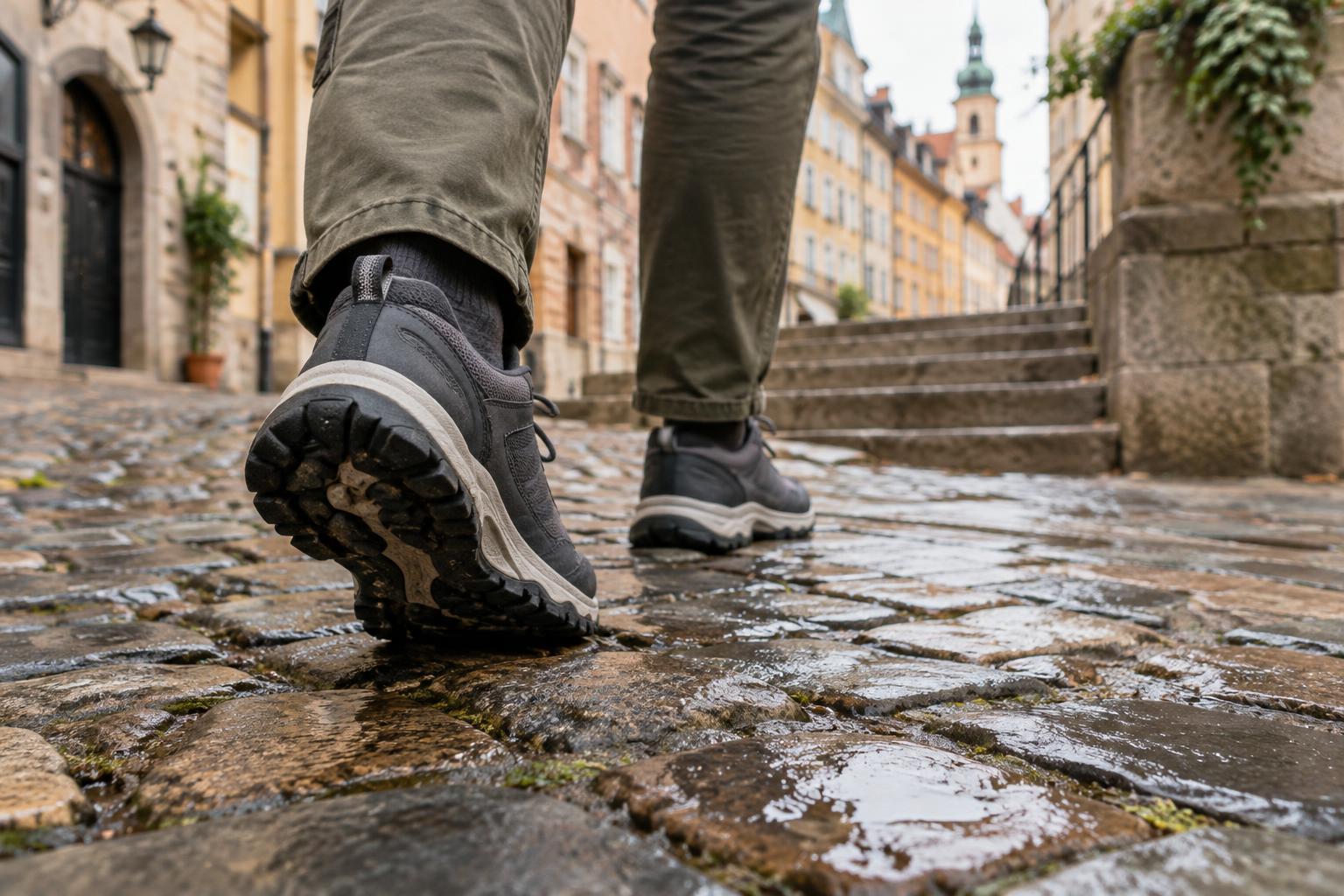
The best shoe for a city trip depends less on its travel label than on the surfaces underfoot. A day might take you from smooth station floors to hard pavement, worn stone steps and cobblestones. Think about your likely routes, the season and how much time you plan to spend walking. If you will mostly use public transport and visit indoor sights, a comfortable everyday walking shoe may be enough. If your plans include steep lanes or uneven historic streets, put more weight on stability and grip.
You do not necessarily need a heavy hiking boot for a city break. Boots can offer coverage, but their weight and bulk may be unnecessary for urban sightseeing. A well-fitting walking sneaker or lightweight walking shoe often offers a better balance of comfort and packability. Choose for the most demanding walking you are reasonably likely to do, rather than for an extreme outing that is not on your itinerary.
Check fit before features
Fit matters more than a long list of technical features. Your toes should have room to move without pressing against the front, particularly when walking downhill or descending stairs. Your heel should feel secure rather than lifting noticeably with each step. The widest part of your foot should sit comfortably in the widest part of the shoe, with no persistent rubbing along the sides.
Try shoes with the socks you intend to wear on your trip. Walk around, turn corners and use stairs or an inclined surface if one is available. Notice any pressure points instead of assuming they will disappear. Feet can feel different later in the day, so a shoe that feels just barely roomy during a quick morning try-on may not feel as good after hours of sightseeing. If you use insoles, test the complete shoe-and-insole combination rather than judging each item separately.
Look for grip, stability and comfortable cushioning
Uneven streets reward a shoe that helps you feel sure-footed. Look at the outsole: a textured rubber sole generally offers more traction than a smooth one, though no tread makes wet stone or painted crossings slip-proof. The sole should flex enough for a natural stride without feeling so floppy that every edge of a cobblestone comes through. A broad, steady base may feel more reassuring than a narrow or unusually tall sole.
Cushioning is personal. A very soft shoe can feel pleasant for a short try-on but less stable on irregular ground; a very firm one may feel tiring on long stretches of pavement. Aim for a balance that feels comfortable when you actually walk. Laces or adjustable straps also help you fine-tune the fit as the day goes on. If two shoes feel equally good, the lighter pair may be easier to wear all day and carry between destinations.
Match the shoe to the weather—and your packing space
For warm weather, breathable materials can help your feet feel less enclosed, but open mesh is not ideal if steady rain is likely. Water-resistant or waterproof shoes can be useful in wet conditions, although they may feel warmer and can take time to dry if water gets in from above. Quick-drying socks and a change of socks often make more of a difference than an extra bulky pair of shoes.
If you have luggage space for two pairs, give them different jobs. Your main pair should handle the longest walking days; a lighter second pair can suit dinners, short outings or time when the first pair needs to dry. Avoid packing two pairs that serve exactly the same purpose. If you are traveling with only one pair, prioritize comfort across your whole itinerary over an appearance that works for just one occasion.
Test your choice before departure
New shoes should meet real streets before they meet your trip. Wear them on several walks that gradually resemble a sightseeing day, including stairs and longer stretches of pavement if possible. Test the socks you plan to pack and pay attention to rubbing, toe pressure or a heel that slips. Adjust the lacing if needed, but do not count on a painful shoe transforming during your vacation.
Before packing, check the tread for excessive wear and make sure the shoes are clean and dry. Bring socks that fit without bunching, and consider a small blister-care kit for unexpected friction. The goal is not to find a shoe that guarantees you will never have tired feet. It is to remove avoidable discomfort so you can spend more of your attention on the city around you.