Decide what you want to see
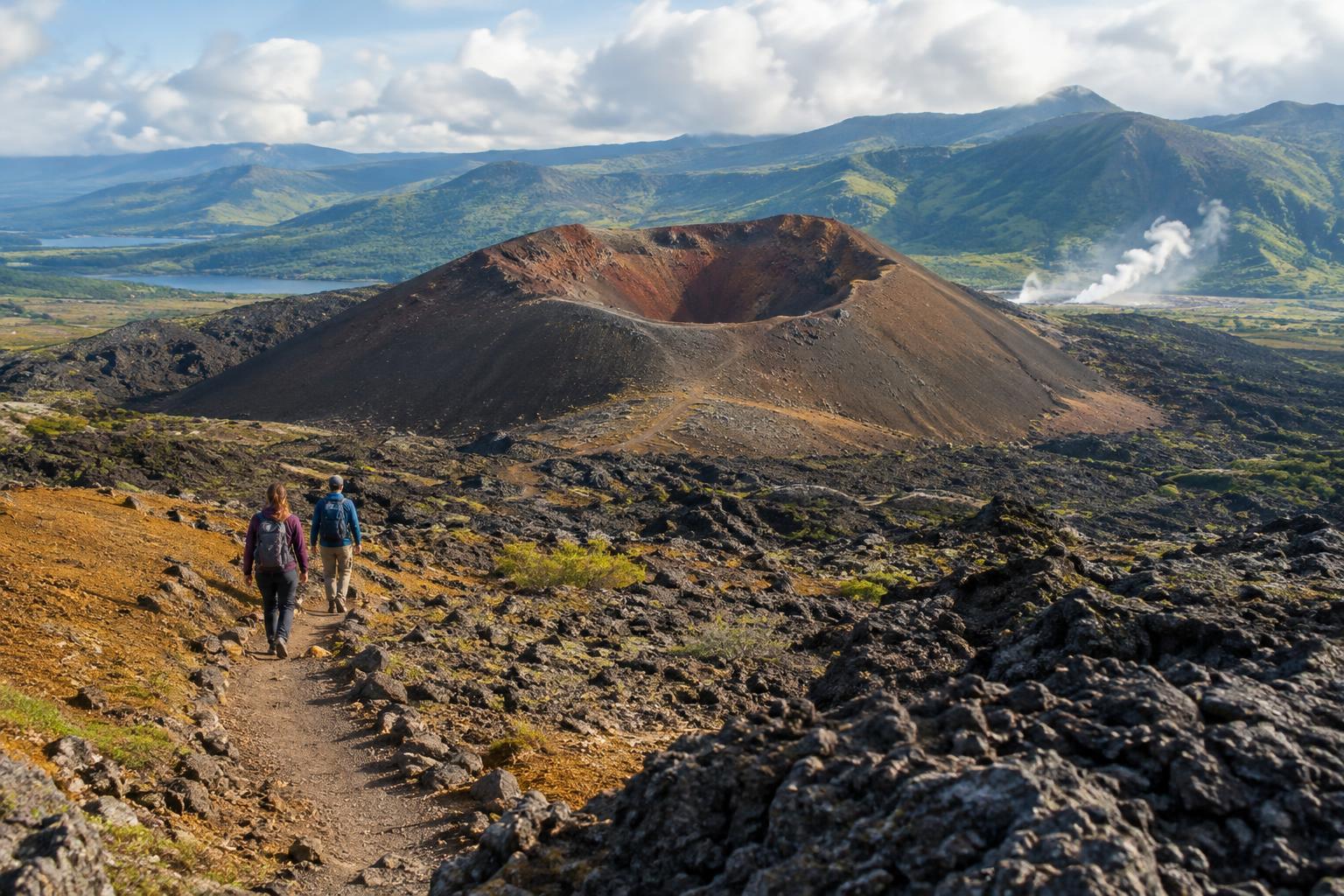
A volcanic landscape is not necessarily a place to watch an eruption. Some of the most memorable visits involve features left by activity long ago: dark lava fields, broad calderas, crater lakes, unusual rock formations and fertile slopes. Elsewhere, steam vents or hot springs make the heat beneath the ground easier to imagine. Start by choosing the experience that interests you most, rather than picking a volcano name from a photograph.
If scenery is the priority, look for viewpoints, short trails and places where the surrounding terrain gives a sense of scale. If you want to understand how people live alongside volcanoes, consider a destination where local guides, museums or community-run experiences add context. If you mainly want an active hike, check the route’s distance and elevation gain before booking. An impressive crater view may require a demanding ascent, while a lava field or geothermal area may be accessible on a gentler walk.
Explore a few different kinds of destination
Iceland is a useful starting point for travelers drawn to lava fields, geothermal features and dramatic contrasts between volcanic rock and water. Many visitors can build a trip around established sightseeing routes rather than a strenuous climb. Weather, road conditions and access to particular areas can change, so it is better to plan around the wider landscape than a single viewing opportunity.
The Hawaiian Islands offer another perspective: volcanic terrain meets beaches, forests and communities with deep cultural connections to the land. Different islands and sites offer very different experiences. Read local guidance about respectful visiting, especially where an area has cultural significance, and check which paths and viewpoints are open before making a route.
For travelers who want a volcano hike, places such as Mount Bromo in Indonesia or Mount Etna in Italy may be appealing. The experience can vary with the route, transport arrangement and access rules; a distant viewpoint is a different outing from a guided ascent. The Canary Islands provide another option for seeing striking volcanic forms as part of a broader island holiday. These are examples to compare, not a checklist to complete. Choose the setting that suits the rest of your trip.
Match the trip to your comfort level
Volcanic areas can be physically and logistically unpredictable even when they are popular visitor destinations. Trails may cross loose rock, exposed slopes or terrain with little shade. Steam, gases and unstable ground can make leaving marked routes dangerous. Activity and access can also change. Before committing to a specific excursion, check the responsible park or local authority’s guidance and be prepared to follow closures without trying to find an alternative way in.
Consider how much uncertainty you would enjoy managing. A traveler with limited time may prefer a destination with several volcanic sights and other activities nearby, so a closed trail does not derail the holiday. Someone who loves hiking might accept a more flexible schedule in exchange for a particular route. If mobility is a concern, investigate the surface and length of paths rather than assuming a site is accessible because it has a car park or visitor center.
Compare the full cost, not just the flight
A volcanic outing might require a rental car, a guide, park admission, suitable footwear or an early start from a nearby town. In some places, independent visits are straightforward; in others, transport or guided access may be the more practical choice. Compare the total cost of reaching the landscape with the amount of time you will actually spend there. A cheaper flight is less appealing if the sight you want requires several additional travel days.
Build a simple shortlist with columns for your preferred scenery, likely walking difficulty, transport, estimated daily costs and backup activities. Then look at the trip as a whole. A destination that combines volcanic sights with food, culture or coastal time may offer better value for you than a journey organized around one viewpoint. Leave some room in the budget for a changed plan, particularly if weather affects outdoor activities.
Make a plan that works without perfect conditions
Once you have chosen a destination, identify one or two must-see landscapes and several flexible alternatives. Give a hike or viewpoint more than one possible day if your schedule allows, but avoid treating a specific view as guaranteed. Check official access information close to departure and again locally. If you book a tour, understand its cancellation and route-change terms before paying.
Pack for the conditions of the actual outing, not just the destination’s general climate. Sturdy shoes, water, sun protection and a layer for changing temperatures are often more useful than specialist gear. Stay on permitted paths and follow local instructions, including rules about collecting rocks or entering geothermal areas. The best volcanic trip is not the one that gets you closest to a hazard; it is the one that lets you appreciate an extraordinary landscape while leaving room for conditions to change.