Start with the conditions, not the calendar
A cold-weather trip can mean crisp city walks, rainy days near freezing, or long stretches outdoors in snow. Before making a packing list, look at the conditions you expect at each stop and the activities you have planned. Temperature matters, but wind, precipitation, and time spent outside can change what feels comfortable. A traveler moving between museums and cafés may need a different bag from someone taking a full-day winter hike.
Sketch out a typical day: how long will you be outdoors, how active will you be, and will you have somewhere to dry wet clothes overnight? Check the forecast again close to departure, while allowing room for conditions to change. If you are visiting places with very different climates, plan for the coldest part of the trip without assuming you must wear your warmest outfit every day.
Build outfits in layers
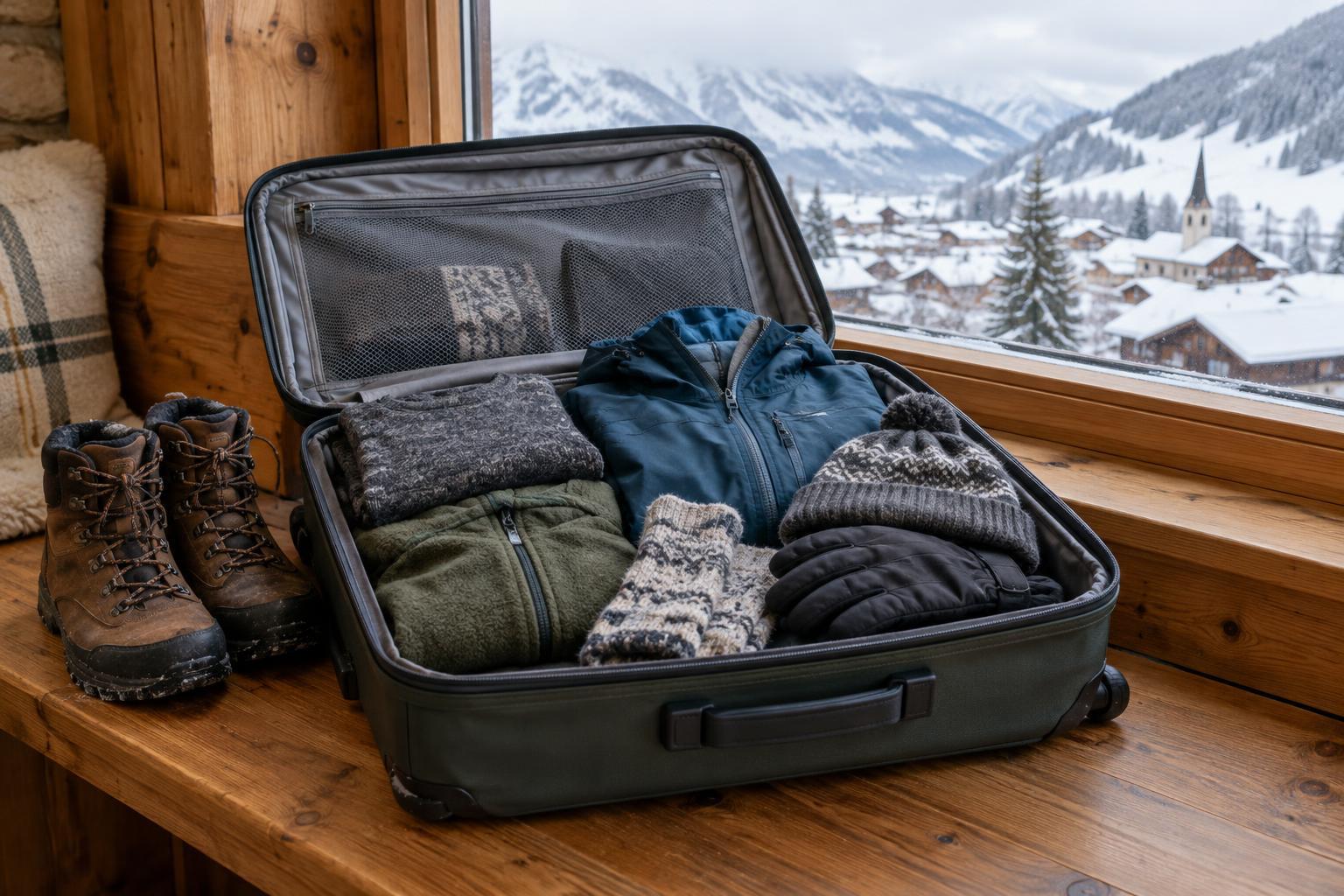
A useful cold-weather outfit has three parts: a base layer next to your skin, an insulating layer for warmth, and an outer layer that blocks wind or precipitation. Layers are easier to adjust than one very heavy garment. You can remove a midlayer when a train or restaurant is warm, then put it back on before heading outside.
For a base layer, choose something comfortable that dries reasonably well. Merino wool and many synthetic fabrics work well for active days; cotton may feel clammy if it gets damp and stays damp. Your insulating layer might be a fleece, wool sweater, or compact insulated jacket. Choose an outer coat or shell suited to the weather you expect. A water-resistant coat may be enough for brief showers, while persistent rain or wet snow calls for more dependable rain protection.
Pack pieces that work together rather than separate outfits for every day. Two or three base-layer tops, a couple of insulating options, and one suitable outer layer give many travelers flexibility for a short trip. The right quantity depends on trip length, laundry access, and how quickly your clothing dries. Try on your full combination before leaving: a coat that fits over a T-shirt may feel tight over a sweater.
Protect your feet, hands, and head
Cold feet can make an otherwise pleasant day feel long. Choose shoes or boots for the ground you will actually walk on, whether that means wet sidewalks, packed snow, or icy paths. Look for adequate grip and enough room for socks without squeezing your toes. Break in unfamiliar footwear before the trip if you can, and consider bringing a second pair if your main shoes are likely to get soaked.
Pack socks that suit your footwear and activity, plus an extra pair for a long day out. A warm hat, gloves, and a scarf or neck gaiter are small additions that can make a noticeable difference. If you expect rain or wet snow, consider gloves that resist moisture or a spare pair you can change into. For extended outdoor activities, keep these essentials somewhere easy to reach rather than at the bottom of your suitcase.
Pack for comfort without filling the bag
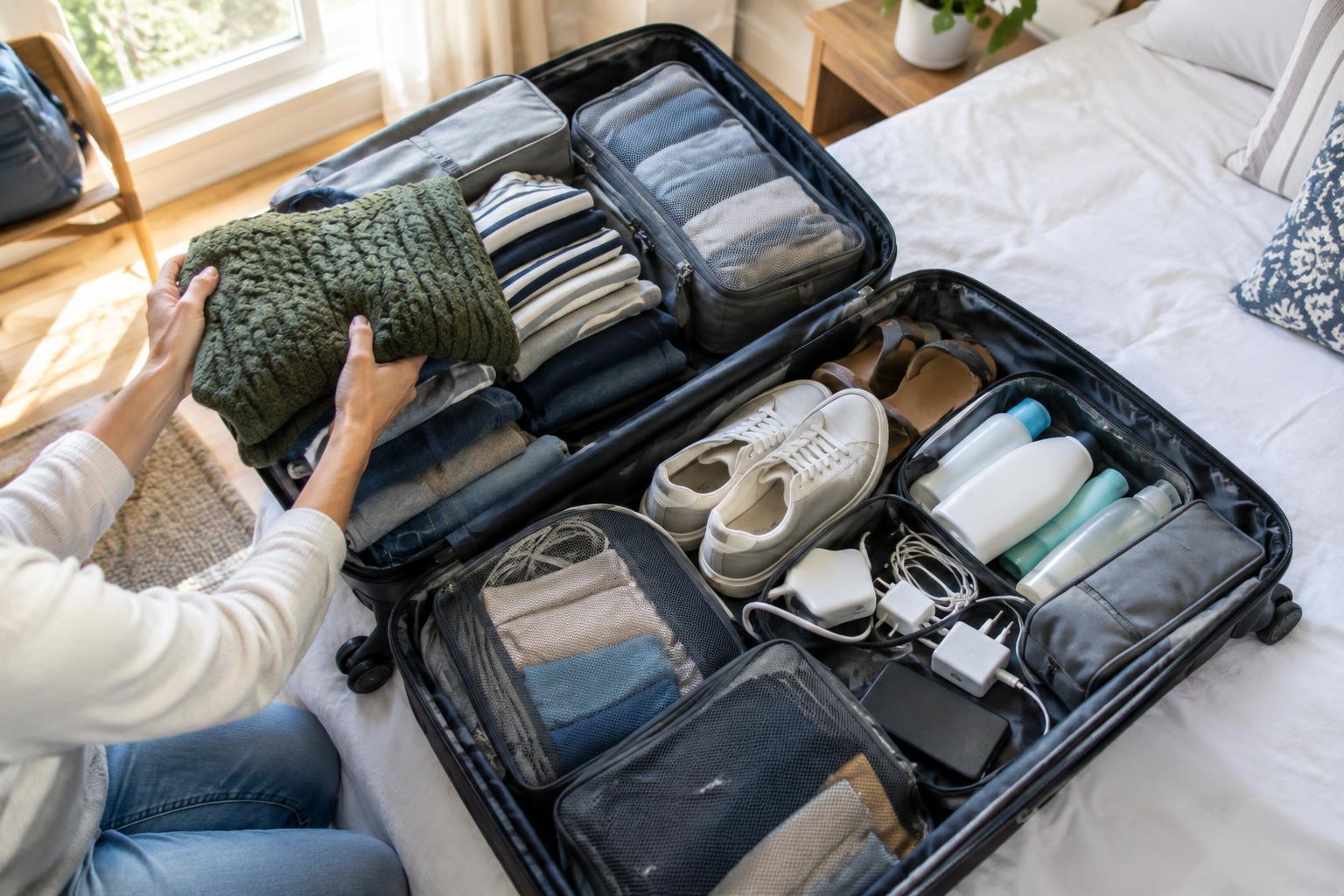
Bulky clothing can take over a bag quickly. Wear your largest shoes and coat while traveling when practical, and pack lighter layers that can do more than one job. A fleece that works under your coat and as an indoor layer earns its space. Packing cubes or simple bags can keep accessories together, while a separate bag for damp items helps protect clean clothes until you can dry them.
Add a few small items based on your plans: lip balm, a reusable water bottle, sunglasses for bright conditions, and a compact day bag are often useful. If you will use your phone for navigation or tickets outdoors, carry a charging option and keep devices protected from moisture. You do not need to buy specialized gear for every cold trip. Check what you already own, then consider borrowing or renting items you will rarely use.
Make a final check before you leave
Lay out what you plan to wear on your coldest expected day, including socks, shoes, and accessories. Then check that the remaining clothes can be mixed, repeated, or washed. Remove duplicates that serve the same purpose unless you need a dry backup. Leave enough bag space to store a layer you take off during the day.
Cold-weather packing is less about bringing the maximum amount of clothing and more about staying comfortable as conditions change. With a workable outer layer, flexible insulation, weather-appropriate footwear, and a way to keep spare clothes dry, you can spend less time managing your bag and more time enjoying the trip.