Start with the trip, not the bag
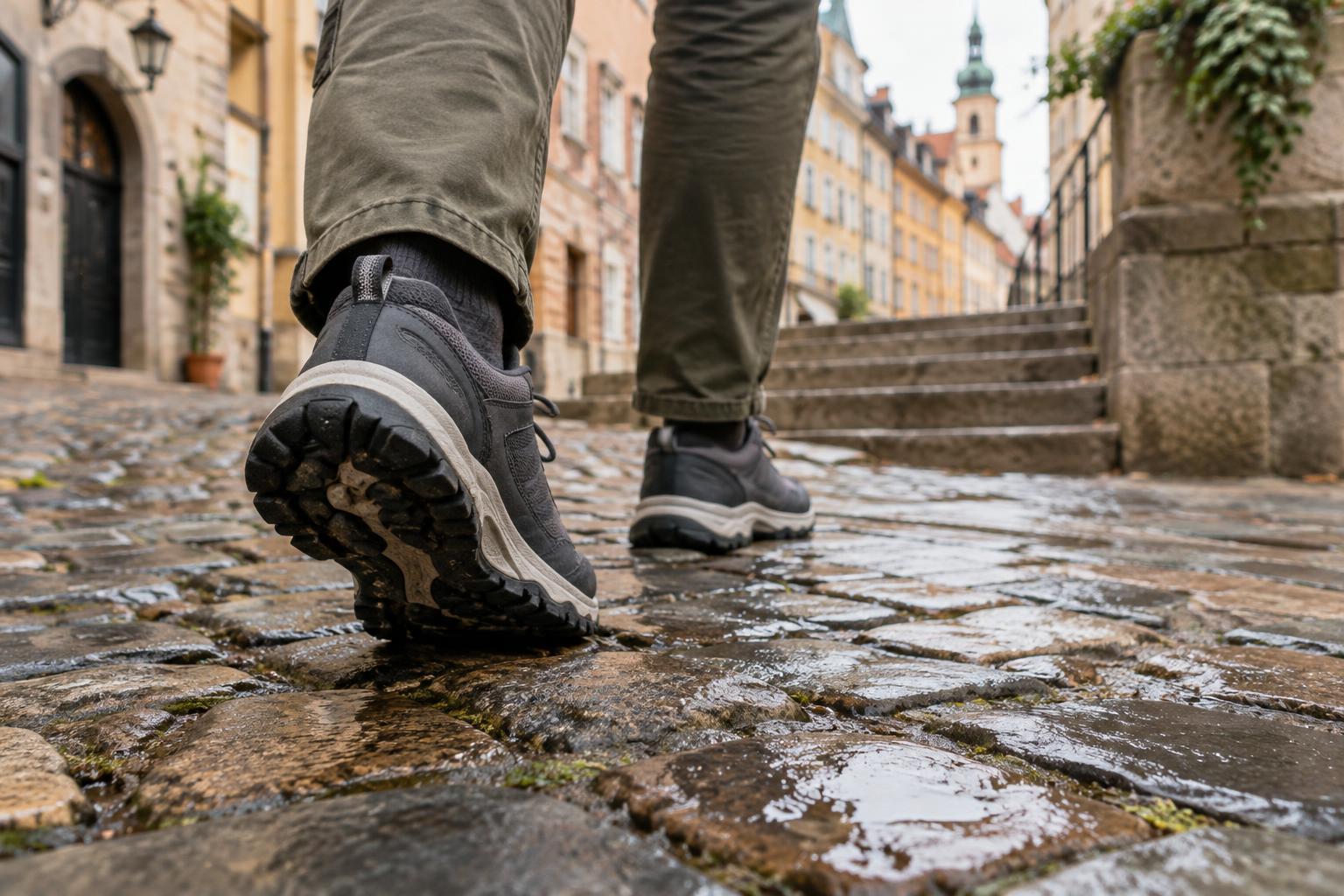
A travel backpack can feel effortless on a flight of stairs and tiring during a long walk. A wheeled suitcase can glide through an airport and become awkward on cobblestones. Neither is the universal winner. Before comparing brands or features, picture a typical travel day: how far will you carry your bag, how often will you change accommodation, and what surfaces will you cross?
Also consider how you travel once you arrive. If you plan to unpack in one place for a week, a suitcase may be easy to live with even if the journey there involves a few steps. If you will move between trains, buses and guesthouses, a backpack may give you more freedom to keep your hands available. For a road trip, a bag that opens wide and stacks neatly may matter more than either wheels or shoulder straps. Let the most demanding part of your likely trip guide the decision.
Choose a style you can move comfortably
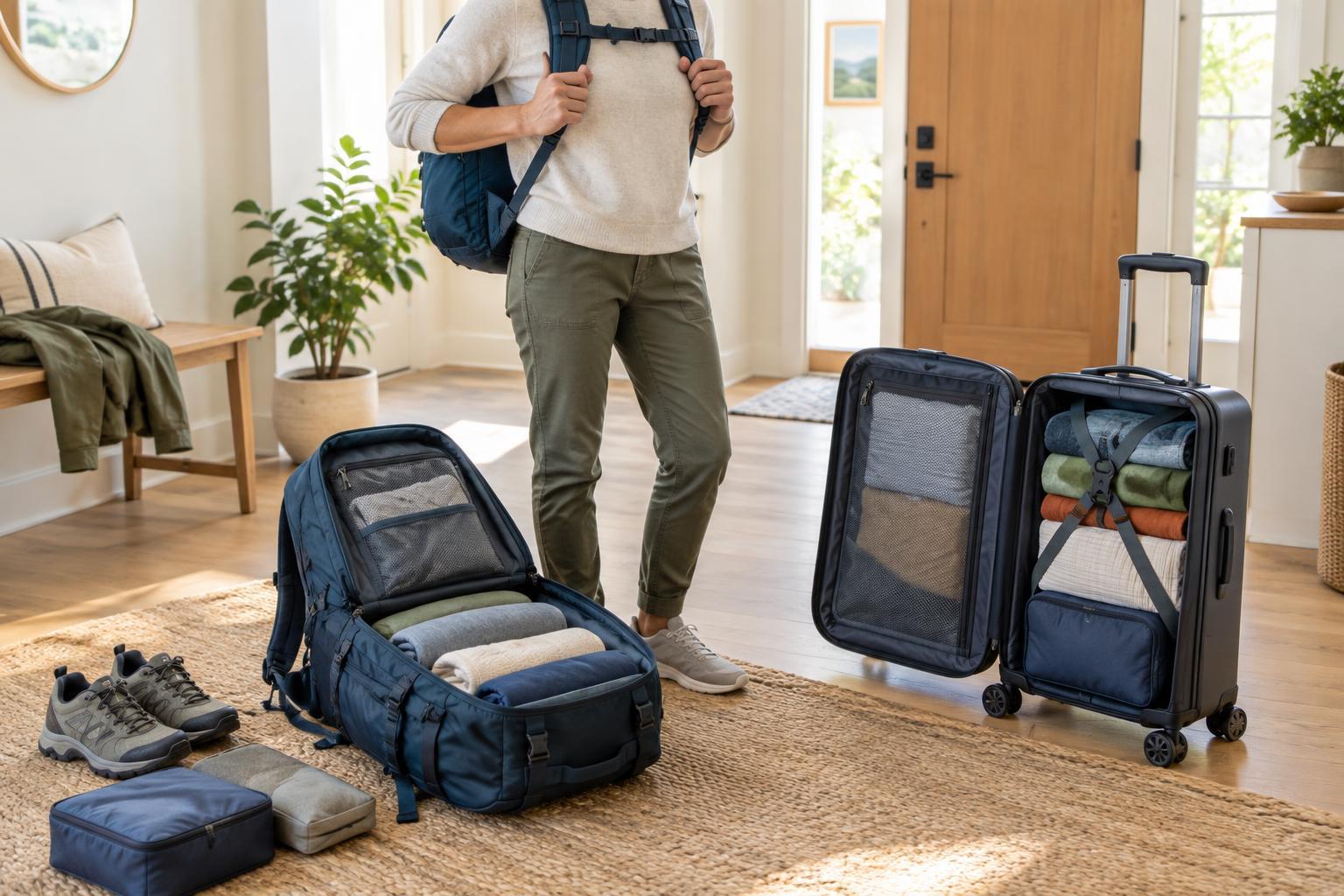
A travel backpack suits routes with stairs, uneven ground or frequent transfers. Look for straps you can adjust, a comfortable back panel and a hip belt if you expect to carry a substantial load. Try it on with weight inside: an empty bag tells you little about how it will feel after a walk. A wide-opening main compartment can make a travel backpack easier to pack than a narrow top-loading design.
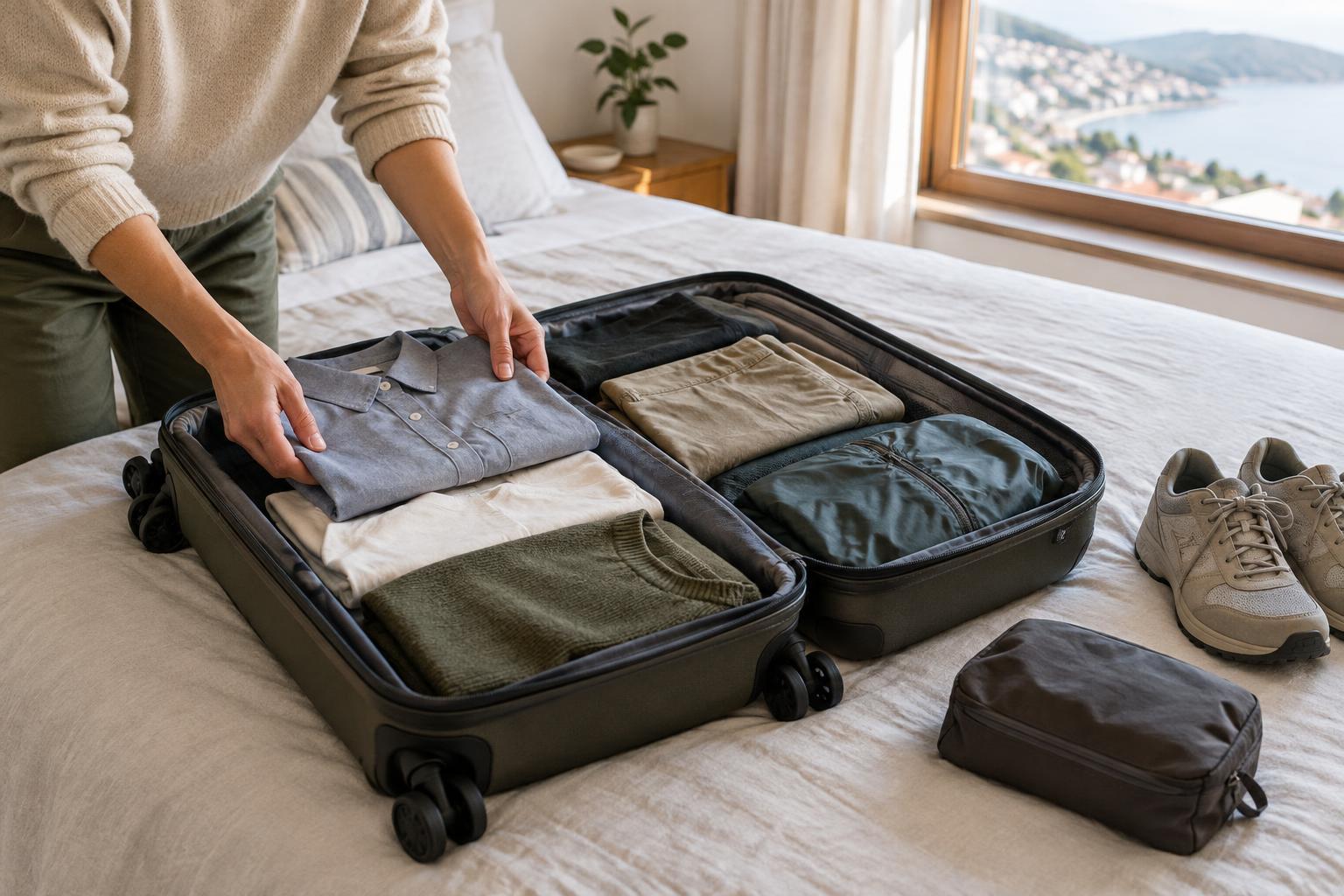
A suitcase is a strong choice when you can roll it for most of the journey or prefer not to carry weight on your back. Two-wheel models tend to track well when pulled; four-wheel models are convenient to push or turn on smooth floors. Check that the handle reaches a comfortable height and that you can lift the packed case when needed. Wheels do not remove the need to handle stairs, curbs or luggage racks.
Hybrid bags combine wheels and backpack straps, but that flexibility can add weight and take up packing space. They are worth considering if you genuinely expect to use both modes. Otherwise, a simpler design may be easier to carry, store and maintain.
Pick a capacity based on what you actually pack
Trip length alone does not determine bag size. A traveler willing to do laundry may use the same bag for a weekend and a longer journey. Climate, bulky shoes, specialist equipment and whether you are carrying items for someone else can make a bigger difference. Begin with a packing list for a realistic trip, including toiletries, layers and anything you cannot easily leave behind. Then choose a bag that holds that load without needing to be forced shut.
Be cautious about buying extra space just in case. A larger bag is easier to overfill, and a manageable load matters most when you have to lift or carry it. If you hope to take the bag into an aircraft cabin, check the size and weight rules for each airline on your itinerary before buying. Cabin allowances vary, and a bag sold as “carry-on” is not a guarantee that it will qualify for your flight.
Check the details that make daily use easier
Prioritize features you will use repeatedly. A bag that opens wide makes it easier to find clothing without emptying everything. A few accessible pockets help with items you need in transit, but too many small compartments can make it harder to remember where things are. If you carry a laptop, check whether its sleeve fits your device and whether you can reach it without unpacking the whole bag.
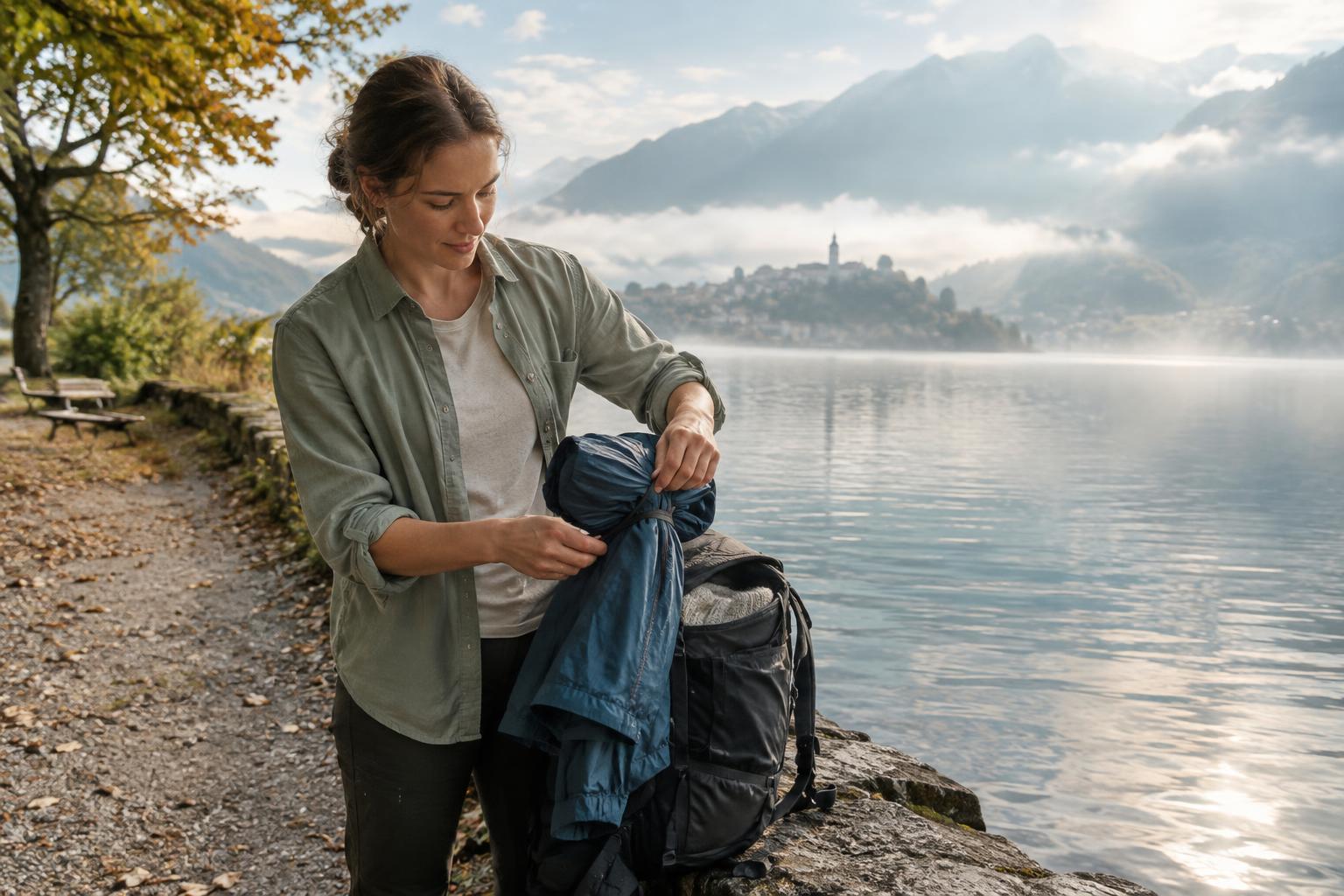
Inspect the parts that take the most strain: zippers, handles, strap attachments, wheels and the base of the bag. Water-resistant fabric can help with a brief shower, but seams and zippers may still let moisture in; use an inner dry bag or cover when weather exposure is a real concern. Consider the empty weight, too. A heavily built bag may feel reassuring in a shop yet leave less comfortable carrying capacity for your belongings.
Do a full packing test before deciding
If possible, load the bag with what you would take on a real trip. Close it, lift it onto a shelf and move it through a doorway. Wear a backpack for a short walk or roll a suitcase over the kinds of surfaces you are likely to encounter. Notice whether it pulls on your shoulders, tips when upright, catches your heels or feels difficult to lift. Those observations are more useful than judging the bag while it is empty.
Finally, check that you can reach essentials without opening your entire wardrobe in a busy station or lobby. A small day bag can keep documents, medication and other must-have items close, leaving the main bag packed. Choose the backpack or suitcase that makes your ordinary travel day easier, rather than the one with the longest feature list.