Decide what would make the visit worthwhile
When you have only an hour or two, trying to see an entire museum can turn an enjoyable cultural experience into a race. Before you go, choose one reason for visiting. Perhaps you want to see a particular artist, learn about the place you are traveling through, or explore a subject you know little about. That priority gives you a way to make decisions once you are inside.
If the museum has a website, look for a floor plan, collection highlights, exhibition descriptions, and practical details such as opening hours and entry arrangements. Pick one must-see area and one optional area rather than building a long checklist. Temporary exhibitions may require a separate ticket or timed entry, so confirm the details directly with the museum before making them the centerpiece of a tight itinerary. If you are visiting with someone else, agree on a shared priority or plan a meeting point so each person can follow their interests for part of the visit.
Give your time a simple shape
A useful plan has three parts: time to get oriented, time for your main focus, and time to finish without rushing. Once inside, take a moment to check the map and locate the galleries you chose, along with restrooms, lifts, and exits if you need them. Then head toward your priority rather than stopping at every display on the way. Museum layouts can be less direct than they appear on a map, so allow a little flexibility.
Decide in advance when you need to leave, especially if you have a train, reservation, or another activity afterward. Set a discreet reminder if that helps you stay present instead of checking the clock repeatedly. If your visit is especially brief, a single gallery may be enough. Spending 45 attentive minutes in one room can be more satisfying than passing through several floors while barely noticing what is there.
Look closely at fewer things
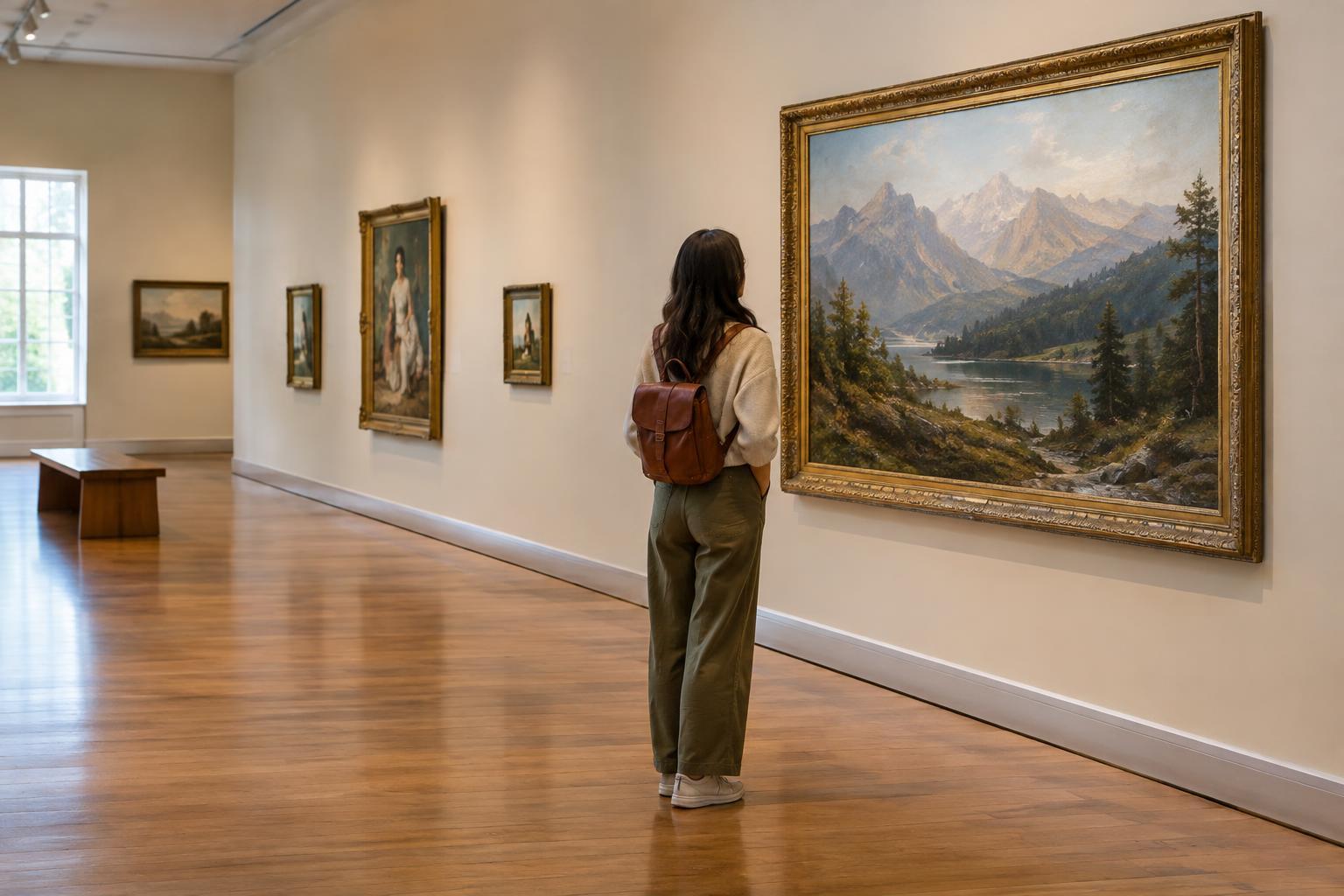
You do not have to read every label to have a meaningful visit. Walk through your chosen gallery once and notice what draws your attention. Then return to a handful of objects or works. Before reading the description, look closely: What materials do you recognize? What details seem deliberate? What questions does the piece raise? The label can then add context to what you have already observed.
For a historical object, consider what it might reveal about daily life, beliefs, trade, or craftsmanship. For a painting, you might notice where your eye goes first and how the artist guides it. You do not need specialist knowledge or a definitive interpretation. Curiosity is enough. If a wall text is dense, read its opening lines and the label for the object that interests you most. A brief visit is a chance to follow a few good questions, not complete an assignment.
Use museum resources selectively
Maps, introductory panels, audio guides, and staff recommendations can help you connect individual objects to a larger story. Ask a staff member what they would suggest for the amount of time you have, or look for a short recommended route if the museum offers one. These tools are most helpful when they support your goal; an audio guide with many stops, for example, may not suit a quick visit.
If you are exploring a culture or community unfamiliar to you, pay attention to who made an object, how it was used, and how the museum explains its presence in the collection. Exhibits may present multiple perspectives or leave questions open. Rather than trying to absorb everything, note one idea you would like to learn more about later. Check the museum’s photography rules before taking pictures, and avoid letting your phone become a substitute for looking.
Leave space for a surprise
A plan should save time, not eliminate discovery. On your way to the exit, allow yourself a short detour if a nearby gallery catches your attention. Equally, give yourself permission to skip a famous work if the room is crowded or something else speaks to you more strongly. The best short visit is not necessarily the one that covers the most celebrated objects; it is the one you can remember afterward.
Before you leave, take a minute to name what stayed with you: an image, a story, a material, or a question. If you keep travel notes, write down a few words while the experience is fresh. You can always return to the museum’s own descriptions later if you want more context. Ending with one clear memory makes a limited visit feel complete, even when much of the collection remains unseen.