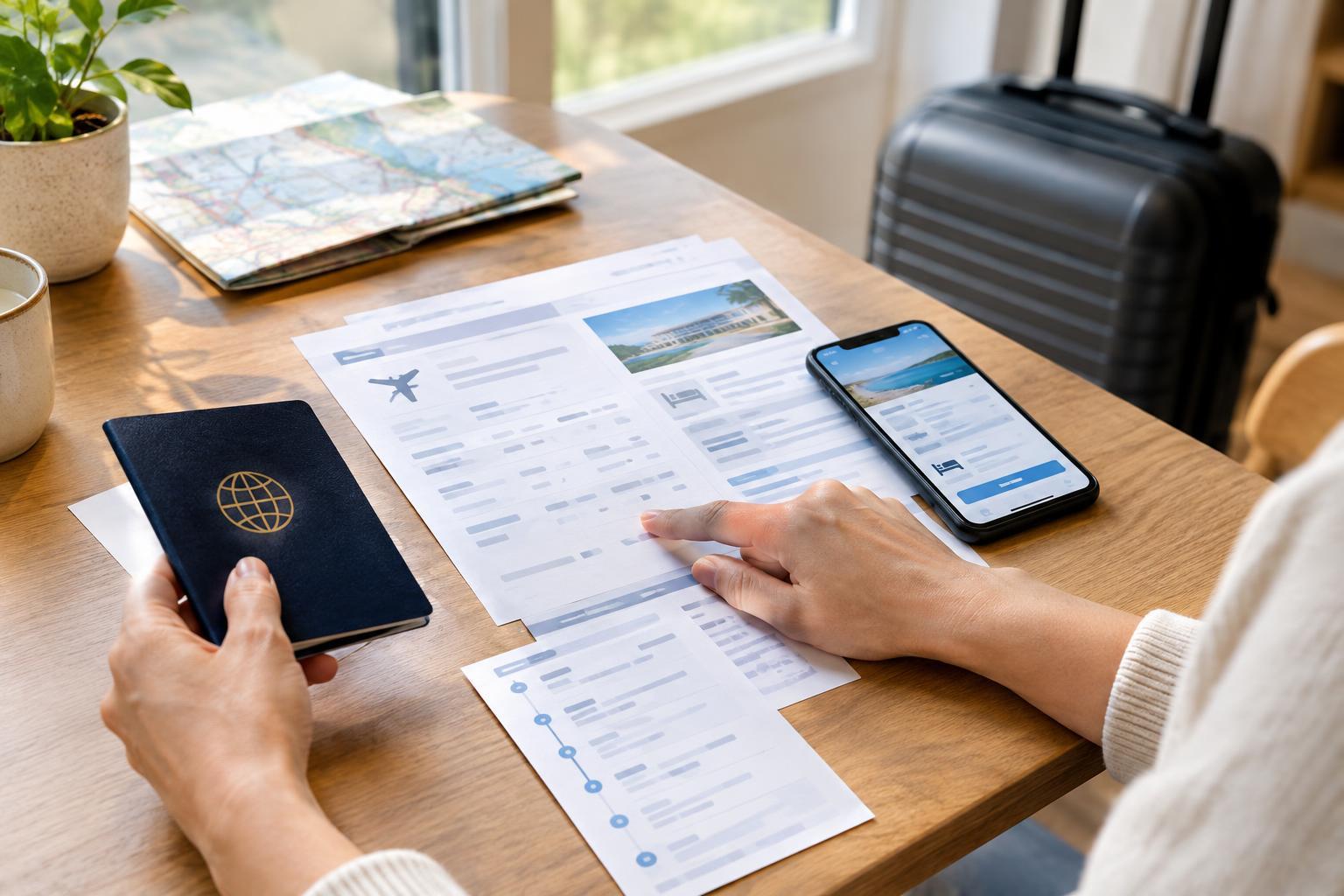
Check names and travel documents first
A small name error can be easy to overlook when you are booking quickly. Compare every passenger name on a flight, train or tour reservation with the document that person will use to travel. Check spelling, the order of given and family names, and any middle names requested by the provider. If something does not match, contact the booking provider promptly rather than assuming staff can fix it at departure. Correction rules can vary by company and ticket type.
Then check that each traveler has the documents needed for the entire route, including any transit stops. Entry and transit requirements can depend on nationality, destination and the type of journey, so verify them through appropriate official channels before booking and again before departure. Also check document validity and allow time to replace anything missing. A correct reservation is not a substitute for the documents required to use it.
Read dates, times and locations as a complete route
The most costly-looking mistake may be a simple calendar error: booking a flight for the right weekday but the wrong month, or reserving a hotel for the nights after you arrive rather than the night you arrive. Review your itinerary from the first departure to the final night away. For each segment, write down the local departure and arrival dates, especially when an overnight flight or time-zone change is involved. Compare lodging check-in and check-out dates with those arrivals instead of relying on the number of nights alone.
Look beyond the city name. Some destinations have multiple airports or stations, and a connection may require a change of airport. Check terminal details when they become available, but do not treat them as fixed. For every connection, consider the time needed to collect bags, pass through any required checks and reach the next departure point. If separate bookings make up one journey, confirm how each provider handles a missed connection; do not assume one ticket protects the next.
Confirm what the price actually includes
A low initial price may describe a narrower booking than you expected. Open the full fare or room details and check luggage allowances, seat selection, meals, taxes and any charges due at the property. For lodging, verify the room type, number of guests, bed arrangement and whether breakfast or parking is included if those features matter to your trip. A photograph or search-result summary is less useful than the details attached to your specific reservation.
Read change and cancellation terms before you need them. Note the relevant deadlines, which time zone applies if stated, and whether a refund, credit or fee may apply. If a tour or rental has a meeting point, pickup window, age rule or equipment requirement, save that information alongside the booking. When a detail is unclear, ask the provider to clarify it and keep the response with your trip records.
Make sure the booking is confirmed, not just requested
A payment alert, search result or email saying a request was received does not always mean every part of a trip is confirmed. Check each booking for a reservation or ticket number and a clear status. For flights, look for the issued ticket details where applicable; for lodging, check that the property has accepted the reservation. If you booked through an intermediary and something looks inconsistent, compare the confirmation with the provider’s own booking record when possible.
Review the total charged, currency and payment schedule against what you intended to buy. Some properties collect payment later or require a deposit, so keep track of what is still due. Save confirmations in a place you can reach without an internet connection, while protecting any personal or payment information they contain. A simple trip folder with booking numbers, addresses and contact details is more useful than searching through an inbox at a check-in desk.
Do one final review before leaving
Set aside time for a final booking check rather than waiting until travel day. Work through the trip in order: traveler names and documents, transport dates and locations, connection plans, lodging nights, inclusions, remaining payments and cancellation deadlines. Make sure everyone traveling knows which reservation applies to them. If you find an error, use the provider’s official contact or booking-management channel and record any changes you arrange.
Finally, revisit details that can change after purchase, such as departure times, terminals, pickup instructions and check-in procedures. Keep an accessible copy of the latest itinerary, not just the original confirmation. This last pass cannot prevent every disruption, but it can catch the avoidable mismatch between the trip you pictured and the bookings you actually made.