Start with the trip you are actually taking
Before choosing clothes, sketch out a typical day on your trip. Will you spend most mornings walking around a city, sit through long train rides, hike, swim, or dress up for dinner? Check the expected weather close to departure, but plan for reasonable variation rather than packing for every unlikely possibility. Your accommodation and access to laundry matter, too: a week with a washing machine calls for a different bag than a week moving between hotels.
Next, note the clothing requirements that ordinary sightseeing outfits will not cover. These might include a rain layer, swimwear, sturdy footwear, or an outfit suitable for a particular venue. If you are visiting places with dress expectations, check them before you pack. Set these exceptions aside first, then build the rest of your wardrobe around the activities you will repeat most often.
Choose pieces that work together
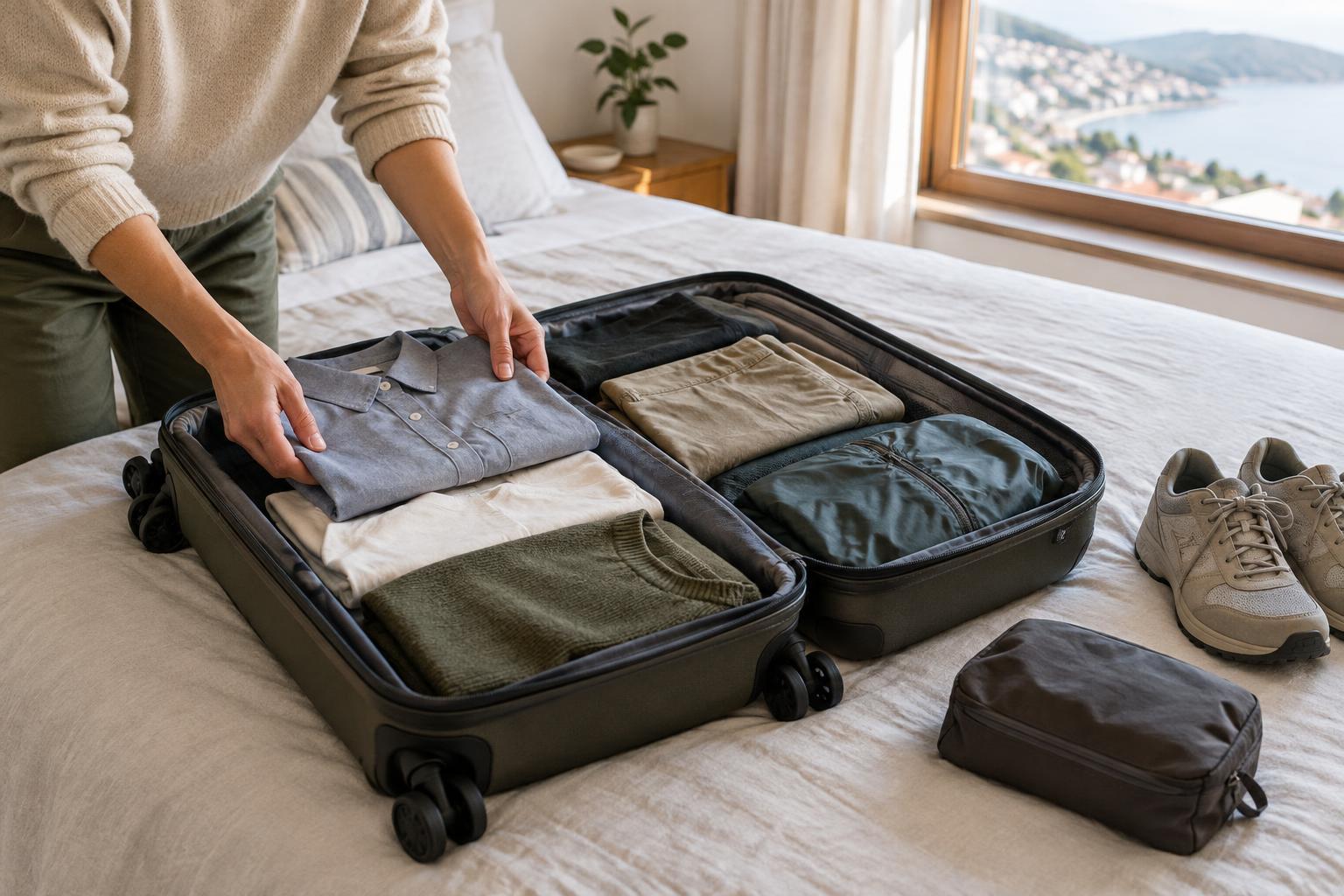
A versatile wardrobe is less about owning special travel clothes and more about making combinations. Pick a small group of colors you enjoy wearing together, then choose bottoms that work with most of your tops. If one shirt only looks right with one pair of trousers, it has fewer uses than a shirt that suits several outfits. Neutral colors can make matching easier, but they are not required; a favorite bright piece can still earn its place if it fits the overall plan.
Think in outfits, not isolated items. Lay out possible combinations for a walking day, a travel day, and an evening out. A comfortable shirt might work under a sweater on a cool morning and on its own later. A simple dress or pair of trousers might look relaxed with walking shoes and more polished with a change of layer. If you cannot picture when you would wear an item, leave it out unless it fills a clear need.
Use layers to handle changing conditions
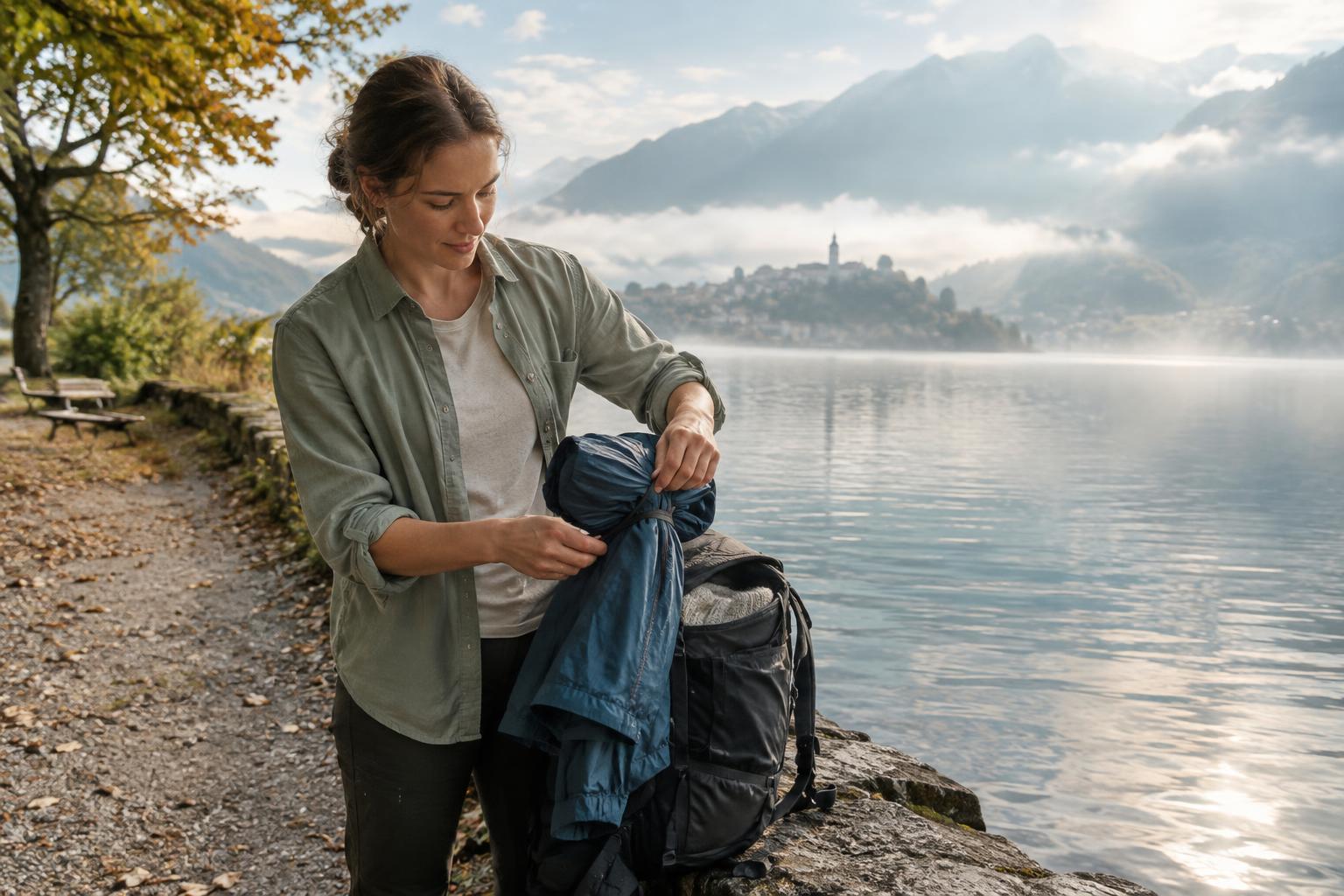
Layers give a small wardrobe more range. A lightweight base, a warmer middle layer, and a weather-resistant outer layer can be worn separately or together as conditions change. Choose fabrics and cuts that feel comfortable against your skin and do not bunch up when combined. Try the full set on before departure: three individually useful pieces are less helpful if they are awkward to wear at the same time.
Let your destination shape the details. In a warm place, a breathable long-sleeved layer may be useful for cooler interiors or sun exposure. In a colder place, warm socks and an insulating layer may matter more than another pair of jeans. For uncertain forecasts, prioritize pieces you can add or remove easily instead of packing several bulky outfits for different temperatures.
Be selective about shoes and accessories
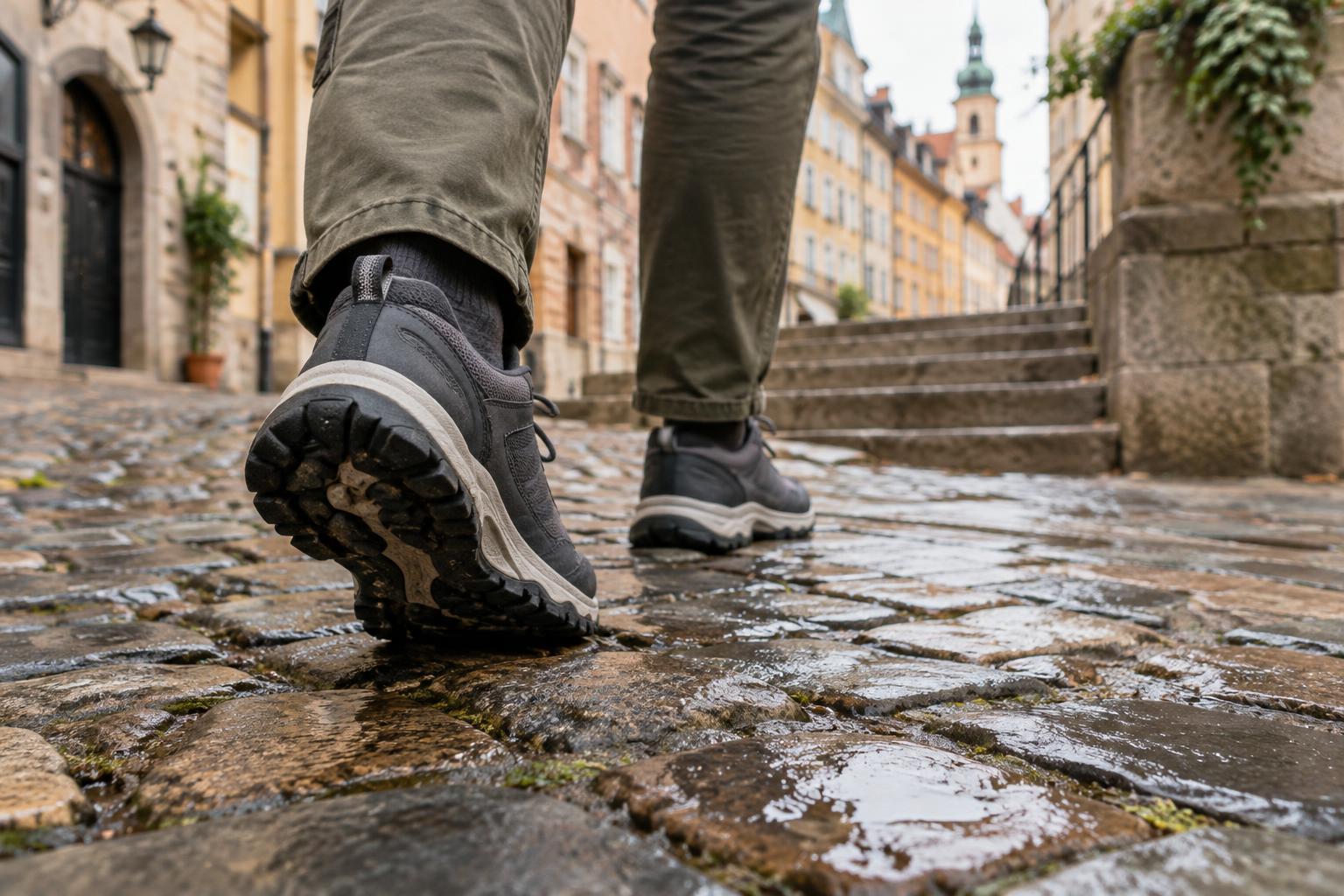
Shoes take up space and can be difficult to substitute, so give each pair a job. A comfortable pair suited to your main activity should come first. Add another pair only if it serves a real purpose, such as wet conditions, a specific activity, or an occasion where your walking shoes will not do. Wear bulky footwear in transit if it is comfortable for the journey, and avoid relying on brand-new shoes that you have not worn for a full day.
Small accessories can change an outfit without adding much volume. A scarf, belt, or compact piece of jewelry may make a familiar combination feel different. Pack accessories you will actually use, though, rather than collecting options just because they are small. The same rule applies to bags: a practical day bag is usually more valuable than several bags chosen for separate outfits.
Pack for a repeatable routine, not a new outfit every day
Decide how often you are willing and able to wash clothes. For a longer trip, packing enough for a manageable stretch between laundry days is usually more practical than packing for the entire journey. Quick-drying items can help if you expect to wash a few pieces by hand, but make sure you have somewhere appropriate to dry them. Keep a small space in your bag for worn clothing so it does not get mixed into clean outfits.
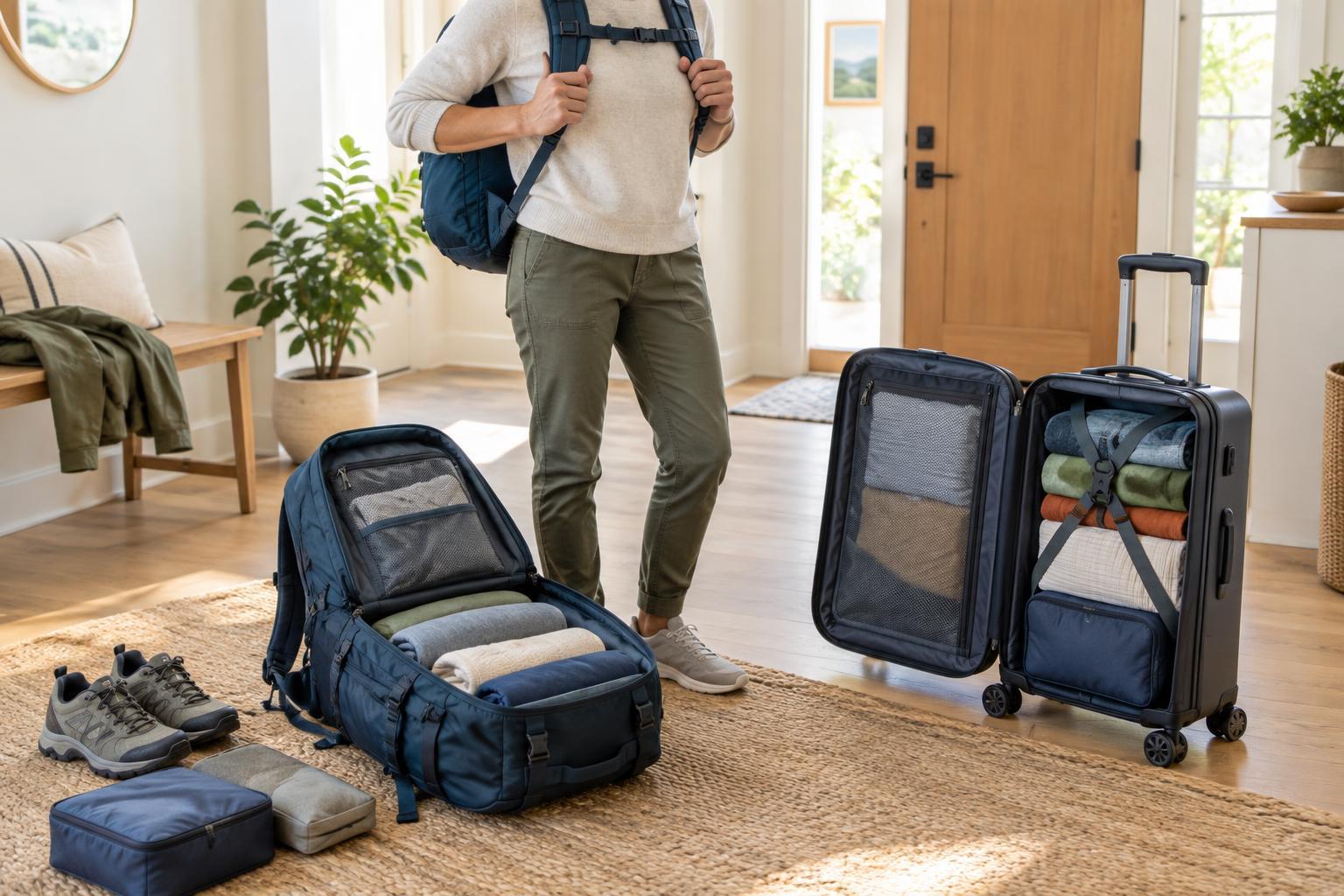
Finally, do a trial pack. Put everything in your bag, check that you can lift and carry it comfortably, and remove the pieces that duplicate another item’s job. Make sure you still have an outfit for each important activity and a way to respond to plausible weather. The goal is not the smallest possible wardrobe. It is a bag that supports your trip without making you manage clothes you never wear.