Start with the purpose of the place
A temple, church, mosque, synagogue, shrine or monastery may welcome visitors, yet its primary purpose is not tourism. People may be praying, grieving, celebrating or carrying out everyday religious duties while you are there. Treat an invitation to enter as permission to visit on the community’s terms, rather than as a promise that every area or activity is open to you.
Customs differ between faiths, communities and individual sites. Even two buildings of the same tradition may have different rules. Before you go, look for visitor information published by the site or ask a local guide who knows its practices. If you cannot confirm a rule in advance, follow signs at the entrance and ask an attendant politely rather than relying on what was acceptable somewhere else.
Plan around access, services and costs
Check whether visitors are admitted during worship, whether parts of the building close at certain times, and whether there are separate entrances or visitor routes. A site that welcomes sightseeing at one hour may need privacy at another. Allow room in your itinerary for a closure or a shorter visit; arriving with a backup plan makes it easier to respect a boundary without feeling that your day has been ruined.
Some sites charge an admission fee for visitor areas, request a donation or offer guided visits. Others allow entry without payment. Confirm what applies before joining a queue, and do not treat a donation box as an invitation to bypass an entry rule. If you hope to learn about art, architecture or history, an authorized tour may be a better choice than trying to explore during a service.
Access needs are worth checking too. Historic buildings can have steps, narrow passages or limited seating, while visitor facilities may be separate from worship areas. Ask about a suitable route if you need one. When a room is closed to visitors, do not assume an open door, an empty corridor or another person walking through it means you may enter.
Dress for the specific site
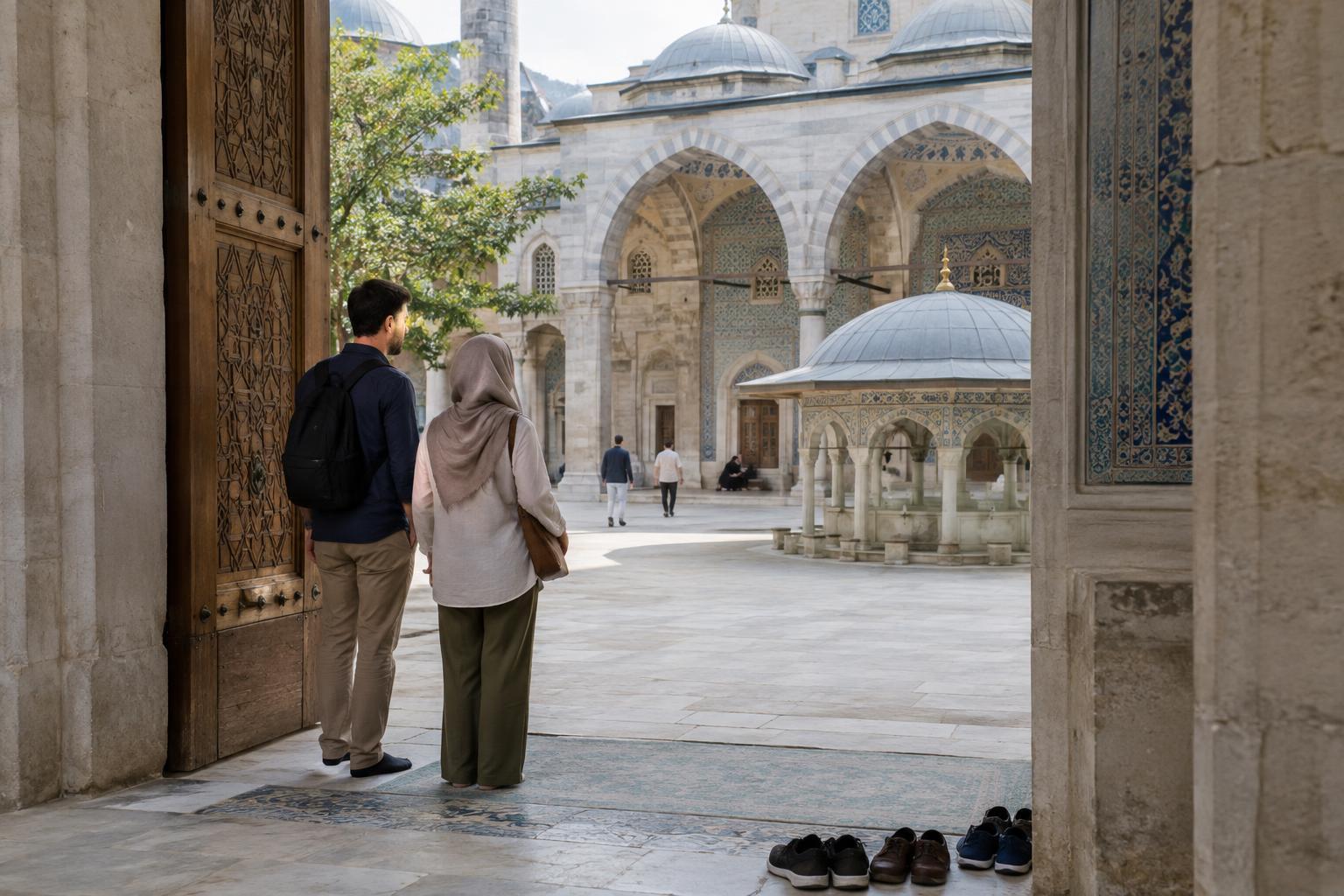
Dress codes vary, so check the requirements for the place you plan to visit. Common requests include covering shoulders or knees, covering or uncovering the head, and removing shoes before entering certain areas. A covering that is appropriate in one setting may be unnecessary or unsuitable in another. Follow posted instructions, and take your cue from staff rather than guessing from other tourists’ clothing.
For a day with several stops, pack adaptable layers: a light scarf or overshirt, clothing that gives you comfortable coverage, and shoes you can remove without holding up a line. Some sites provide wraps or shoe storage, but it is best not to count on them. If you are unsure whether an item of clothing meets the rule, ask before entering. Stepping aside to adjust it is usually less disruptive than doing so inside a crowded room.
Let the people and rituals set the pace
Inside, lower your voice, silence your phone and keep walkways clear. Stay behind barriers and avoid touching altars, offerings, religious objects or decorative surfaces unless you are explicitly invited to do so. In spaces where people sit, stand, bow or move in a procession, leave them room. You do not need to imitate a ritual you do not understand; quiet observation from an appropriate place is often the most respectful option.
If a service begins during your visit, follow any directions for visitors. It may be appropriate to remain at the back, pause your sightseeing or leave quietly. Do not interrupt someone who is praying to ask a question, even if they appear to be a good person to ask. Save questions for a guide, attendant or designated information desk, and accept that some practices may not be explained on demand.
Ask before taking photographs
Photography rules can change from one room to another. Look for signs before raising your camera, and remember that permission to photograph a building does not automatically include permission to photograph worshippers or a ceremony. Avoid flash where it is prohibited, and be mindful that a shutter sound, tripod or long photo session can interrupt the atmosphere even where cameras are allowed.
If you want a portrait, ask the person first and accept a refusal without negotiation. If photography is restricted, put the camera away instead of trying for a quick shot. The same care applies to video calls and social media clips: recording a private moment can feel intrusive even when you intend to share your trip with friends. A brief, attentive visit without pictures may leave you with a stronger memory than one spent looking through a screen.