Start with your booking, not a general packing list
Airline baggage limits are not universal. The number of bags, their permitted size and weight, and any charges can depend on the airline, route, cabin, fare type, and extras purchased with your ticket. Before choosing a suitcase, open your booking confirmation and note the fare name, flight numbers, and airlines shown for every leg. Then look up the baggage allowance that applies to that booking on the airline’s website or in its app.
Check each type of bag separately: a personal item that goes under the seat, a cabin bag that goes in an overhead bin, and a checked bag that travels in the hold. A fare may include one type but not another. If your confirmation does not make the allowance clear, use the airline’s booking-management page or contact the airline rather than relying on a general search result. Save a copy of the relevant allowance so you can refer to it while packing.
Read the measurements carefully
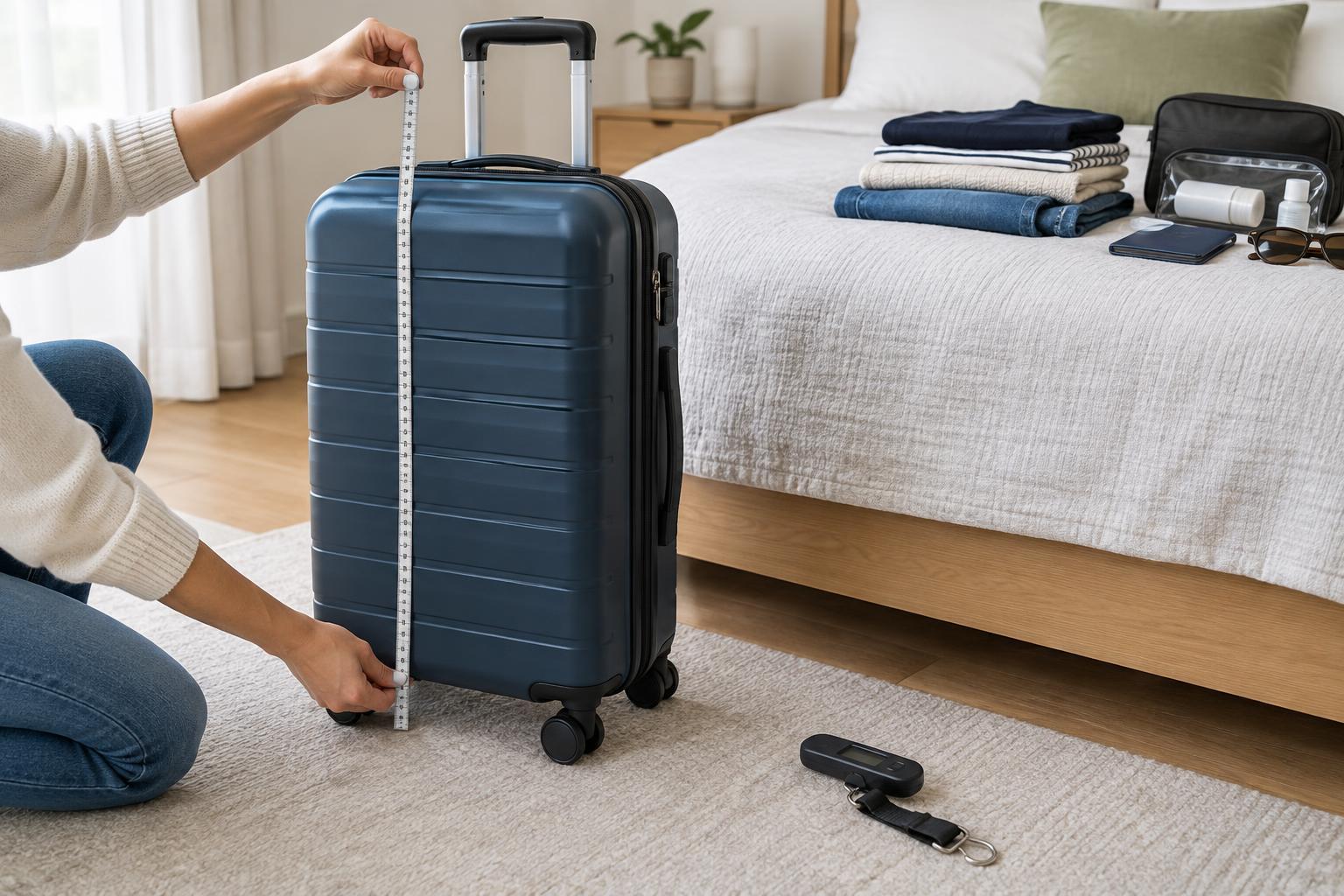
For cabin bags and personal items, look for maximum height, width, and depth. Some airlines state a limit for each dimension, while others may also specify a weight limit. A soft bag is not automatically within the rules: measure it when filled to a realistic level, including any bulging pockets. For a wheeled case, include its wheels, handles, and other protruding parts when comparing it with the published dimensions.
Checked-bag rules may give a maximum weight per piece and a size limit expressed as the sum of length, width, and height. Add all three measurements if that is how the limit is written; do not compare only the suitcase’s longest side. Pay attention to the units, too. A limit in inches should be compared with measurements in inches, and a limit in kilograms with a weight in kilograms. Conversions and rounding can matter when a bag is close to the maximum.
Treat a published maximum as a ceiling, not a packing target. Bags can expand after you add souvenirs, and home measurements are not always exact. Leaving a little space and weight margin gives you more flexibility on the return trip.
Check every flight on the itinerary
A connection can make baggage planning less straightforward. Your ticket may name one airline while another operates the aircraft, or different airlines may operate different legs. Do not assume the rules from the first flight apply throughout the journey. Review the baggage details attached to your ticket and check any operating airlines’ instructions, particularly for cabin bags. If the information conflicts, ask the airline or booking provider which allowance applies to each leg.
Also check for conditions beyond the main allowance. Smaller aircraft may have limited overhead-bin space, and an airline may give instructions about where a cabin bag can travel. If you have separate tickets, review each booking independently, including what you will need to do with checked luggage between flights. Check the return journey as well, especially if it has a different airline or fare.
Measure and weigh before you leave home
Once you know the limits, test the actual bags you intend to take. Measure each bag on a level floor and weigh it after packing, not just when it is empty. A luggage scale is convenient for suitcases; for smaller bags, a suitable household scale may work. Weigh checked bags individually if the allowance is stated per bag. Keeping your luggage within both the size and weight limits is important: meeting one does not make up for exceeding the other.
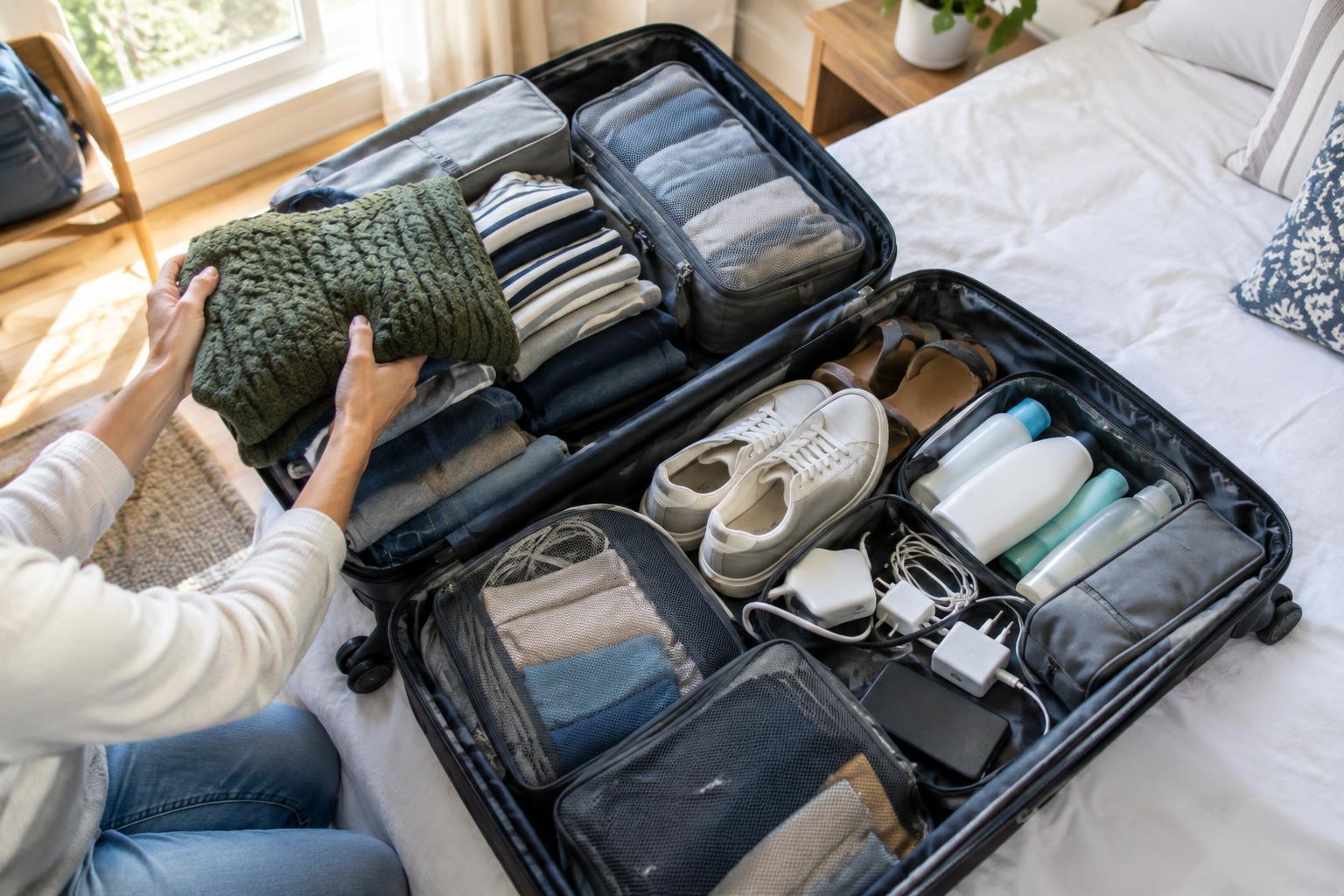
Make a short bag plan as you pack. Decide which items will go in your personal item, cabin bag, and checked bag, and leave room in the appropriate bag for anything you may buy. Check the airline’s separate guidance for items such as liquids, batteries, and sporting equipment; baggage allowance alone does not tell you where every item may be carried. If you need more capacity, compare the available baggage options before departure rather than assuming you can add a bag at the airport on the same terms.
Do one final check close to departure
Before travel day, revisit your booking and the airline’s baggage page in case your flight details or purchased extras have changed. Confirm what is included, what you have added, and whether any leg has a different limit. Keep your booking information accessible, then give your packed bags one last measure and weigh.
The goal is not to memorize every airline’s policy. It is to match the bags you are carrying to the rules for your particular trip. A few checks before you pack can spare you a hurried reshuffle at the airport and make it easier to travel with only what you need.