Start with the two different jobs
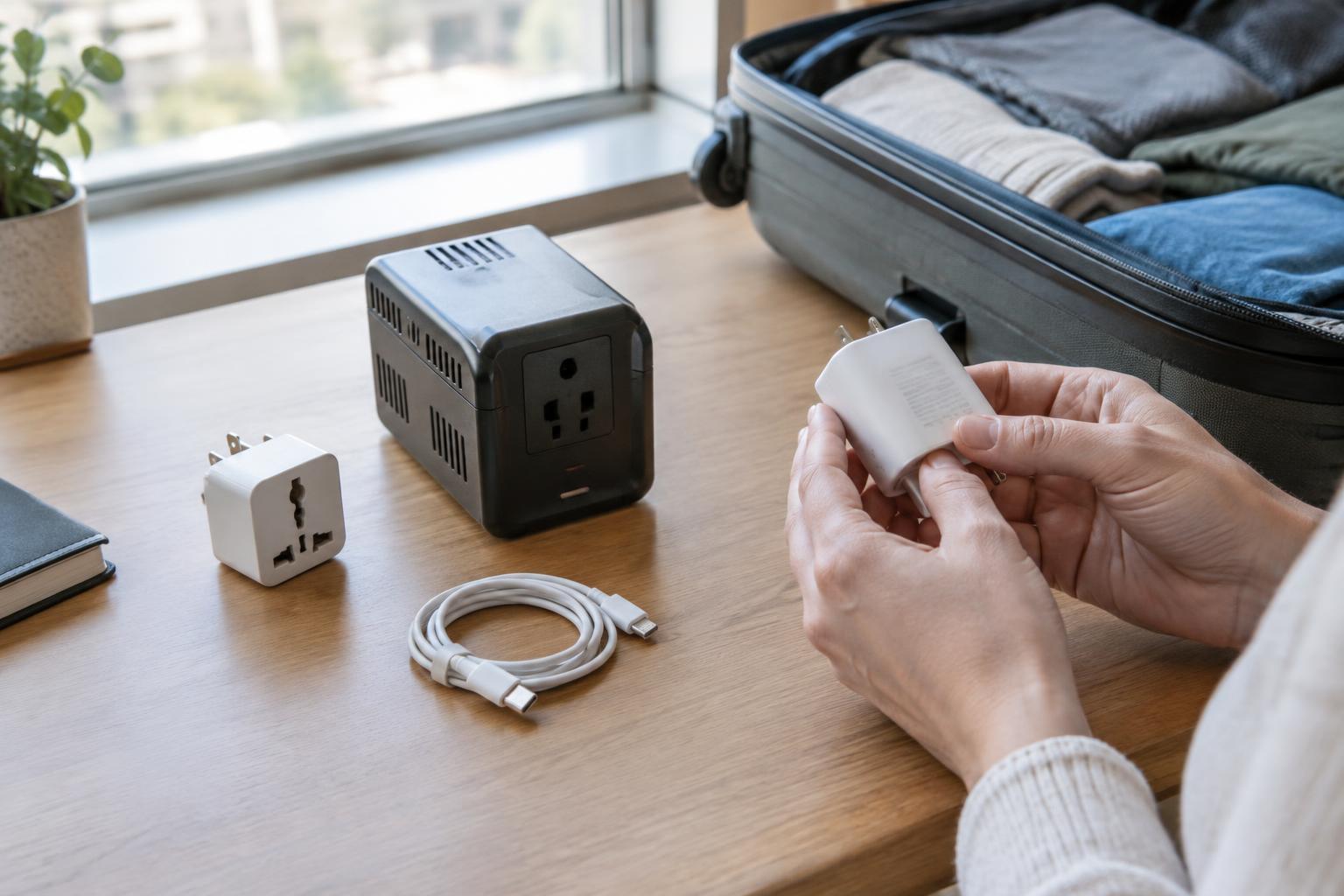
A travel plug adapter lets your plug fit a differently shaped wall outlet. It does not normally change the electricity coming from that outlet. A voltage converter is designed to change the voltage supplied to a device. Some products combine both functions, but a simple adapter should never be treated as a converter.
That distinction matters because outlets vary in two ways: their physical shape and their electrical supply. A charger may be able to handle the local voltage but still need an adapter to fit the wall. Another device might fit with an adapter yet be unsafe to use at that voltage. Check both questions before packing: “Will the plug fit?” and “Can the device accept the supply?”
Read the label before buying anything
Look for the small input label on the item that plugs into the wall. For a phone, laptop, camera or tablet, this is often the charging brick rather than the device itself. An input range such as “100–240V, 50/60Hz” generally means the charger can accept the common household voltage and frequency ranges used around the world. In that case, you typically need only a plug adapter for your destination.
If the label lists just one voltage, do not assume an adapter is enough. Compare that rating with the electrical supply at your destination, including any countries you will pass through. Also check that the plug adapter is appropriate for the outlet type you expect to find. Outlet types can vary within a country, and accommodation may have more than one style, so a compact adapter with several compatible plug options can be useful on a multi-country trip.
Be especially cautious with heat-producing devices
Hair dryers, straighteners, curling irons, travel kettles and similar appliances often draw much more power than small chargers. Some are dual-voltage; others are not. A dual-voltage appliance may have a manual switch that must be set correctly before use. Read its own label and instructions rather than relying on what came with another device.
A voltage converter is not an automatic fix for a high-power appliance. Converters have power limits, and some are intended only for particular types of devices. If a single-voltage appliance cannot be used directly at your destination, the simplest option may be to leave it at home and use a suitable appliance provided by your accommodation or one designed for local use. If you do bring a converter, its instructions must explicitly cover your device type and power draw.
Build a small, sensible charging setup
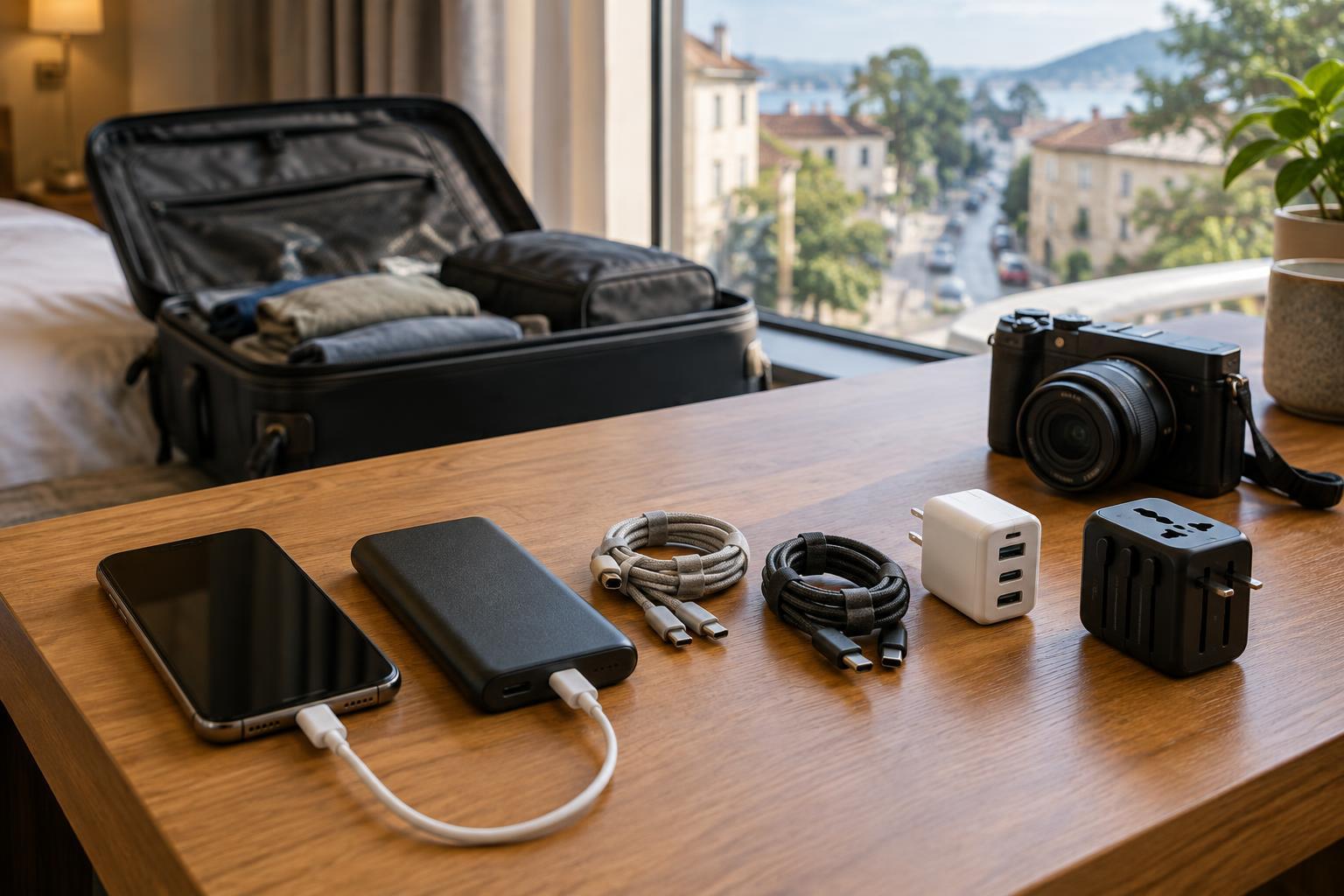
For many travelers, one or two plug adapters plus chargers labeled for a wide input range will cover phones, cameras and laptops. A multi-port USB charger can reduce the number of wall outlets you need, provided it accepts the local supply and delivers enough power for your devices. Check your laptop’s charging requirements in particular: a USB-C port alone does not guarantee that every USB-C charger can power it adequately.
Consider where you will charge your devices. A compact adapter may fit easily behind a bedside table, while a bulky one may block a neighboring outlet or sit loosely in the socket. If you need a grounded connection, choose an adapter that supports grounding where the local outlet provides it. An adapter cannot add a genuine ground to an ungrounded outlet.
Do a final check before departure
Make a list of everything you plan to plug in, including less obvious items such as an electric toothbrush charger, a camera-battery charger or a portable monitor. For each one, note the input voltage and frequency, its plug shape, and any special power requirement. Then check the outlet types and supply for each destination against that list. This takes only a little time and is more reliable than buying a converter “just in case.”
Avoid plugging an unfamiliar power strip or surge protector into an adapter without checking its voltage rating; an adapter does not make the strip suitable for a different supply. When a label is missing or unclear, consult the manufacturer’s instructions or choose another way to charge. The packing rule is straightforward: match the outlet shape with an adapter, and use a converter only when a device truly needs voltage changed and the converter is rated for that specific use.