Pack for the stops you will actually make
Before loading the car, picture a typical travel day: driving, stopping for food, exploring on foot and checking in for the night. Then identify what you will need at each point. A bag that works well at a hotel may be awkward to dig through at a roadside stop, so it helps to separate items by when you will use them rather than packing everything by person or clothing type.
Keep your plan modest. A road trip does not require a special organizer for every object. A few bags or containers you already own may be enough. If several people are traveling, agree on where shared items will go so nobody has to search multiple bags for a charging cable, sunscreen or a clean layer. Leave enough open space to load and unload without rearranging the whole car.
Create a reachable zone for the travel day
Put frequently used items in a small bag that can move easily between the car and a café or rest stop. It might hold tissues, hand sanitizer, charging cables, a reusable water bottle and weather-appropriate layers. Keep snacks together rather than scattered through seat pockets. Choose foods and containers that are manageable in a moving vehicle, and bring a small bag for wrappers until you can dispose of them properly.
Accessibility should not mean leaving loose objects on seats or the floor. Secure bags so they cannot slide around, and keep the driver’s space clear. Store anything needed for a planned stop where a passenger can retrieve it after the car is parked. That simple habit makes stops less disruptive while avoiding the temptation to reach into a packed area during the drive.
Separate overnight items from the rest of the luggage
If the trip includes one-night stays, make it possible to carry in only what you need. Each traveler could use a small overnight bag, or the group could pack one shared bag with sleepwear and basic toiletries. Keep medication and other personal essentials with the person who needs them rather than relying on a shared bag. A separate pouch for chargers helps prevent them from disappearing into a larger suitcase.
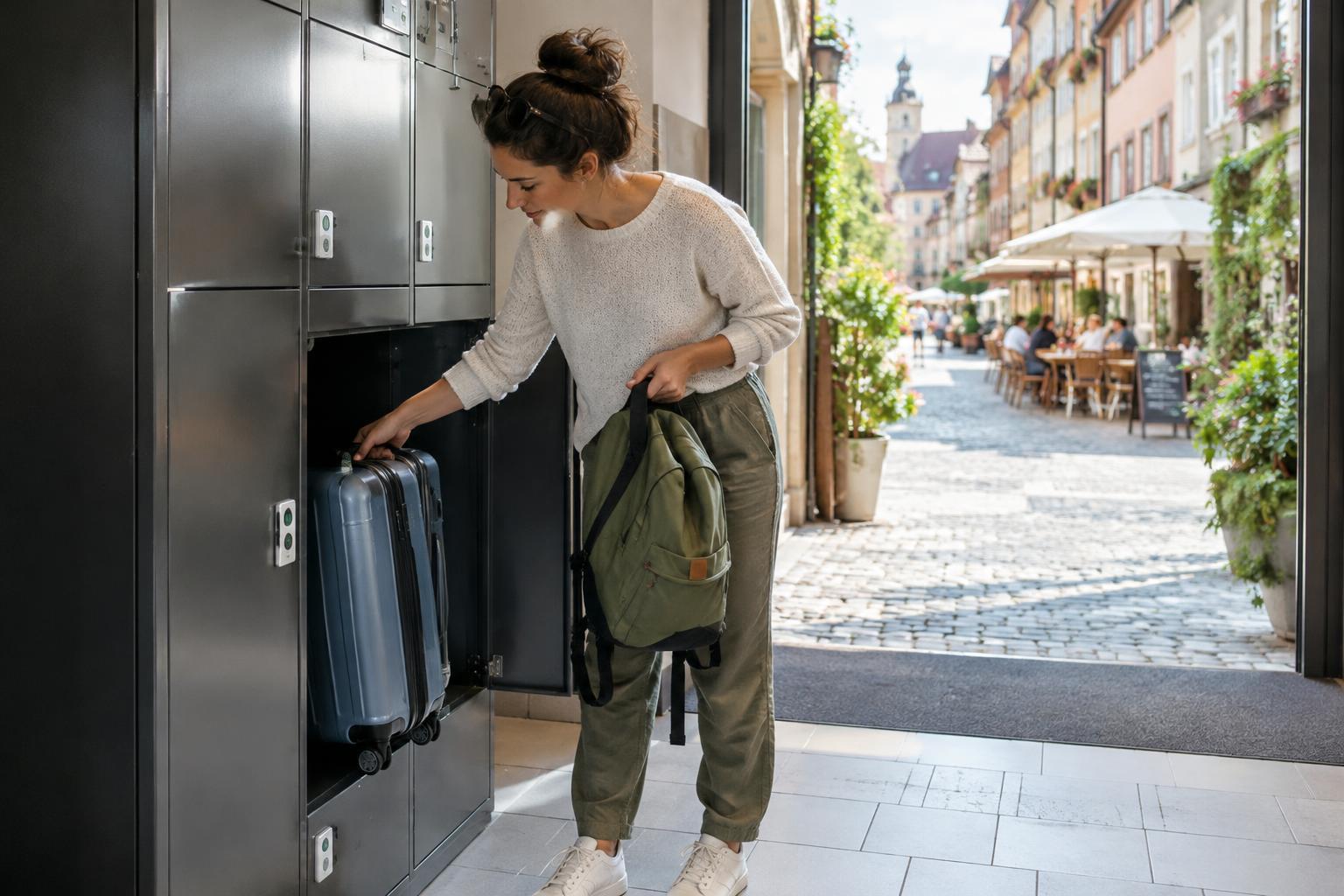
Think ahead to the first few minutes after arrival. A change of clothes, toothbrush and phone charger should not be buried under equipment intended for a later destination. Place heavier or less-used luggage where it can remain undisturbed during short stays. At check-in, take valuables and anything sensitive to temperature with you; a parked car is not a dependable storage place for important belongings.
Give bulky gear a place, not just a space
Hiking shoes, picnic supplies, beach gear or extra coats can quickly take over a vehicle if they have no assigned place. Group items by activity and keep damp or dirty gear apart from clean clothing. An empty bag for wet shoes or sandy items is often more useful than another bag full of just-in-case equipment. Let damp items dry when you have a suitable opportunity instead of sealing them away for days.
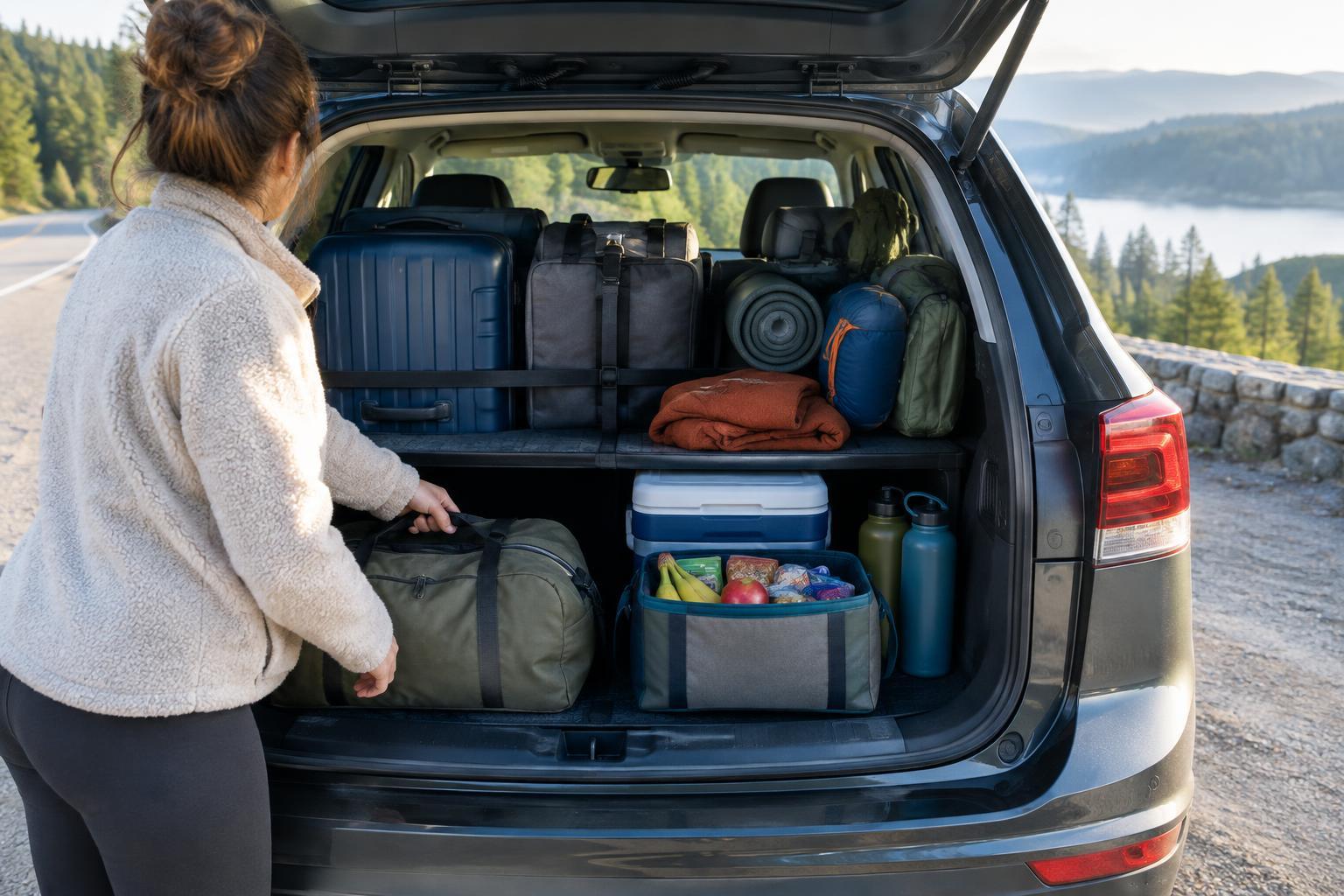
Load with visibility and stability in mind. Keep sightlines clear and avoid piling heavy objects where they could shift during a sudden stop. If luggage must be stacked, put heavier pieces lower and check that doors and seats can be used normally. The goal is not a perfect-looking trunk; it is a layout that stays practical after the first time you remove something.
Reset the car at the end of each day
A short evening reset can save time the next morning. Remove rubbish, refill water bottles where appropriate and return shared items to their assigned places. Check whether tomorrow calls for a different layer, footwear or activity bag, then move those items somewhere easy to reach while the car is parked. This is also a good moment to bring in anything that should not stay in the vehicle overnight.
Before setting off, count the bags you expect to have and confirm that the overnight bag, day bag and any activity gear are back in the car. You do not need a detailed inventory for every stop. A repeatable routine is enough: pack for the next day, secure what is loaded and keep the essentials accessible. That leaves more attention for the trip itself.