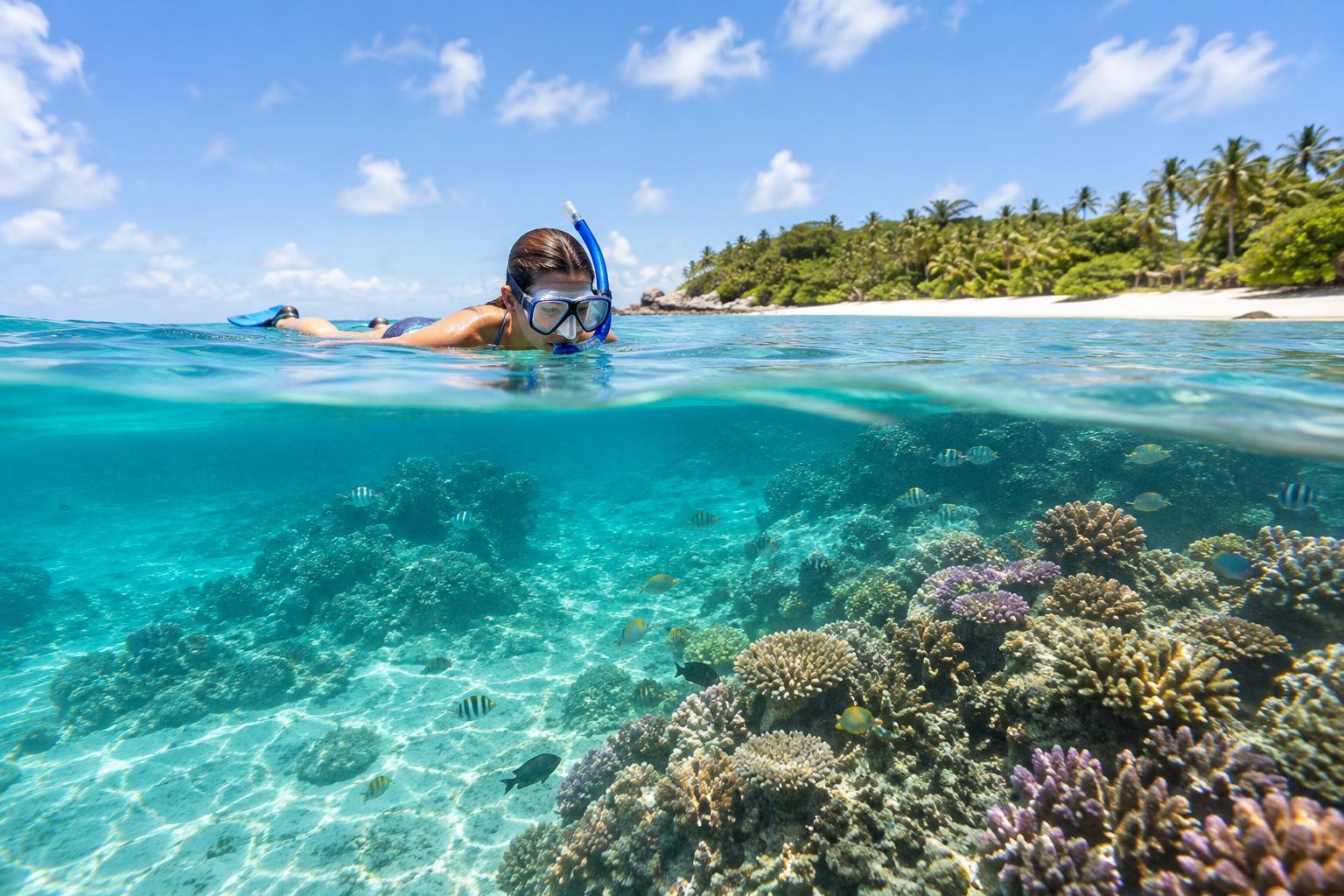
Choose the experience before the destination
It is easy to start with a photograph of brilliant coral and decide to go wherever it was taken. For a first snorkeling trip, begin with a different question: what would make you comfortable enough to enjoy the water? A short swim from a sheltered beach may be more rewarding than a dramatic reef reached by a long, choppy boat ride. The best destination for a beginner is one where the journey to the reef suits their abilities as well as their sense of adventure.
Think about whether you would prefer to enter from a beach, join a small guided outing or snorkel from a boat with a crew nearby. Shore access offers flexibility: you can take a break and try again later. Boat trips may reach reefs that are harder to access independently, but they can involve deeper water and a fixed schedule. Neither option is automatically easier. The entry point, conditions and level of guidance matter more than the label.
Look for manageable water conditions
When comparing destinations, look beyond descriptions such as “clear water” or “excellent reef.” Ask whether beginner sites are sheltered from waves, how far you must swim to see marine life and whether currents are common at the entry point. Clear water can make snorkeling feel more inviting, but visibility may change after rain, wind or rough seas. A destination with several possible sites gives you a better chance of finding a suitable option during your stay.
Seasonal conditions deserve attention before you book. Wind, swell and rainfall can affect both comfort and visibility, and the most pleasant months for a beach holiday may not always be the best for a particular reef. Check destination-specific guidance and ask an accommodation provider or snorkel operator what conditions are typically like during your proposed dates. Treat those answers as planning information, not a guarantee: the sensible site on any given day depends on the weather and water.
Compare reef access and beginner support
A destination can have spectacular coral yet offer few easy ways for a newcomer to see it. Find out what lies between your accommodation and a suitable snorkeling site. Can you walk to a marked entry point, or will you need a taxi and a boat booking? Are there calm, shallow areas where you can practice breathing through a snorkel before going farther? If access is by boat, ask how guests enter and leave the water and whether someone can stay close to less confident swimmers.
A guided trip can be especially useful when you are learning to recognize safe routes around a reef. Before reserving one, ask about group size, swimming expectations, available flotation aids and what happens if conditions change. An operator who explains the site clearly and offers an alternative or cancellation when the water is unsuitable may be a better fit than one promising the most impressive sights. If you are not comfortable swimming in open water, choose an introductory lesson or a different activity rather than relying on equipment to make the experience safe.
Build a trip that works beyond the reef
Snorkeling is weather-dependent, so consider whether you would enjoy the destination even if you spent less time in the water than planned. Beaches, walks, local food and cultural activities can turn an uncertain snorkel day into a satisfying part of the trip. Allowing more than one possible water day also reduces the temptation to go out when conditions feel wrong simply because it is your only chance.
Compare the full cost rather than the room rate alone. A less expensive stay may require paid transfers and repeated boat trips, while a pricier location near suitable shore access could be simpler for a short visit. Check whether equipment is included, whether it fits comfortably and whether you can try it before heading out. A mask that seals well can make a bigger difference to your enjoyment than a long list of reef excursions.
Make reef care part of your choice
Coral reefs are living places, not displays to swim through. Seek out destinations and operators that explain how to avoid touching coral, standing on the reef or chasing wildlife. Good briefings should also cover where to enter and exit so you do not need to push off fragile surfaces. If you are still learning to control your position in the water, practice over sand or in a pool first and consider using a flotation aid where appropriate.
Once you have narrowed your choices, picture an ordinary day there: an easy start, a site suited to your comfort level, time to rest and something enjoyable to do if the sea is uncooperative. That picture is a more useful test than a single striking underwater image. Choose a place that gives you room to learn, and your first reef encounter is more likely to feel memorable for the right reasons.