Start with the landscape, not the postcard
The word “desert” may bring to mind endless sand, but deserts can also hold mountains, salt flats, rock formations and dense stands of plants. For a first visit, that variety matters: the scenery shapes how you get around, what you can do in a day and how much time you will spend outdoors.
Think about the experience you want before choosing a destination. Do you hope to walk on dunes, explore a rocky valley, photograph wide-open salt flats or spot desert wildlife? Also consider whether you would rather join a guided excursion from a town or build a longer journey around the desert itself. The five places below offer different starting points, not interchangeable versions of the same trip.
Morocco: dunes and oasis settlements
For travelers imagining a classic sea of sand, Morocco’s Erg Chebbi dunes near Merzouga are a compelling choice. The appeal is physical as much as visual: walking up a dune takes effort, footprints change the surface, and a short distance can feel much longer than it looks. Nearby villages and oasis landscapes add contrast to the sand.
A dune visit often fits into a wider route through Moroccan towns and mountain passes rather than a quick detour. Allow time for the journey instead of judging the trip by the hours spent on the dunes. Overnight camps range from simple to more comfortable, so check what is included, how you will reach the camp and what bathroom facilities are available. If riding an animal is offered, you can ask about walking or vehicle transfers instead.
Jordan: sandstone corridors in Wadi Rum
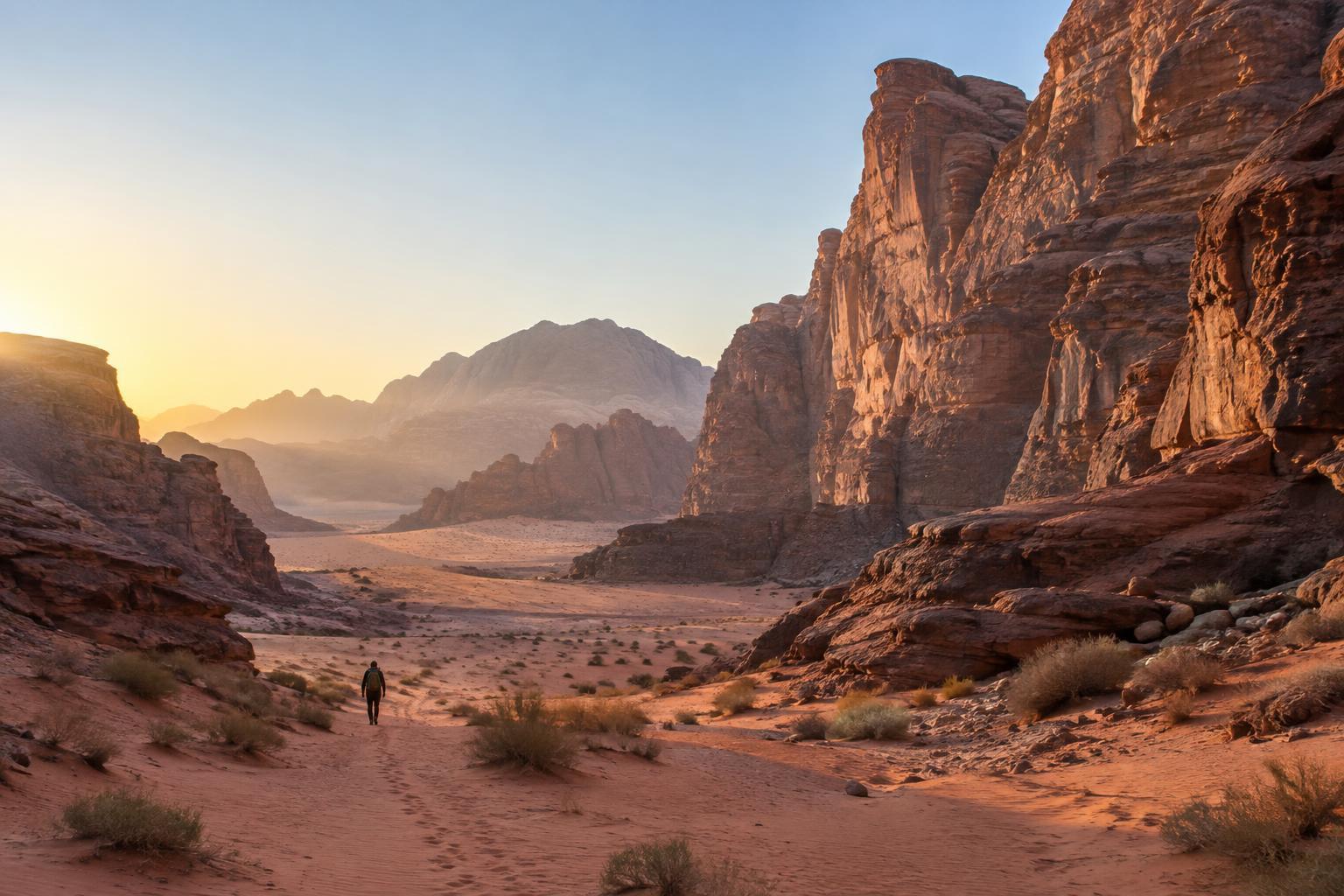
Wadi Rum offers a different kind of desert drama. Broad sandy ground sits between sandstone cliffs, arches and isolated rock formations. Its scale becomes clearest when you move between viewpoints: the valley may look open from a distance, yet each turn reveals another wall of stone or sheltered passage.
Guided vehicle trips are a common way to cover ground, while walks let you notice rock textures and changes in color more slowly. Ask what a tour actually includes; a route focused on stops for photographs will feel different from one with substantial walking. Rock scrambling is not essential to enjoying the landscape. For an overnight stay, confirm the camp’s pickup arrangements and bring a warm layer, since conditions after sunset can feel very different from the afternoon.
Chile: salt, rock and altitude in the Atacama
The Atacama is a strong choice if dunes are not your main interest. Around San Pedro de Atacama, excursions can reveal salt flats, rocky valleys, mineral-colored terrain and high-elevation landscapes. Rather than one continuous view, the reward is seeing how dramatically the surroundings change from one outing to the next.
Altitude is an important planning difference. Some excursions climb much higher than the town, and travelers may respond differently to the thinner air. Keep your first day relatively gentle, ask operators about the elevation and walking involved, and avoid packing every available excursion into a short stay. Distances and early departures can make a seemingly relaxed itinerary tiring. Sun protection, water and layers are useful even when the air feels cool.
The Sonoran Desert: a closer look at desert life
In parts of the Sonoran Desert in the southwestern United States and northwestern Mexico, plants are the headline attraction. Saguaros in suitable areas, other cacti and hardy shrubs make this landscape feel markedly different from a bare sand desert. A short trail can be more rewarding than a long drive if you want to notice plant shapes, birdlife and the way vegetation changes across a slope.
This is a practical first desert experience for travelers who prefer marked trails and established visitor facilities, though conditions vary by location. Choose a walk that matches the season and your ability, carry water, and turn back before you feel depleted. Avoid touching unfamiliar plants or reaching into sheltered spaces. If seeing saguaros is a priority, check your specific destination: they do not grow throughout the entire Sonoran Desert.
Namibia: giant dunes near the Atlantic coast
Namibia’s Namib Desert brings together towering dunes, pale pans and, in some areas, a striking meeting of desert and coast. The Sossusvlei area is known for dune scenery and walks across exposed terrain. It suits travelers who want broad views and have time to make the journey part of a larger itinerary.
Plan around access as carefully as scenery. Driving distances can be substantial, road conditions may differ from familiar paved routes, and some sights involve both a vehicle transfer and a walk. Check the final approach before setting out, particularly if you are driving yourself. Early starts can make walking more comfortable, but the simplest first visit is not necessarily the one with the most stops. Pick a few places to explore properly and leave room for the travel between them.