Start with how you will actually spend
Before choosing what to pack, sketch out the payments your trip will involve. Accommodation and long-distance transport may be paid before departure, while meals, local transit, tips and small purchases may be paid as you go. Look at each booking to see whether a balance is due on arrival and whether the property expects a card, cash or a deposit. A destination that feels largely cashless can still have small businesses or transport services that prefer cash.
Check the payment information for your destination and the places on your itinerary, rather than assuming one method will work everywhere. Card networks, contactless terminals, ATM access and cash customs vary by location. If you will arrive late, travel somewhere remote or cross a border, plan how you will pay before you reach a working ATM. The goal is not to predict every purchase; it is to avoid relying on a single way to pay.
Check your cards before you leave
Review the terms for each card you might take. Look for foreign transaction fees, overseas ATM fees, cash withdrawal limits and any charges that apply when you withdraw cash with a credit card. A credit-card cash withdrawal may be treated differently from a purchase, so it is worth checking its terms rather than using it as your default source of cash. Confirm that your cards are active, that you know any required PINs and that you can access your account securely while traveling.
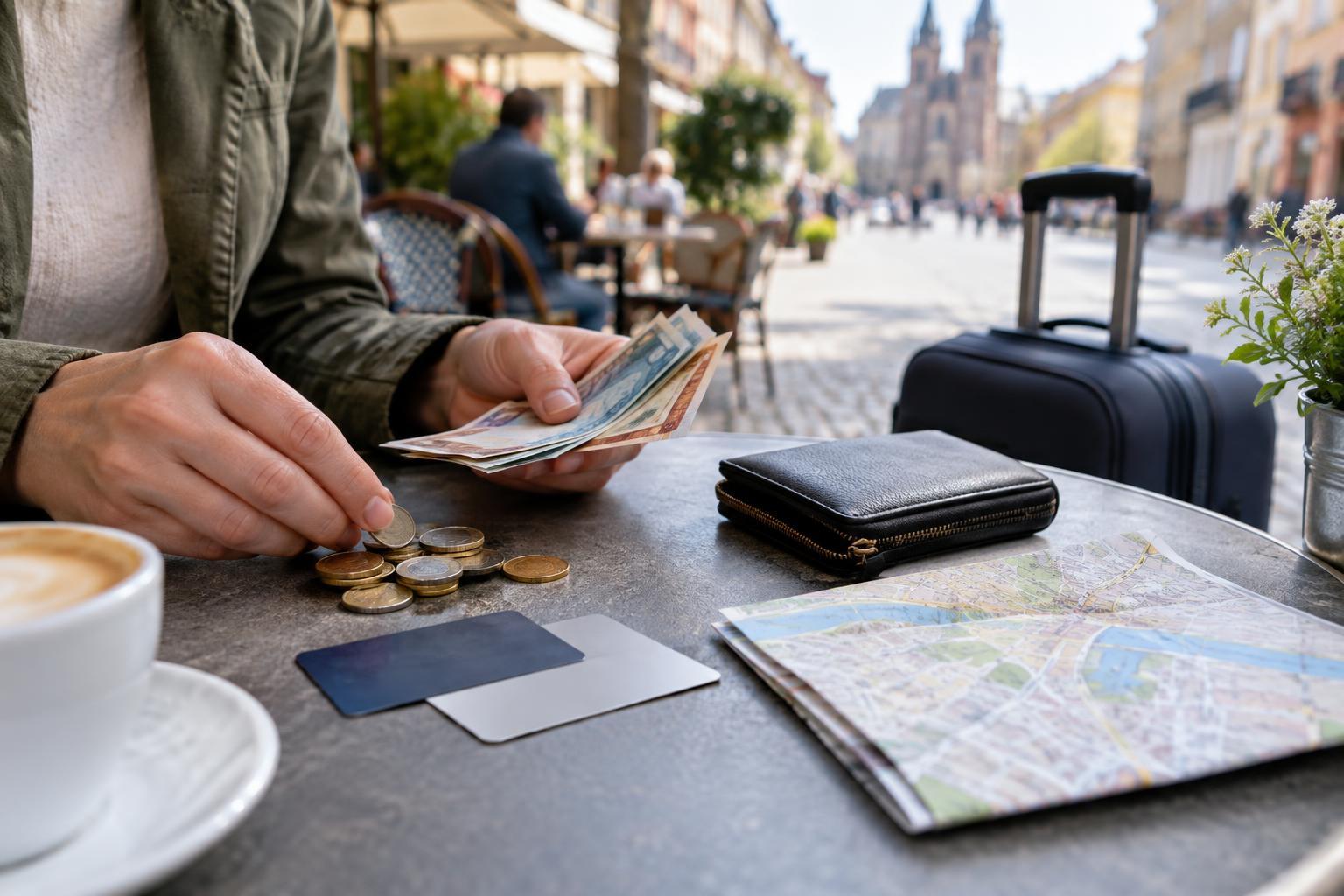
Take at least two usable payment methods if you can, and keep them in separate places. A backup is helpful if a card is lost, a terminal rejects one network or an issuer blocks an unfamiliar transaction. Check whether your provider wants a travel notice and make sure it has a reliable way to reach you. Save the provider’s lost-card contact details somewhere you can access without the card itself.
Understand the price behind a card payment
A purchase abroad may involve a currency exchange rate plus a fee charged by your card provider. The fee may appear as a separate line or be reflected in the amount posted to your account; your card terms and statement should explain how it works. If you are comparing cards, check the fees for the kind of transaction you expect to make, not just the headline description of the card.
At some terminals, you may be asked whether to pay in the local currency or your home currency. Choosing your home currency usually means the merchant or its payment processor performs the conversion, sometimes called dynamic currency conversion. That offer can include its own rate or markup. You can generally choose the local currency and let your card provider handle the conversion, but check the displayed terms if you are unsure. Also remember that a hotel or car rental company may place a temporary hold on your card; leave room for it in your available balance.
Plan cash withdrawals, not just cash to pack
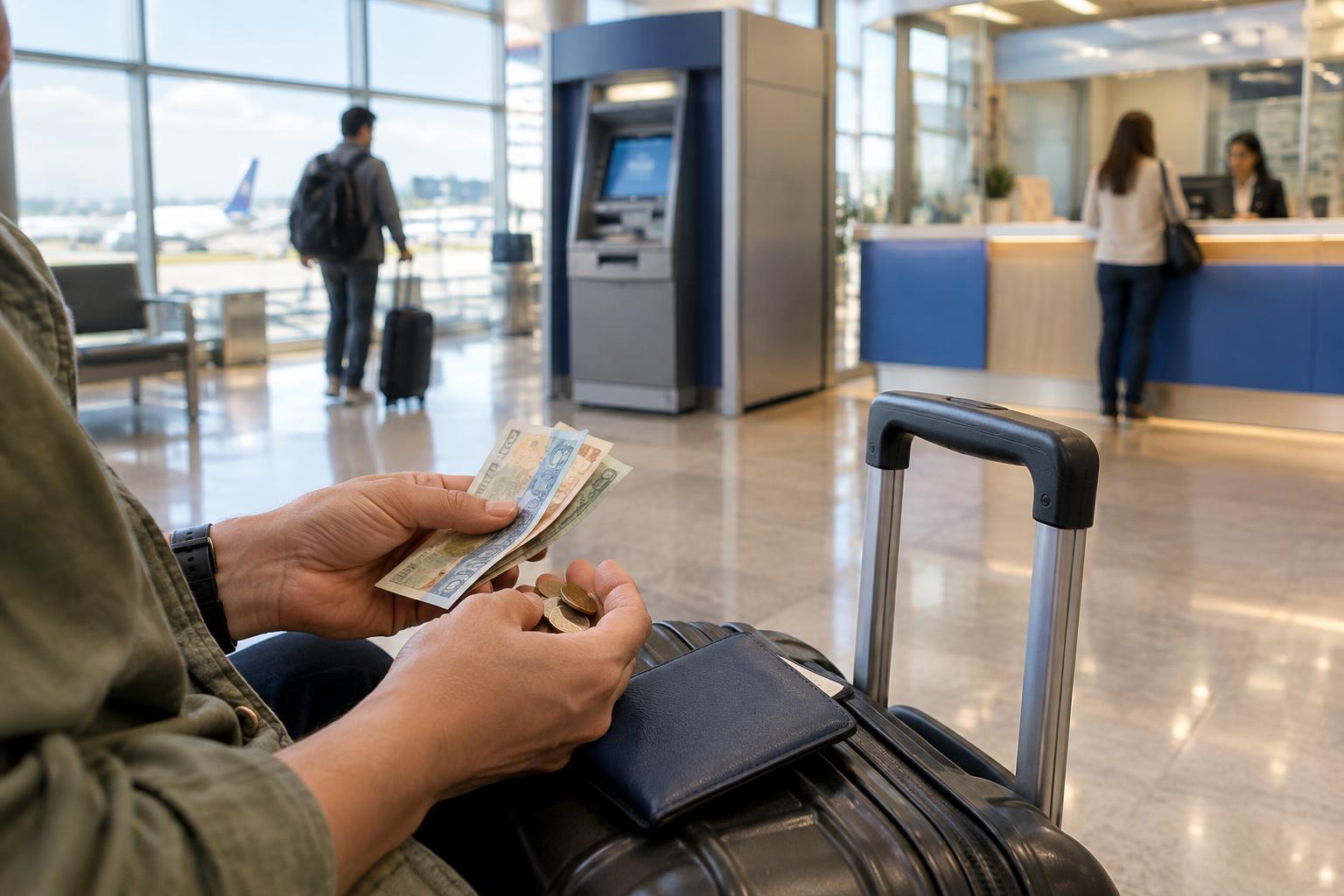
Local cash is useful for small purchases, places without card terminals and situations where a terminal is offline. You do not necessarily need to carry enough for the entire trip. Instead, consider a modest amount for arrival and a plan for obtaining more from an ATM when needed. If you expect to use an airport ATM, have another way to cover the journey onward in case it is unavailable.
An ATM withdrawal can involve several separate costs: a fee from your bank or card provider, a fee charged by the ATM operator and currency conversion. Read the screen before accepting a withdrawal, especially if it offers to convert the amount into your home currency. Where possible, use an ATM in a well-lit, established location, shield your PIN and put cash away before leaving. Avoid carrying all your cash in one place, and keep enough for immediate needs without making every withdrawal so small that repeated fixed fees add up.
Build a simple payment backup plan
Before departure, make a short payment note: which card you will use for everyday purchases, which one is the backup, how you will obtain cash and what fees or limits apply. Store it securely rather than alongside your wallet. If you use a phone wallet, take a physical card too; a flat battery, damaged phone or incompatible terminal should not leave you without a way to pay.
Once away, check transactions periodically so you can spot unexpected charges and keep track of your remaining funds. Keep receipts for large purchases, deposits and disputed payments. If a card fails, try a different payment method before repeating the same transaction several times, then contact the provider if needed. A good setup is flexible: it lets you pay for ordinary travel days and still get through a missed ATM, a lost wallet or a changed itinerary.