Plan for the trip home before you buy
A fragile souvenir is easiest to protect when you consider its journey before paying for it. Picture the item inside your luggage: Is it small enough to sit away from the bag’s edges? Does it have a handle, narrow stem or projecting corner? Can you carry it comfortably alongside everything you already own? An object that fits in a shop bag may still be awkward to pack securely.
Ask the seller whether the item comes with a sturdy box or protective wrap, and inspect it before leaving the shop. Keep any receipt and information about the material, especially for objects made from wood, plant material, animal products or other materials that may be subject to import rules. If you are flying, check your airline’s baggage limits and the relevant security and customs rules for your route. A large bottle, sharp-edged piece or oversized object may not be suitable for a carry-on, even if it is delicate.
Build a small protection kit
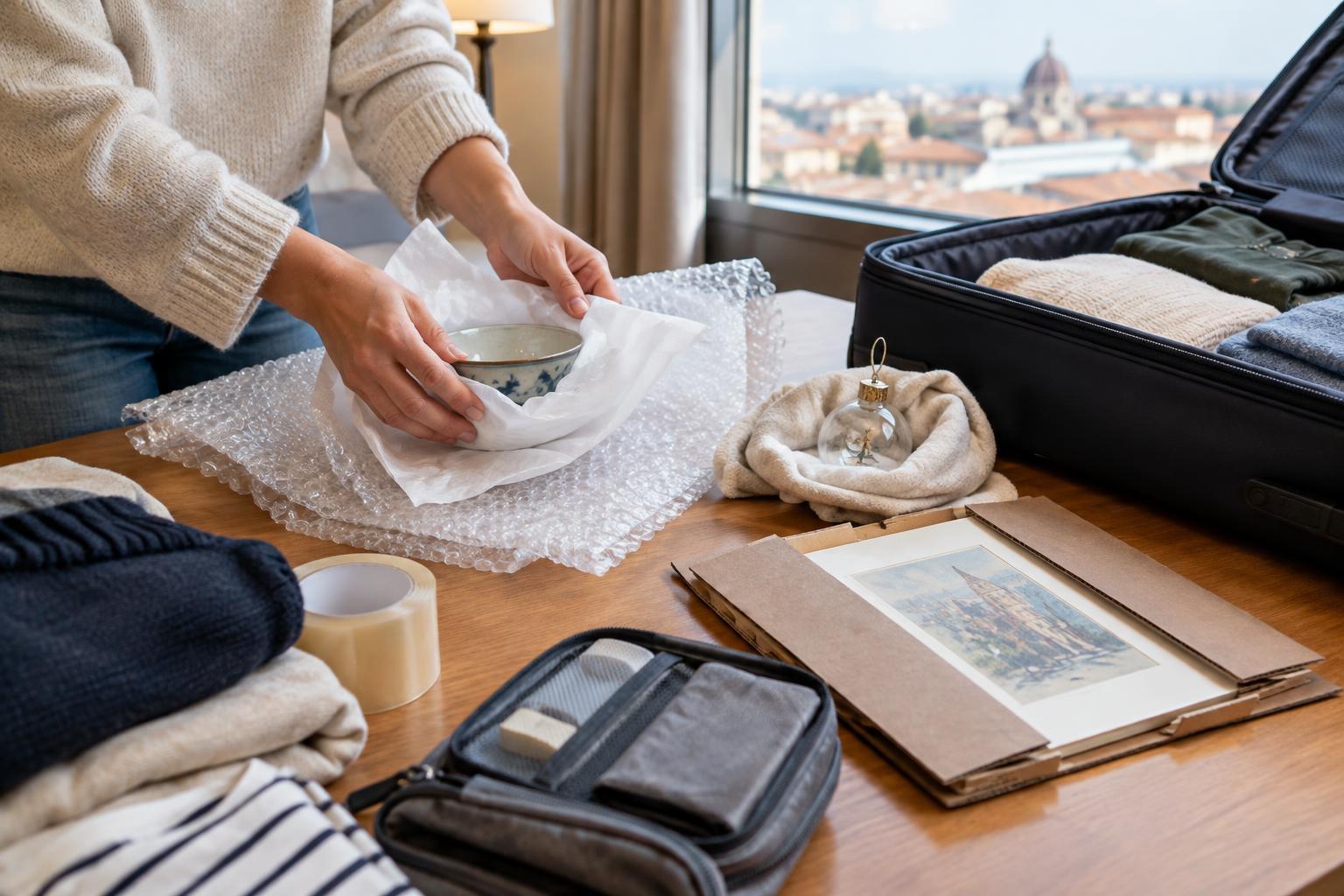
You do not need a suitcase full of specialist supplies. A few reusable zip-top bags, a soft cloth or scarf, and a compact sheet of bubble wrap or foam can help with unexpected purchases. For a particularly delicate item, look for a rigid box and enough padding to fill the space around it. Clothing works well as an outer cushion, but a thin T-shirt alone may not protect a glass rim or ceramic handle from a direct impact.
Pack in layers rather than making one tight bundle. First, protect the item’s surface with clean paper or soft fabric. Then cushion vulnerable points and place it in a box or other firm container. Finally, fill empty spaces so it cannot shift when the container is gently moved. Avoid pressing tape directly onto painted, glazed or delicate surfaces; adhesive may leave residue or pull away a finish. If the item has several parts, wrap them separately so they cannot knock together.
Match the method to the souvenir
For mugs, bowls and small vases, pay special attention to rims, bases and handles. Pad any hollow interior without forcing material inside it, then wrap the whole piece. A handle needs support on both sides so pressure does not fall on its narrowest point. Nesting ceramics may save space, but place cushioning between each piece and avoid stacking them if they fit tightly.
For glass, use a rigid box whenever possible and keep the object from touching its walls. Small ornaments can go in individual compartments; a bottle should have padding around its neck and base and be enclosed in a leak-resistant bag if it contains liquid. Keep glass away from heavy shoes or hard toiletries. Prints and posters are often safest in a sturdy tube sized to prevent sliding. If a print must travel flat, sandwich it between clean, rigid boards without taping the artwork itself. Textiles may need less impact protection, but a clean bag can keep them dry and prevent snags.
Choose where the item will travel
Carry-on luggage can be a good choice for small, valuable or irreplaceable pieces because you can limit how much handling they receive. It is not automatically safer, though: an overfilled bag, a crowded overhead bin or an unexpected requirement to check the bag can put pressure on its contents. Keep the item in a firm container, and make sure you can carry it without relying on it as a cushion for other belongings.
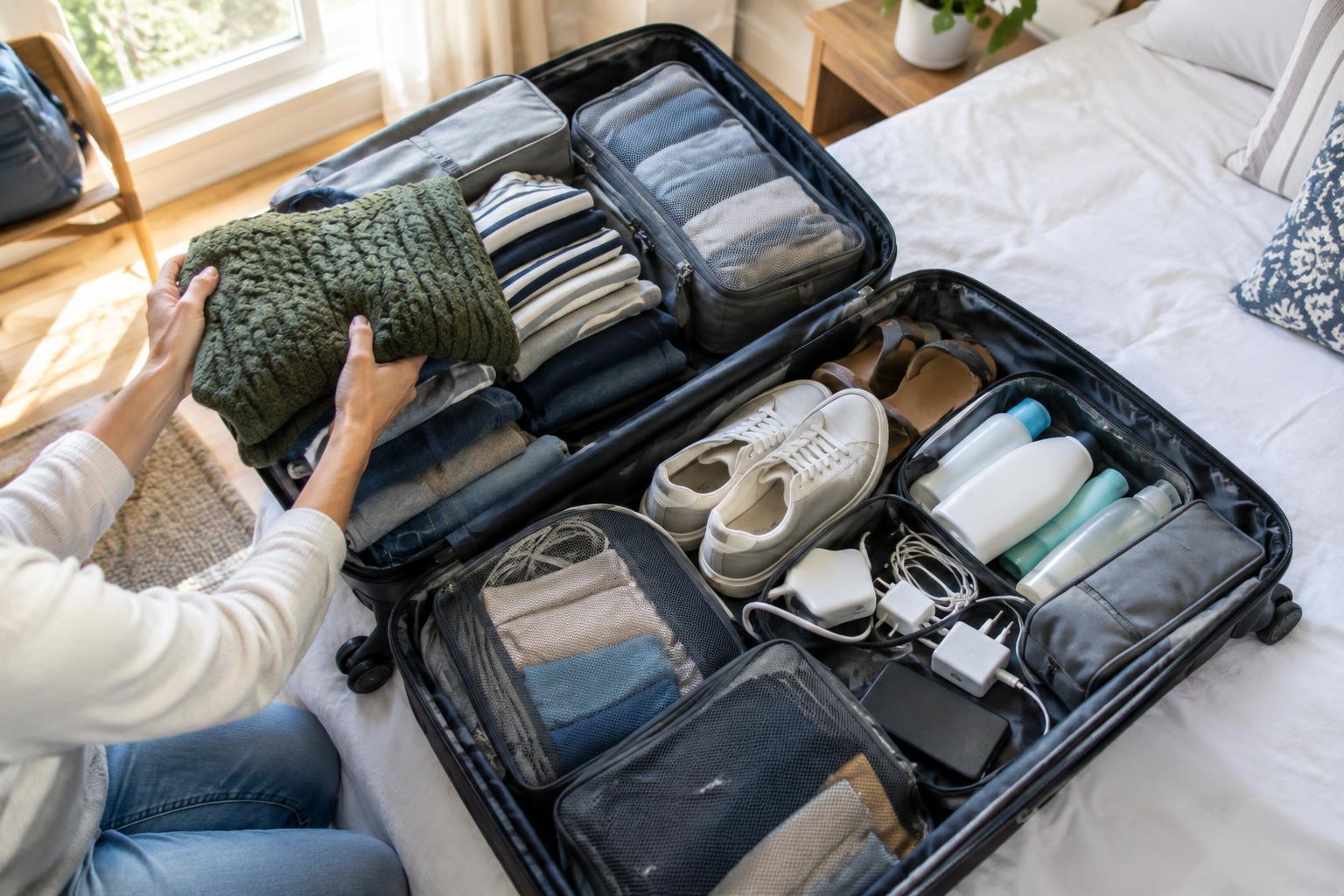
In a checked suitcase, place the wrapped item near the center, surrounded on all sides by soft clothing. Keep it away from wheels, corners and the outer shell, and do not pack heavy objects above it. A hard-sided suitcase may provide useful structure, but careful cushioning still matters. If a purchase is too large to pack without strain, ask the seller about shipping or compare other shipping options. Discuss packaging, tracking and coverage before sending it, and keep copies of the purchase and shipping paperwork.
Do a final movement check
Before closing your bag, lift and gently tilt it. If you hear or feel the souvenir moving, add padding or use a smaller container. The goal is to prevent movement without squeezing the object. Check that the suitcase closes easily; forcing the zip shut can transfer pressure straight to a fragile piece. Photographing the item and its packaging before departure can also give you a useful record if you need to identify damage later.
Once home, unpack fragile purchases rather than leaving them under other luggage. Remove wrapping slowly, particularly around handles and narrow parts, and check for any loose pieces before discarding the packaging. With a little planning, your souvenir can arrive as more than a memory of the trip: it can be something you enjoy using or displaying for years.