Start with the trip, not the forecast
Rain gear earns its place in your bag when it lets you keep exploring comfortably. Before choosing a single item, picture a wet day on your trip. Will you be walking between museums, standing at a viewpoint, hiking for hours or carrying a daypack? Consider wind, temperature and how often you will need to put your rain protection on and take it off. A short shower in a city calls for a different solution from steady rain on an exposed trail.
Also decide what must stay dry. An umbrella can shelter your head and upper body, while a poncho may cover a backpack as well. A waterproof jacket protects you when your hands need to be free, but your bag may need its own cover. No option will keep everything dry in every condition, so choose for the activities you are most likely to do rather than an unlikely worst-case scenario.
Umbrella: convenient for streets and short walks
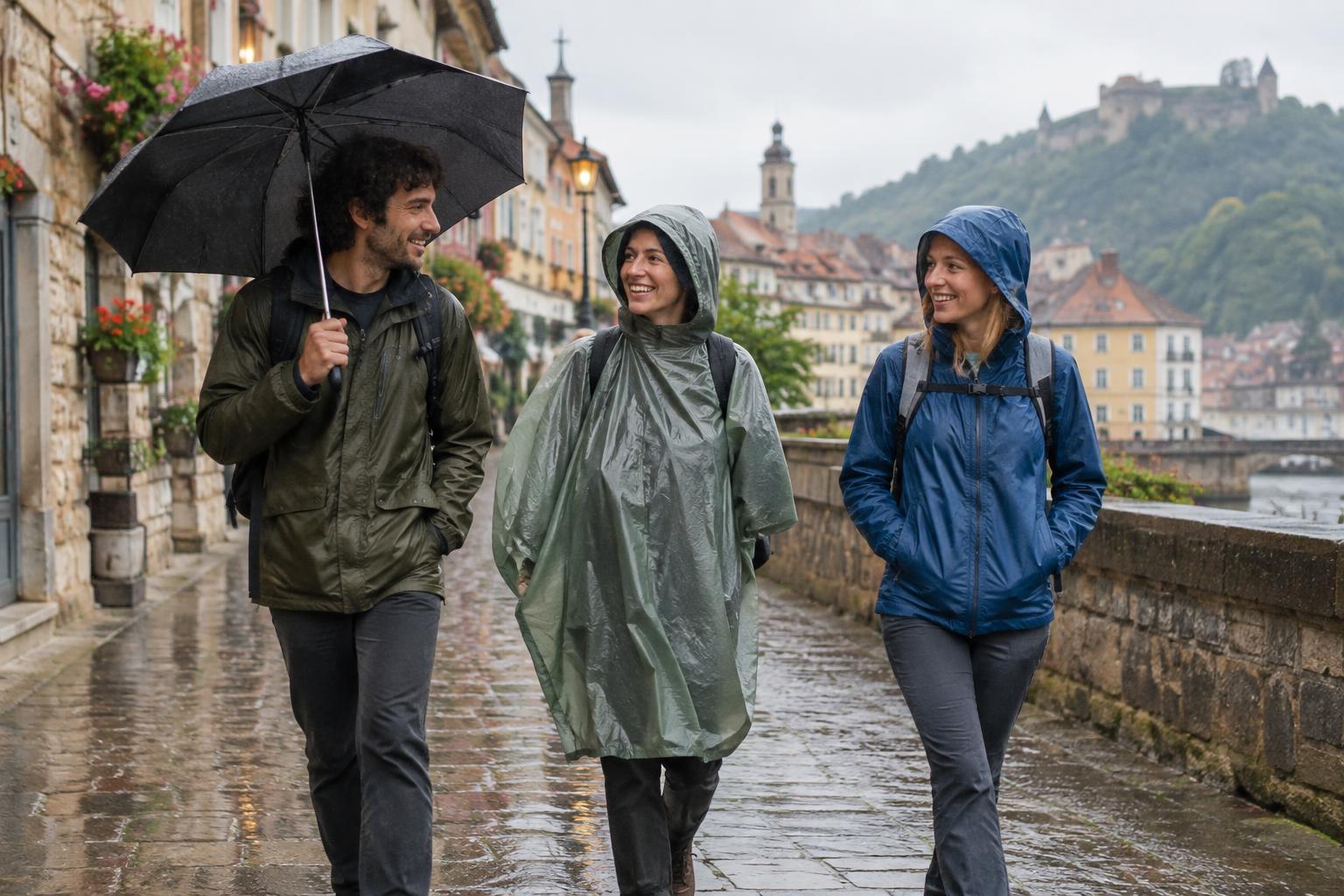
A compact umbrella is easy to share between days of sightseeing and ordinary errands. It goes over the clothes you already planned to wear, offers shade from light rain without adding a warm layer, and is simple to close when you step into a café or onto public transport. If you expect occasional showers in towns, it can be the most comfortable choice, particularly when the weather is mild.
Its drawbacks become clear when you need both hands or the wind picks up. An umbrella offers limited protection to your legs and pack, can be awkward on crowded pavements, and needs somewhere to drip after use. Check its closed length against your day bag, and consider whether you will realistically carry it every morning. It works best as everyday convenience, not as your only protection for a long walk far from shelter.
Poncho: generous coverage with a loose fit
A poncho is useful when you want one layer that can go over your clothing and, depending on its cut, a small backpack. Its loose shape makes it quick to pull on over different outfits and allows air to circulate. A lightweight version can be a sensible backup for sightseeing, outdoor events or trips where rain is possible but you do not want to pack a dedicated jacket.
Check the coverage before relying on one. Some ponchos end well above the knees or leave the sides open, while pack-covering designs may fit differently once your bag is underneath. Loose fabric can flap in strong wind, snag in tight spaces or interfere with walking where you need to see your feet. Try yours on with the pack you intend to carry, and make sure you can move, use your hands and see clearly.
Waterproof jacket: the versatile hands-free option
A waterproof jacket is often the strongest single choice for active days. It stays with you while you take photos, use walking poles or manage luggage, and it can double as a wind-blocking outer layer. For cool or changeable trips, you can adjust the layers underneath instead of packing a separate coat for every temperature. Look for a hood you can adjust, cuffs that close comfortably and enough room for the clothes you will wear beneath it.
Pay attention to the wording on the label. Water-resistant jackets may handle light showers but are not necessarily designed for prolonged rain; a waterproof jacket is the more appropriate starting point when you expect extended exposure. Even a good shell can feel clammy during exertion, so vents and a comfortable fit matter. Jackets also leave trousers and backpacks exposed. If your plans include long wet walks, think about rain trousers or pack protection rather than expecting the jacket to do every job.
Choose a combination you will actually carry
For a city break with brief outdoor walks, start with a compact umbrella or poncho that fits in your day bag. For hiking or frequent outdoor activities, prioritize a waterproof jacket and add protection for your pack and legs if those will be exposed for long periods. On a mixed itinerary, an umbrella plus a light jacket can be more useful than one item forced to cover every situation. You do not need to buy all three if your plans do not justify them.
Before departure, test your setup on a walk close to home. Pack it where you can reach it without unpacking your bag, check that closures and hoods work, and note how much space the item takes when wet. Keep a small bag or separate compartment available for damp gear, then air it out when you reach your accommodation. The best choice is the one that fits your activities, feels comfortable and is easy enough to carry that it will be with you when rain arrives.