Decide what you want from the visit
A famous viewpoint can be a wonderful reason to travel, but it tells you little about the rest of the day. Before choosing a waterfall destination, picture the experience you want: a short, accessible stop; a quiet walk through forest; a challenging hike; or a base for several days outdoors. Two waterfalls that look similar in photographs may require very different amounts of time and effort to visit.
Start by asking what would make the trip satisfying even if the light is flat or the waterfall is partly obscured by mist. Perhaps you want a picnic area, a loop trail, opportunities to watch wildlife from a distance, or a town where you can spend an unhurried evening. This shifts the decision from finding the most dramatic image to choosing a place you will enjoy being.
Compare the whole route, not just the final lookout
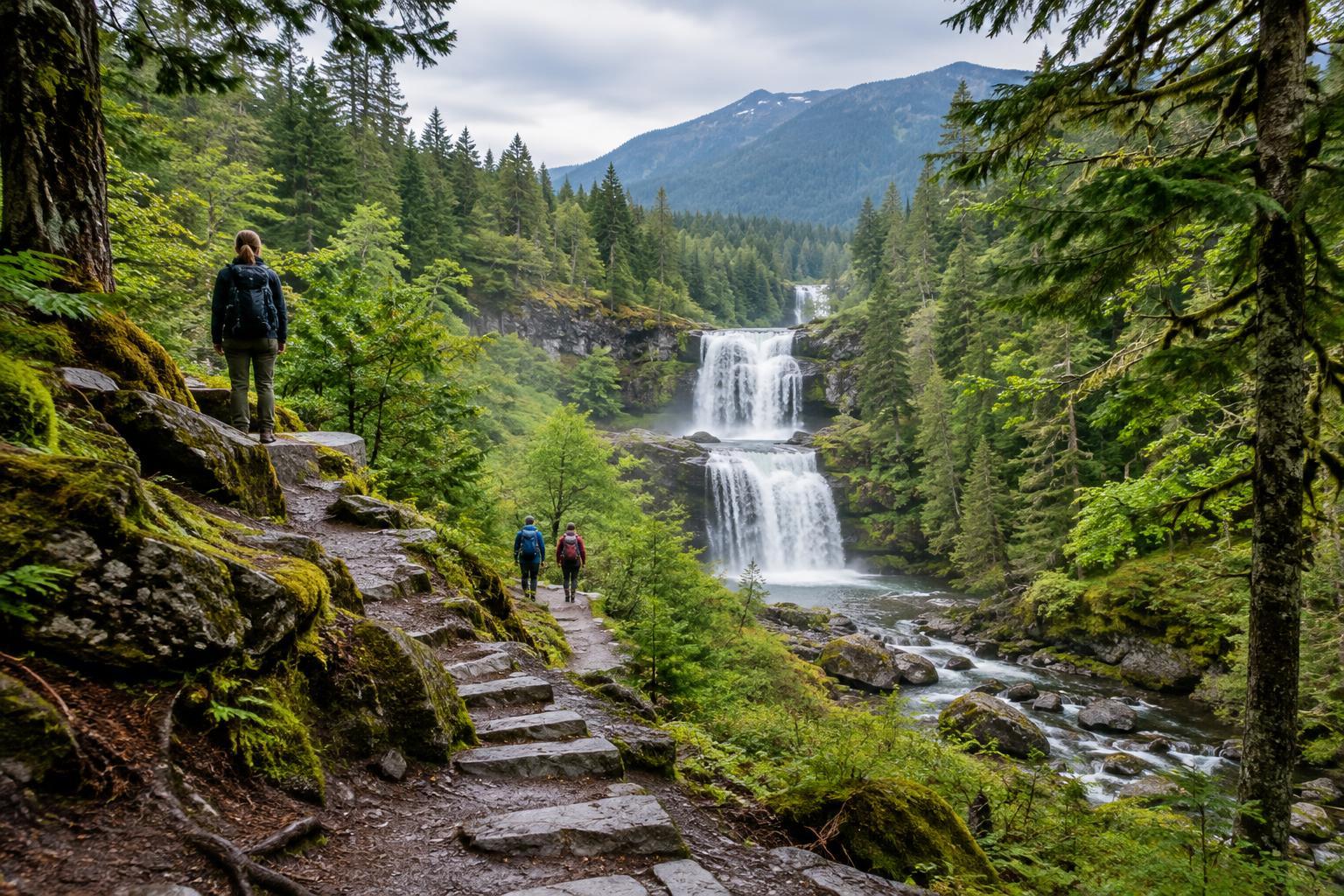
Check how you reach the waterfall from where you plan to stay. A short walking distance on a map does not necessarily mean an easy visit: the path might have steep steps, uneven ground or limited shade. Look for descriptions of the route’s surface, elevation change and likely walking time, as well as whether the viewpoint is reachable without taking the main trail. If anyone in your group has mobility needs, treat accessibility as a specific feature to verify rather than an assumption.
The journey can also be part of the appeal. One destination might offer several viewpoints along a riverside path, while another has a single platform at the end of a long drive. Consider whether you would enjoy the approach, how much time you want to spend on your feet and whether there is a reasonable way to turn back early. For a group with mixed energy levels, a place with both a straightforward viewpoint and optional longer trails can offer more flexibility.
Think in terms of conditions, not a perfect season
Waterfalls change with rainfall, snowmelt and dry spells. More water can create a powerful scene, but it can also mean muddy paths, heavy spray or restricted access. Lower flow may reveal rock formations and make surrounding walks more comfortable. Rather than assuming there is one universally best time to go, decide which conditions matter most to you and check locally available visitor information as your trip approaches.
Weather affects the experience beyond the volume of water. A shaded gorge may feel cool even when the surrounding area is warm, and wet stone can be slippery at any time. Build some flexibility into your plan if the waterfall is the centerpiece of your trip. A second walk, museum, market or scenic drive nearby gives you an appealing alternative if conditions make the main trail unsuitable.
Look at what surrounds the waterfall
A destination becomes more compelling when it fits into a trip you would want to take anyway. Explore the nearby landscape: are there other trails, places to swim where swimming is permitted, distinctive villages or viewpoints that reward a longer stay? If you are traveling for cultural experiences as well as scenery, look for locally run accommodations, food and activities that interest you without treating the waterfall as the only attraction.
The surrounding area matters for logistics, too. Compare the distance from your accommodation, the availability of public transport or parking, and whether food and restrooms are close by. A remote waterfall may be worth the extra planning, but a less famous site near your route could leave more time and budget for the rest of the journey. Choosing the convenient option is not settling if it better matches your travel style.
Make a realistic shortlist
Choose two or three candidates and compare them using the same questions: How long will the full outing take? What does it cost to reach and visit? Is there a trail suitable for everyone in your party? What else would you do nearby? Include transport, lodging and any required entry or parking arrangements in the comparison, not just the price at the gate. Leave room in your schedule for a slower walk, a meal and unexpected changes.
Before committing, check the relevant park or site information for trail status, access rules and permitted activities. Stay on designated routes, respect barriers and avoid entering water simply because other visitors do; currents and submerged hazards may be difficult to judge from the bank. The best waterfall destination is not necessarily the tallest or most photographed. It is the one whose journey, surroundings and practical demands add up to a trip you can enjoy responsibly.