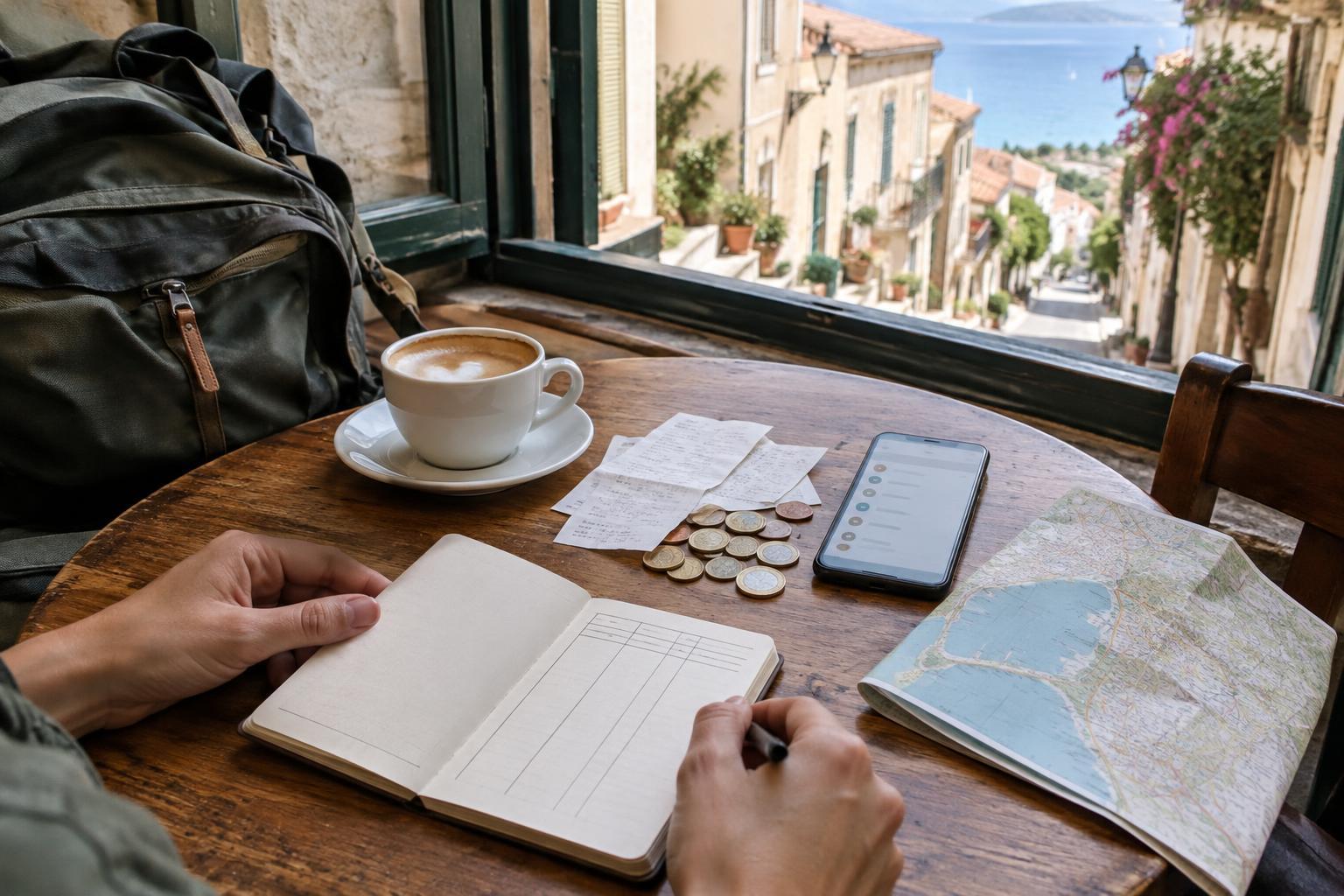
Start with one trip budget and a few useful categories
Before booking anything, make a list of the costs you expect: transport to and from your destination, accommodation, local travel, meals, activities, insurance and any travel documents you may need. Add a category for small extras such as snacks, tips, laundry or luggage storage. The aim is not to predict every purchase. It is to make sure the obvious costs are visible before they compete with your daily spending money.
Use whatever you will actually keep up to date: a spreadsheet, notes app or paper notebook. Give each expense a date, category, amount and short description. Add two columns if helpful: “estimated” and “actual.” Keeping both figures lets you see where your early assumptions were close and where the trip is costing more or less than expected.
Set aside a flexible amount for unplanned expenses rather than assigning every bit of your budget to a reservation or activity. How much you need depends on the trip, but leaving some room makes it easier to respond to a delayed journey, a change of plans or an opportunity you decide is worth the cost.
Record pre-trip payments as soon as you make them
Flights, deposits and advance tickets can be paid weeks or months before departure. Enter each payment when it happens, even if the experience itself is later. Mark whether it is paid in full, partly paid or still due. That distinction prevents a deposit from looking like the total price and helps you avoid counting a fully paid booking twice when you reach the destination.
For each reservation, note the amount, currency, payment method and any remaining balance. Keep confirmation details somewhere you can find them, but you do not need to copy sensitive card information into your tracker. If a booking can be cancelled or changed, note the terms that matter to your plans and check the original confirmation before making changes.
Before departure, total what you have already paid and what you still expect to spend. The second figure is the more useful guide for deciding how much cash or available spending money to have during the trip.
Make daily tracking quick enough to maintain
During the trip, choose a routine you can complete in a few minutes. Record purchases as you make them or gather receipts and enter them each evening. If an exact amount is missing, write down a reasonable estimate and label it as such; an imperfect record is more useful than a tracker abandoned after two days.
Keep categories broad. “Food,” “local transport” and “activities” are often enough to show where money is going. For a longer trip, a short note beside an unusual expense can help you understand it later. A costly travel day may reflect an airport transfer rather than a pattern you need to fix.
Check your remaining amount against the days and known payments ahead, not just against what you have spent so far. If several prepaid days are coming up, your daily costs may fall. If a tour balance or train fare is still due, keep that money separate in your plan before treating the remainder as available for spontaneous choices.
Keep currencies and shared expenses clear
When spending in more than one currency, record the amount in the currency you paid and, if useful, an approximate amount in your home currency. Use the conversion rate shown by your payment provider when it becomes available; until then, mark any conversion as an estimate. Fees and rates can vary, so the price on a menu and the final amount on a statement may differ.
Cash withdrawals need special care. A withdrawal moves money from an account into your wallet; it is not, by itself, the same as spending it. Record the withdrawal separately, then track purchases made with the cash. This avoids counting the same money twice. Include any withdrawal fee as an expense if one applies.
For a group trip, write down who paid and how the cost will be split. Settle shared expenses at agreed intervals rather than relying on everyone to remember them at the end. A shared note or expense-splitting app can work, provided everyone uses the same approach to currencies and repayments.
Review the plan without letting it run the trip
A brief check every few days is usually more helpful than constant calculation. Compare your actual spending with the amount you planned for that point in the trip. Look for decisions you can still change: choosing a simpler meal, using public transport where practical or swapping one paid activity for a free afternoon. Try not to judge the whole trip by a single expensive day.
When you get home, add any delayed charges and settle shared balances. Then compare estimated and actual totals by category. Notice which costs you overlooked, which estimates were realistic and where you were glad to spend more. Save those observations alongside the tracker. They can make the next trip easier to plan without turning every travel day into an accounting exercise.