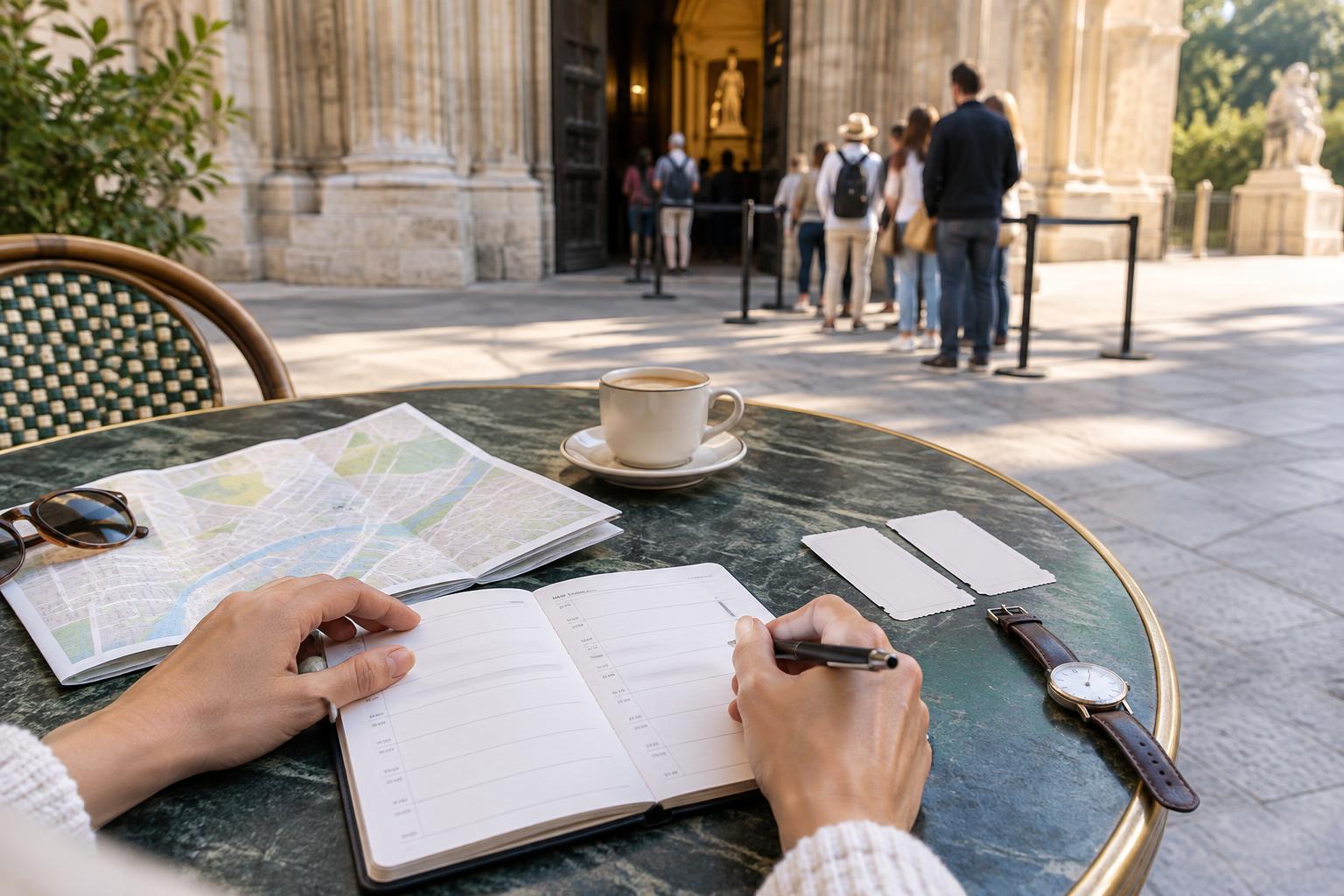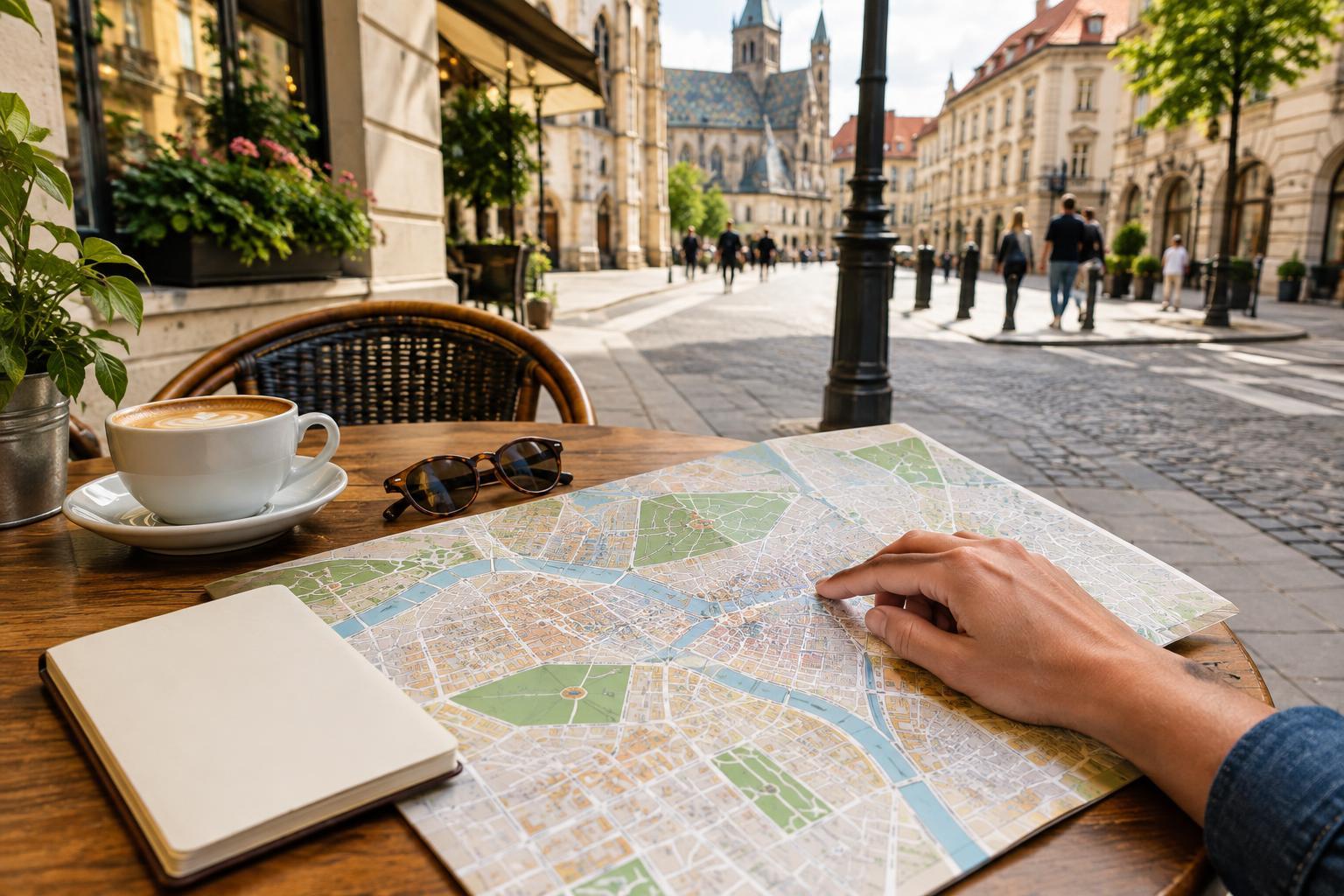
Start with a map, not a schedule
Before assigning sights to days, put every place you are considering on one map. Save museums, viewpoints, markets, restaurants and transport hubs as separate pins. Include your accommodation, too: the easiest route on paper may feel less convenient once you account for the journey back. At this stage, collect possibilities rather than trying to fit everything in.
Zoom out and look for clusters. Places described as being in the same neighborhood may still sit far apart on foot, while stops in differently named districts may be an easy walk from each other. Use the map and likely transport routes, not neighborhood labels alone, to draw loose groups. If a sight sits by itself, ask whether it deserves a dedicated trip or pairs naturally with something along the way.
Give each cluster a main stop
Choose one or two priorities for each area: perhaps a museum that needs a long visit, a food market you particularly want to explore or a viewpoint best enjoyed at a certain time of day. These are your anchors. Smaller sights become optional stops around them, rather than obligations that dictate the whole day.
Then check the practical constraints of each anchor. Opening days, entry times, reservation requirements and the likely length of a visit can all change the best order. If you have a timed ticket, build the route around it. If a market closes earlier than nearby shops, visit the market first. Check official details when you are ready to book, since hours and access arrangements can change.
Trace a route with a clear beginning and end
For each cluster, choose a starting point that is easy to reach from your accommodation. Draw a rough line through the sights you want to see, ending near a useful station, dinner area or route home. A route does not need to be perfectly straight; the goal is to avoid repeatedly crossing the same ground for stops you could have visited together.
Pay attention to more than distance. A short walk on the map may involve a steep hill, a difficult crossing or an indirect entrance. Likewise, a quick transit hop may save energy even when the stops look close. Compare walking and transit options for the longest gaps, and leave enough time for finding platforms, waiting and getting oriented. If someone in your group has mobility needs, check accessible routes and entrances rather than relying on the map’s shortest path.
Build a day you can actually enjoy
Give each neighborhood day a modest number of planned stops. Time inside a sight, queues, meals and the pleasure of wandering all take longer than moving between pins. A useful approach is to protect time for your anchors, identify a few nearby extras and decide in advance which extras you would happily skip. That makes a delay a small adjustment, not a failed itinerary.
Place meal breaks where they make sense on the route instead of assuming you will find food precisely when you need it. You can save a few options near your midday stop without committing to one restaurant. Also consider the rhythm of the day: after a long indoor visit, a park or relaxed walk may be more appealing than another museum. Good grouping reduces travel time, but varied pacing keeps the day enjoyable.
Keep a flexible version of the plan
Save your clusters in a form you can use on the move, such as labeled map lists or a short note with the day’s anchor, nearby options and route home. Download any maps or booking details you may need if connectivity is uncertain. Share the plan with travel companions so everyone understands which stops are priorities and which are choices.
Finally, make room to change course. Weather, energy levels or an unexpected discovery may make a different route more appealing. When your sights are already grouped by area, you can swap one neighborhood day for another or drop a minor stop without rebuilding the trip. The map is there to make exploration easier, not to prevent it.