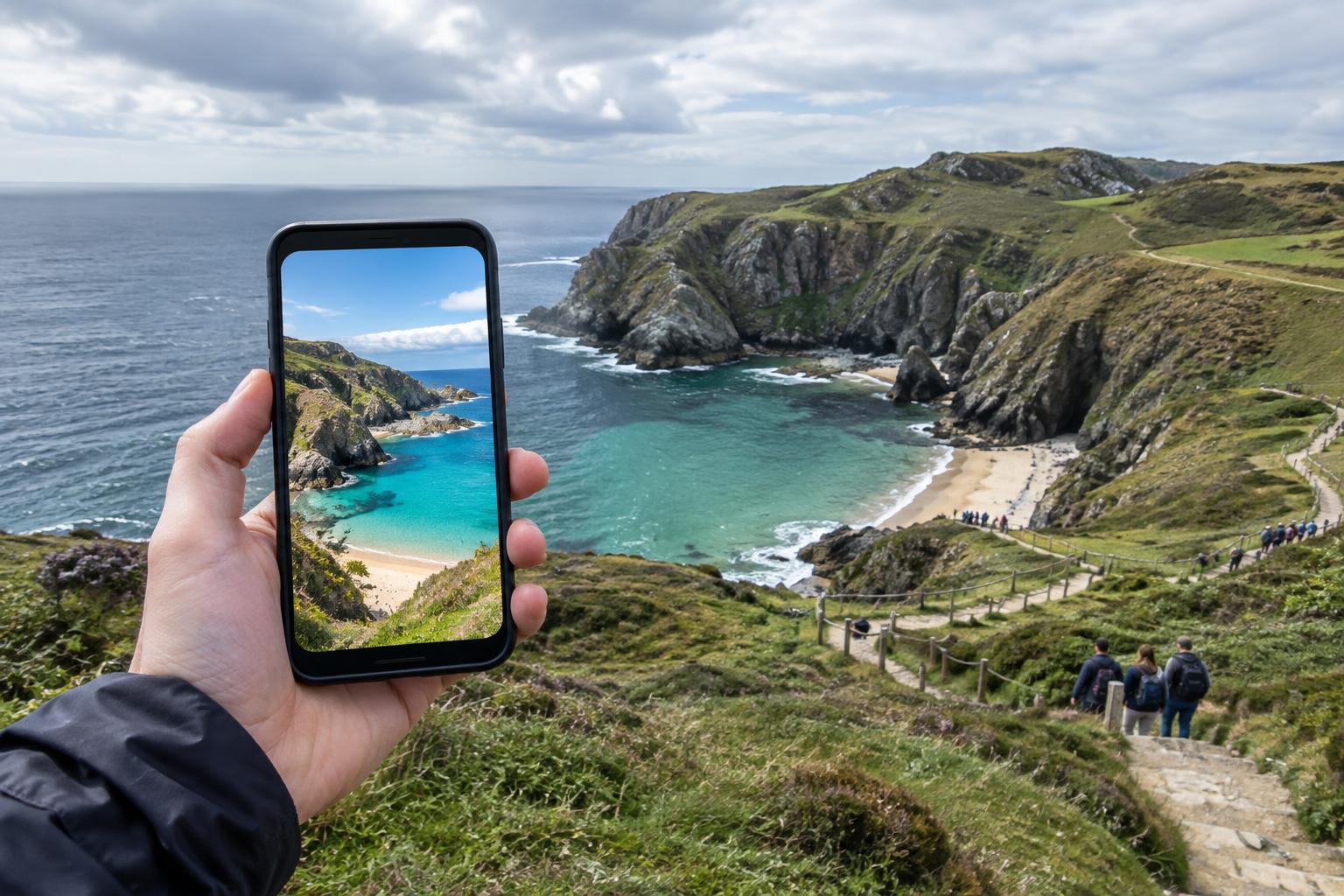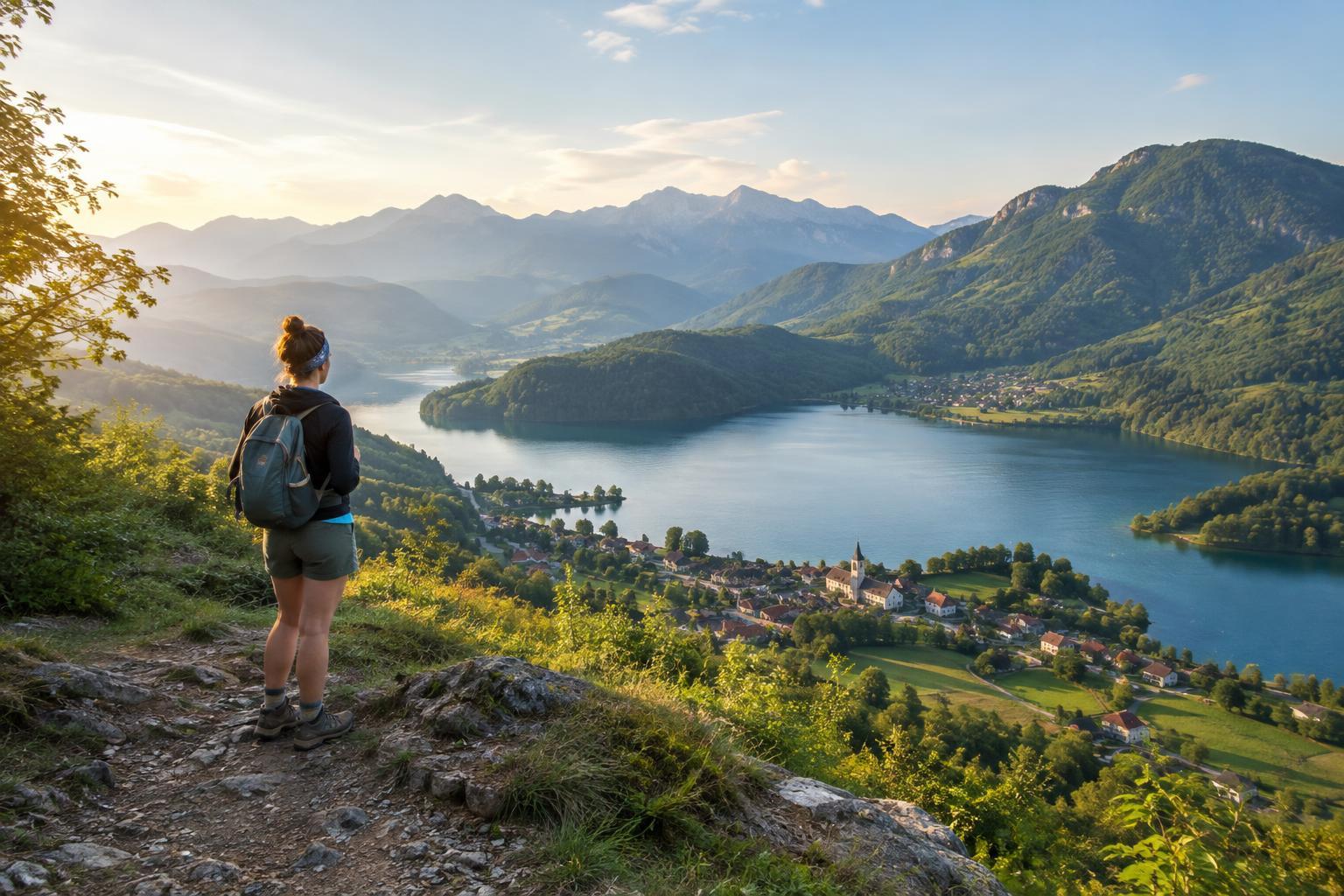
Start with the view, not the trail
A dramatic lake photograph can make it seem as though the best viewpoint must be hours from the road. Often, the more useful question is where the scenery meets a town, a waterfront path or a transport stop. From those places, you can enjoy the setting without committing to a difficult hike—and still leave room for a short walk if you feel like one.
Easy to reach does not always mean step-free or effortless. Shorelines may have gravel, village streets may slope, and transport arrangements can change. The destinations below are starting points for planning, not promises of universal accessibility. Before booking, check the particular viewpoint and the route from your accommodation or arrival point.
For big mountain backdrops: Lake Louise, Canada
Lake Louise in Alberta delivers a classic mountain-and-water scene close to its developed lakeshore. You do not need to climb for a view across the lake toward the surrounding peaks: the shoreline near the main arrival area is itself a destination. A gentle stroll can give you a different angle, but there is no need to complete a trail to make the stop worthwhile.
The planning challenge is less about physical effort than access. This is a well-known destination, so work out your transport before you go rather than assuming you can park nearby. Check current park guidance for shuttle or parking arrangements, and allow time for the journey in both directions. Mountain weather can change quickly; a warm layer and footwear suited to a potentially damp shoreline are useful even on a short visit.
For villages beside the water: Lake Bled and Lake Como
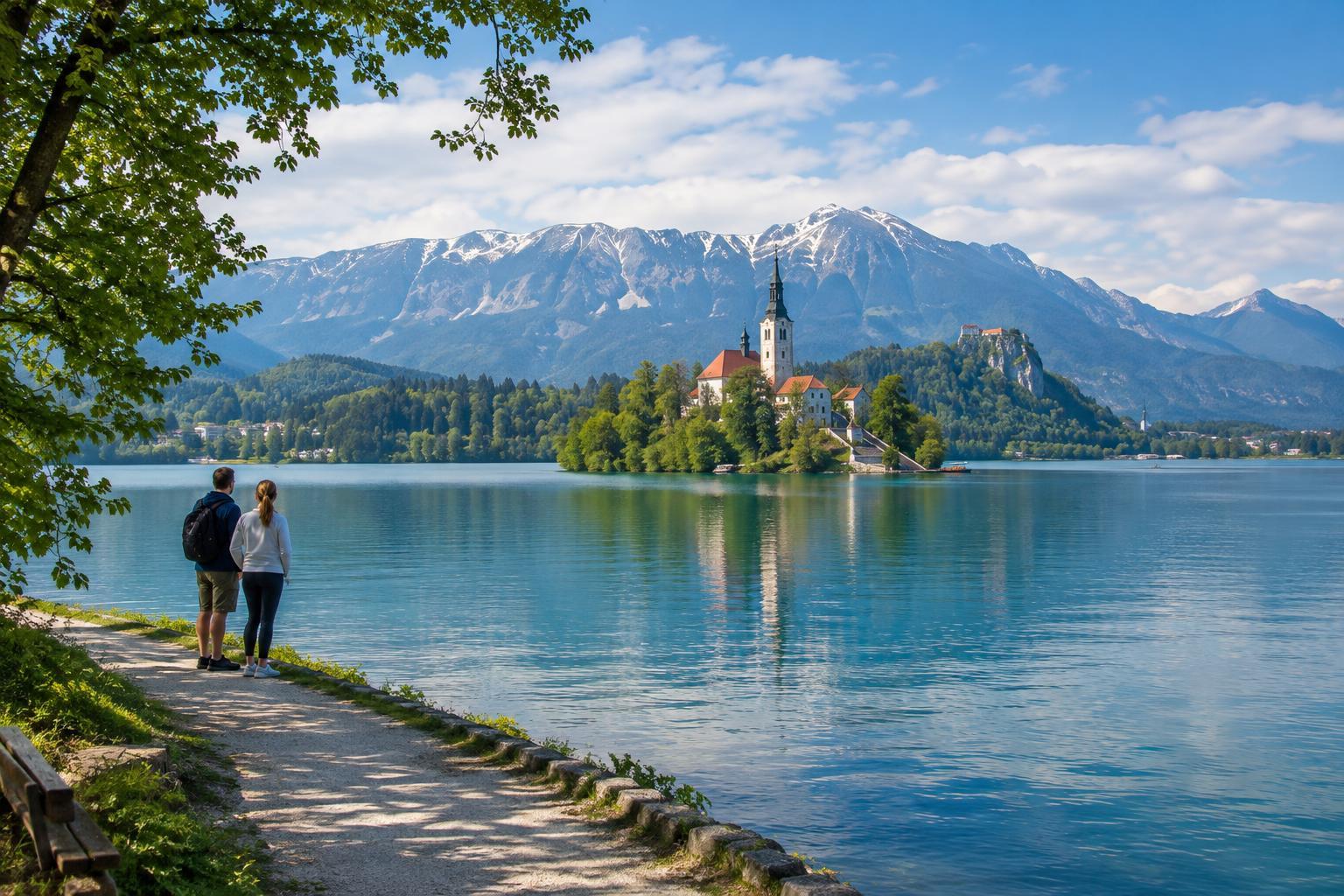
Lake Bled, Slovenia, combines water, wooded slopes and an island church in a compact setting. You can appreciate that combination from several points along the shore without taking on the climb to Bled Castle. If walking is part of the pleasure, choose a manageable stretch of the lakeside route and turn back when you are ready rather than treating a full circuit as the goal. Leave time simply to sit and watch the changing light on the water.
At Lake Como, Italy, the appeal is different: villages, ferries and mountains rising behind the lake. A waterfront stay or ferry outing can make the scenery the main event, with no summit viewpoint required. Menaggio is one possible base for time by the water; other towns offer their own appealing waterfronts. Check the exact walk between your lodging, the ferry landing and the shore, though. Narrow lanes, cobbles, slopes or steps can make a short distance feel harder than it looks on a map.
For either lake, resist planning a day around collecting every famous viewpoint. One comfortable base, an unhurried waterside walk and a place to pause may give you a better experience than repeated transfers. If you want a boat trip, confirm its operating schedule and boarding arrangements for your travel dates.
For a different sense of scale: Lake Kawaguchi and Lake Tekapo
Lake Kawaguchi in Japan offers the possibility of seeing Mount Fuji above the water from accessible parts of the lakeside area. The mountain is weather-dependent, however, so build flexibility into your plans rather than hinging an entire trip on one photograph. A shore visit can still be enjoyable when clouds obscure the summit, especially if you give yourself time for a slow wander or a waterside break.
Lake Tekapo on New Zealand’s South Island has a more open feel, with broad water and distant mountain scenery visible around the village and shoreline. It suits travelers who would rather linger near their accommodation than set out on a long walk. Conditions can be breezy and temperatures may feel cooler beside the water, so pack a layer that is easy to carry. At both lakes, check how you will get from your arrival point to the specific stretch of shore you want to visit.
Make an easy-view lake day genuinely easy
Choose your viewpoint before you choose your schedule. Look at the distance from the bus stop, station, ferry landing or parking area, then consider the surface and elevation changes—not just the number of minutes shown on a map. Recent visitor information from the relevant transport operator, park or accommodation can help you resolve details that a scenic photo cannot show.
Keep the day simple: aim for one main lakeside stop, add a boat ride or short walk only if it fits, and leave a little time for weather or transport delays. Bring water, a layer and shoes appropriate to the ground you expect. The reward is not how far you walked to reach the lake. It is having enough time and energy to take in the view once you arrive.