Start with door-to-door time, not the headline journey
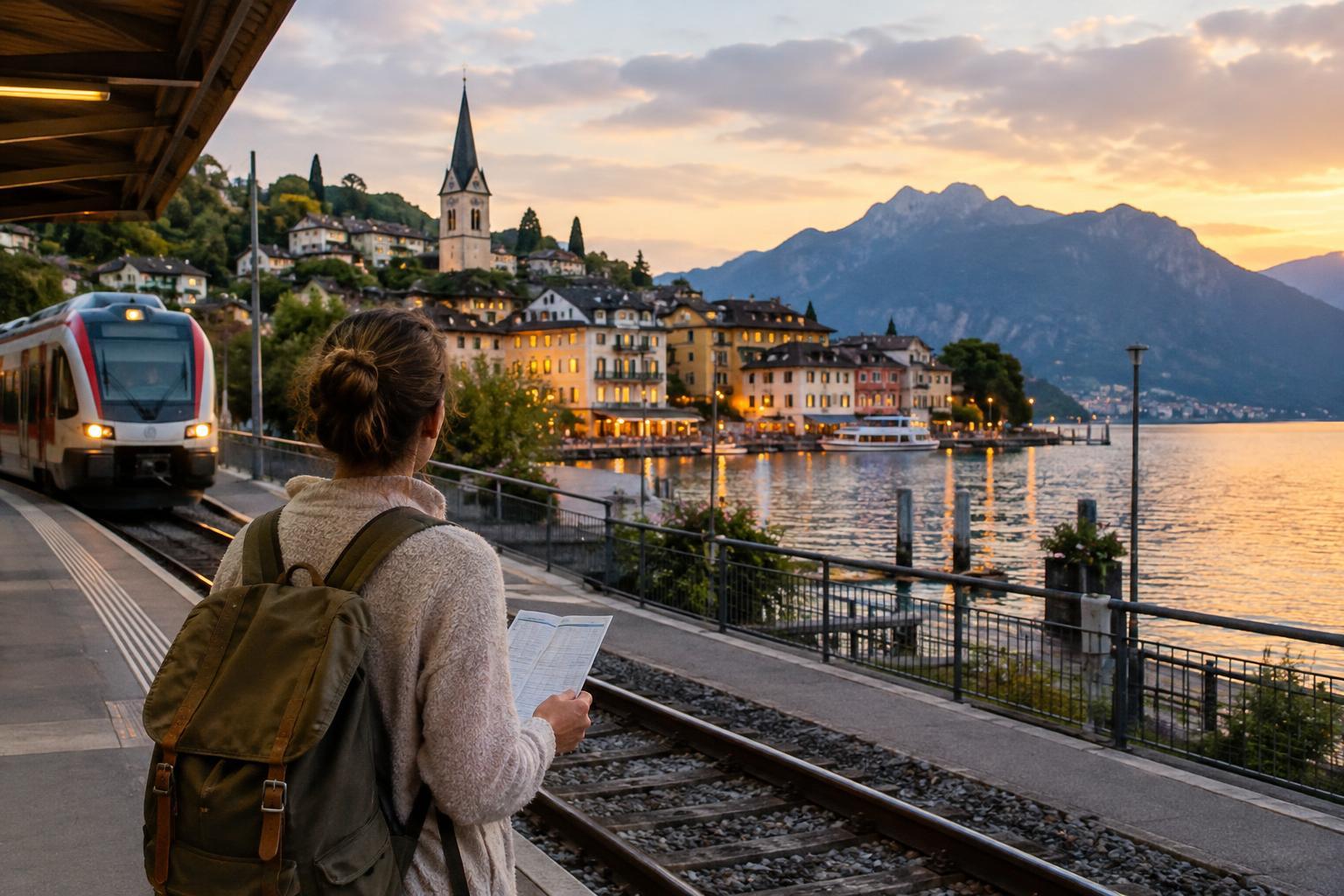
The travel time shown on a map or ticket usually describes only part of a move. A train journey starts before departure, when you leave your accommodation and find the platform. It ends after you get off, collect your belongings and reach your next stop. To estimate a day realistically, map the whole sequence: check out, reach the terminal, wait, travel, make any connections, reach your accommodation and settle in.
Write each step on your itinerary, even if you do not assign an exact minute to it. A hotel near a station may make a train transfer straightforward; a remote guesthouse can change the day considerably. For flights, include the trip to and from each airport and the time needed for check-in and security. For a rental car, allow for pickup, fuel stops, parking and the walk from the car to your destination.
Check the details that affect your particular route before making plans around an arrival time. A service that runs frequently offers more flexibility than one with limited departures. A direct journey differs from a connection that requires changing terminals or carrying luggage across town.
Build in buffers where they matter most
An itinerary does not need a large block of unused time after every activity. It does need breathing room around steps that can disrupt everything after them. Connections, border crossings, unfamiliar stations, car collection and travel during busy periods are good places to allow extra time. The right buffer depends on the route and how costly a missed connection would be, so avoid treating one fixed allowance as a rule for every trip.
Separate commitments from flexible plans. If you must catch a booked train, give the journey to the station priority over a final museum visit. If your afternoon is open, a delay may simply mean a later walk or dinner. Putting flexible activities after uncertain transfers keeps a small setback from undoing the whole day.
Also leave room for ordinary needs: a meal, a restroom break, a place to store bags or a pause to get your bearings. These are not failures of planning. They are part of moving through an unfamiliar place.
Plan the route in the order you will experience it
Before booking several stops, look at their sequence rather than judging each journey separately. Three manageable transfers can still make a trip feel dominated by packing and transit. On a map, trace the route from arrival point to departure point and look for backtracking. If two places are near each other, grouping them may save a repeated long journey.
For each move, ask whether it earns its place in the trip. Does the stop offer something you especially want to experience? Could it work as a day trip from an existing base instead? Staying longer in fewer places may give you more time on the ground, though a short stop can still make sense when it breaks up a long route or meets a specific goal.
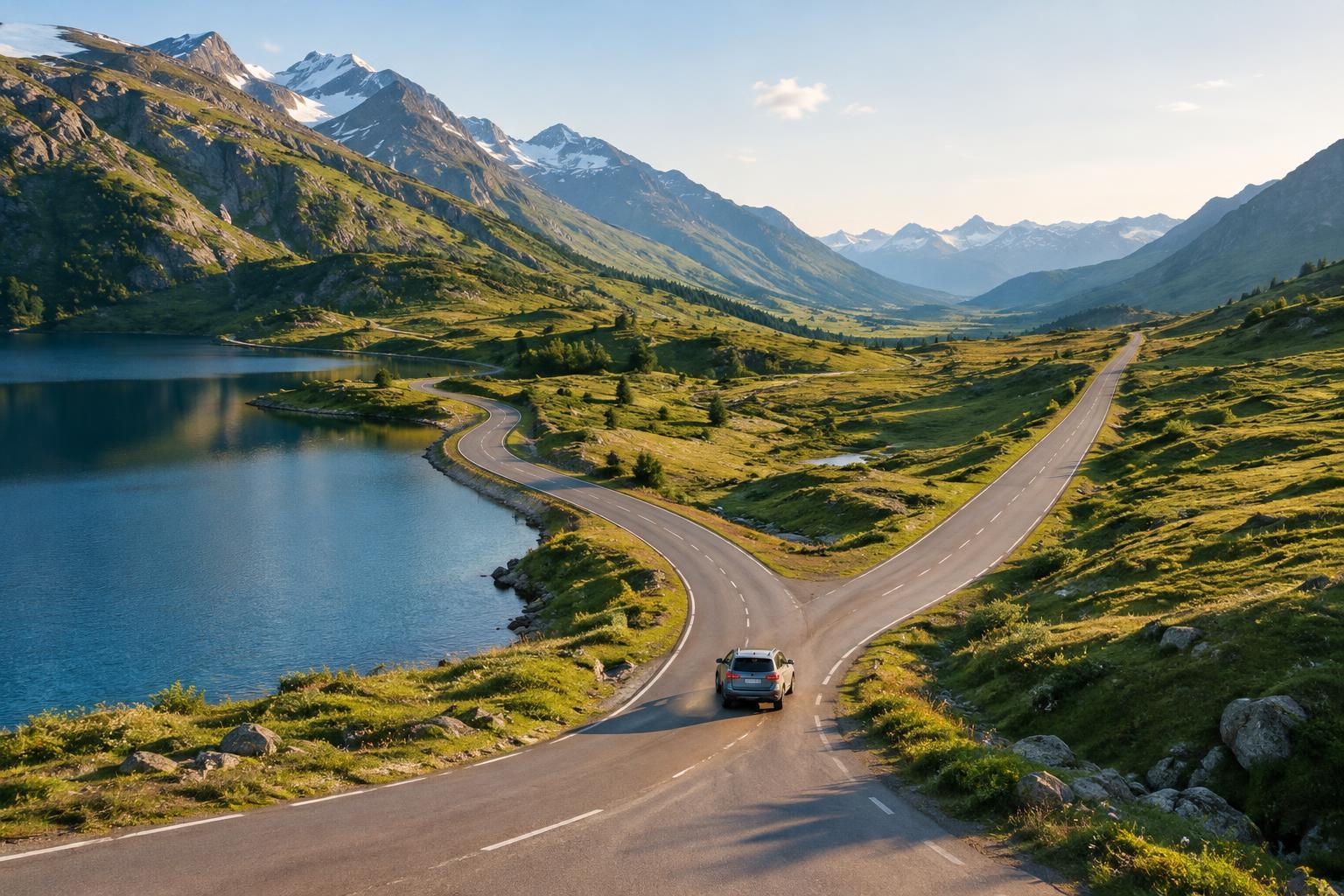
Compare transport options by the full day they create, not only by their advertised journey times. A quicker flight with a distant airport and an early departure may demand more of your day than a slower train between central stations. The best option is the one that fits your schedule, budget and tolerance for hassle.
Give arrival days lighter expectations
A change of destination takes energy as well as time. Carrying bags, navigating signs and finding an address can be tiring even when everything runs smoothly. Treat an arrival day as a transition day first, especially after a long journey. Choose one easy activity near your accommodation, such as a neighborhood walk or a relaxed meal, rather than several timed sights.
Check-in and check-out times can shape the day, too. If you arrive before your room is available, find out whether you can leave your luggage somewhere suitable. If you cannot, a plan that depends on immediately visiting a crowded attraction may be awkward. Likewise, a late departure can provide useful sightseeing time only if you have a practical plan for your bags.
Use your own travel habits as a guide. Some people enjoy heading straight out after arrival; others need a quiet hour before exploring. A realistic itinerary reflects the people taking the trip, not just the transport timetable.
Pressure-test each day before you book
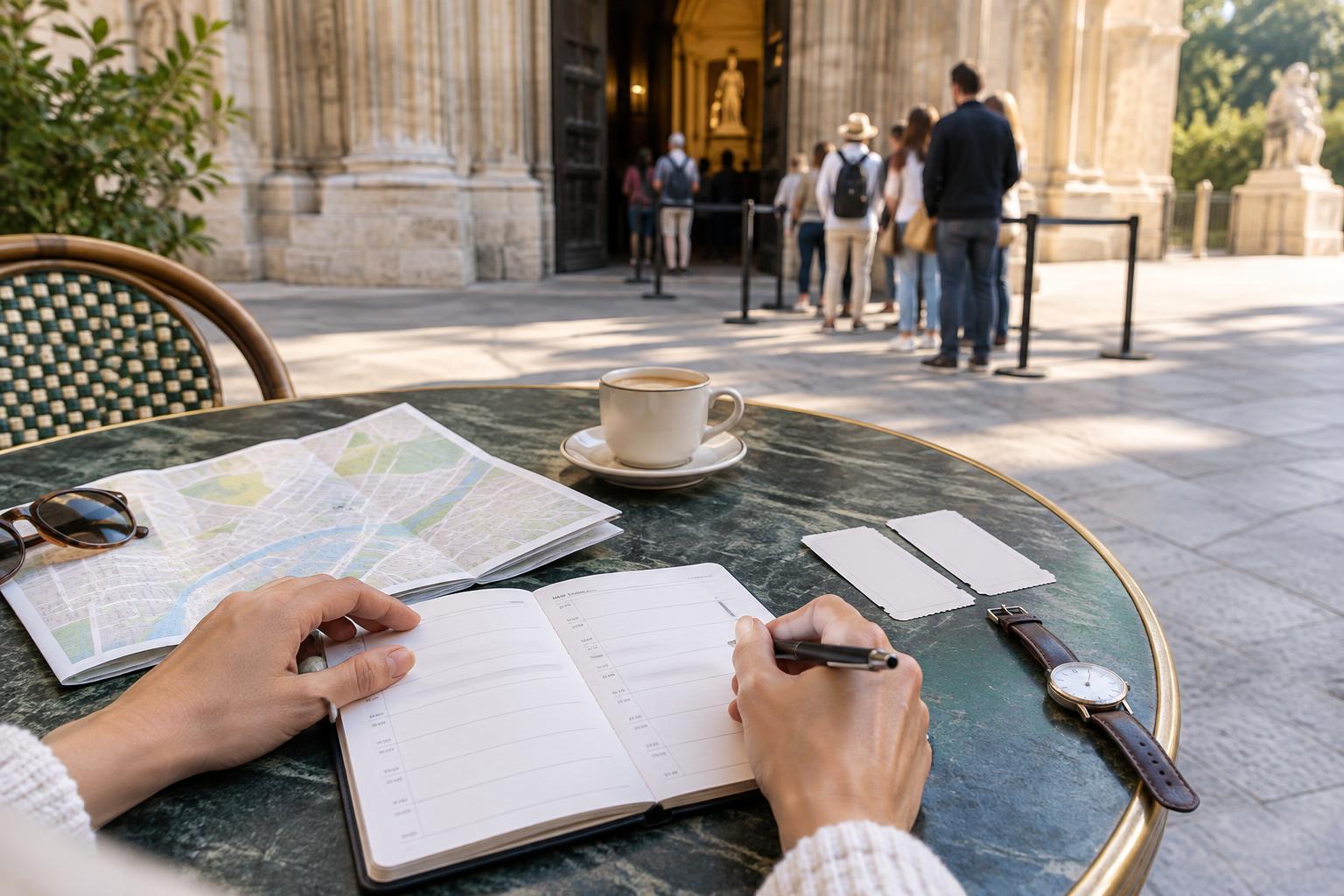
Read the itinerary as a sequence of actions. Can you describe how you get from each stop to the next, with luggage if necessary? Have you allowed time to eat? Are two fixed reservations close together after a journey that might run late? If the day works only when every transfer is immediate and every queue is short, simplify it.
Mark the day's one or two priorities, then identify what you could drop without disappointment. You might keep a booked tour and leave an optional viewpoint for another day. This makes the plan useful without making it rigid. When possible, check opening hours, transport schedules and reservation conditions before committing to an order; these details can change.
Finally, look at the trip as a whole. A busy travel day can be worthwhile when followed by time to explore, but several in a row may leave little room for the experiences you came for. A good time estimate does more than prevent lateness: it protects the enjoyable parts of the journey.